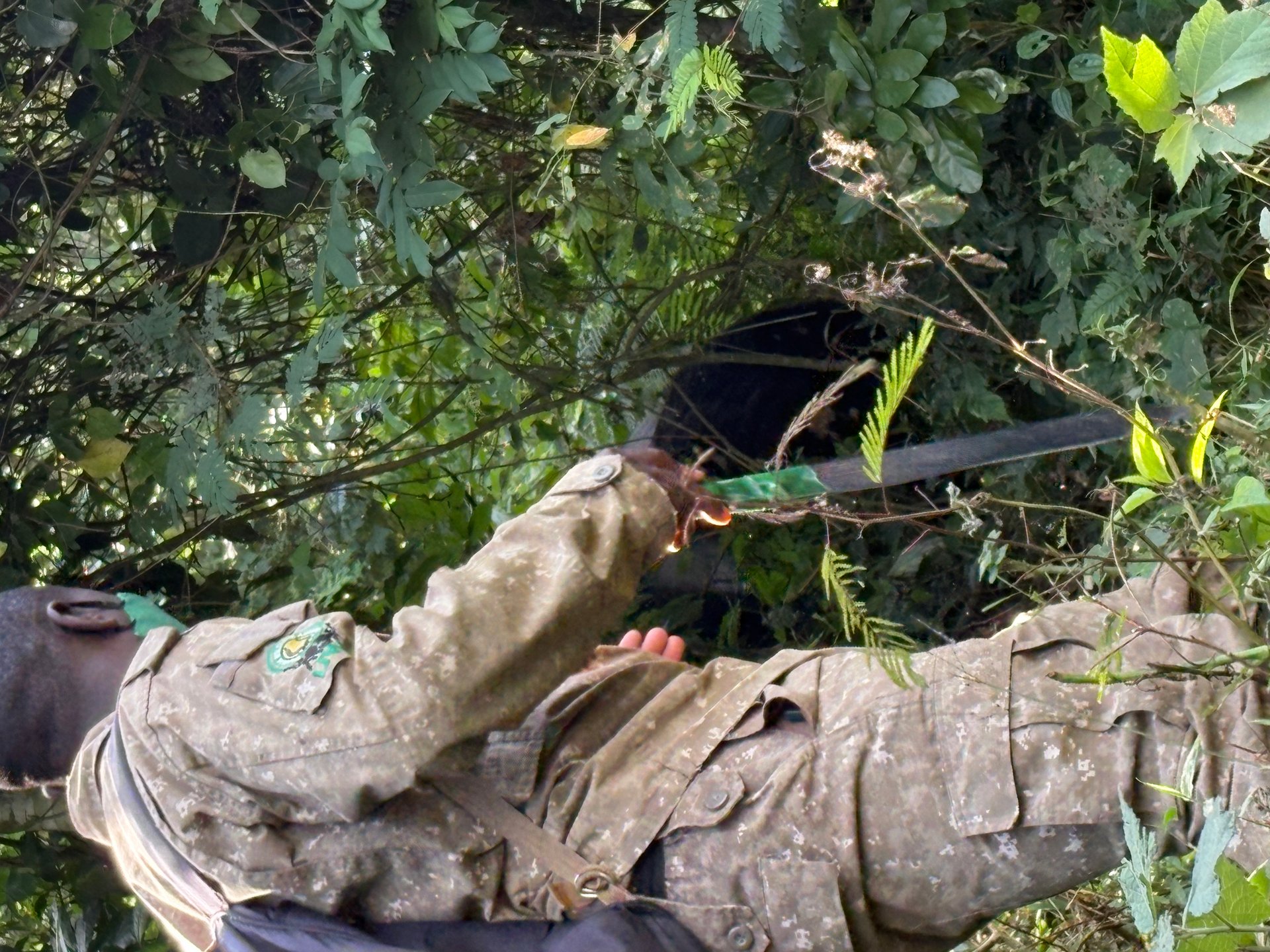
Source: VMGP for the Batwa around BINP, MWE/UWA, December 2025; IUCN Mountain Gorilla SSP; Gorilla Journal (Fossey Fund)
Kin, Not Prey
The Batwa name for mountain gorillas is not a word for wild animal or for prey. In their oral tradition, gorillas are something closer to a different kind of person — large, powerful, intelligent beings who happened to move through the forest differently. The Batwa hunted small game with nets and traps: forest antelope, bushpig, small primates. They did not hunt gorillas.
This is not a sentimental claim. It is supported by evidence. When the mountain gorilla population of Bwindi was first systematically studied in the 1980s, it numbered in the hundreds — a population consistent with millennia of peaceful coexistence with human forest dwellers. If the Batwa had hunted gorillas over 60,000 years, the population would reflect that pressure. It does not.
Bwindi hosts approximately 460 mountain gorillas today — nearly half the world's total mountain gorilla population. Chimpanzees, a second great ape species, also live in Bwindi. It is the only place on Earth where both species share a habitat. The Batwa lived in this extraordinary ecosystem for tens of thousands of years. The ecosystem did not suffer for it. The gorillas were not threatened by it.
The Batwa as First Gorilla Researchers
When Western researchers began studying Bwindi's gorillas seriously in the 1980s, they were working in an ecosystem the Batwa had known for thousands of years. Some of the most valuable early knowledge about gorilla family structures, nesting habits, seasonal movement patterns, and individual behaviors came from Batwa informants.
The Batwa could identify individual gorillas. They knew which families ranged in which territories. They understood gorilla behavioral signals — the chest-beating displays that signal threat, the quieter vocalizations that signal curiosity or contentment — because they had observed them for generations. A Batwa elder could read the state of a forest clearing and know whether gorillas had fed there that morning.
This knowledge was not preserved or formally acknowledged when the park was established. The people who held it were evicted. The researchers who benefited from it continued their work without their informants. The gorillas whose families the Batwa had tracked for generations now live in a forest that the Batwa cannot legally enter.
The Gorilla Tourism Economy and the Batwa
Gorilla trekking in Bwindi generates substantial revenue for Uganda. A single gorilla trekking permit costs $700-800. In a good year, thousands of permits are sold. UWA's Revenue Sharing Scheme distributes 20% of gate proceeds to adjacent communities. This system funds schools, clinics, and household livelihoods across the sub-counties around Bwindi.
The Batwa participate in this benefit stream — but as one community among many, not as a specially recognized group with prior rights. The disparity documented in consultations is consistent: the Batwa have historically benefited less from revenue sharing than the surrounding Bakiga communities. The communities with more social capital, better organized groups, and stronger political connections receive more. The Batwa, at the bottom of the social hierarchy, receive less.
For a visitor who has just paid $700 to see a gorilla family, understanding that this experience is connected to a 30-year-old act of dispossession is part of full engagement with what they are seeing. The gorillas are there, in that forest, in part because the Batwa cared for it for millennia. That history deserves acknowledgment.
Frequently Asked Questions
Related Pages
Last updated: September 2026