Source: Uganda National Census 2024 (UBOS); VMGP for the Batwa around BINP, MWE/UWA, December 2025
3,857
Total in Uganda (2024 census)
6,200
Total in Uganda (2014 census)
1,403
Adjacent to Bwindi
2,656
Kisoro + Kanungu (2016 survey)
68.8%
Under 25 years old
<0.01%
Of Uganda's population
Reading the Data With Caution
Population statistics for the Batwa must be read carefully. The apparent 38% decline from 6,200 in 2014 to 3,857 in 2024 does not necessarily mean the Batwa population fell that sharply in a decade. The Uganda Bureau of Statistics (UBOS) itself has acknowledged that data on the Batwa is of limited reliability. The Batwa are dispersed across multiple districts, often living on the margins of larger communities where census enumerators may not identify them separately from the surrounding Bakiga or Bafumbira populations.
Local surveys tell a different story. The Bwindi Mgahinga Conservation Trust (BMCT) census of 2016 counted 2,656 Batwa in Kisoro and Kanungu districts alone — more than the 2014 national figure for all Uganda. A Batwa community leader from Kanungu put the number in his district at 841, higher than the BMCT figure for the same area. These discrepancies suggest that counting the Batwa accurately is genuinely difficult and that national figures likely undercount the true population.
What is consistent across all sources is that the Batwa are one of Uganda's smallest and most marginalized ethnic groups, representing less than one percent of one percent of the national population. This tiny population size, combined with high levels of poverty and social exclusion, makes the Batwa acutely vulnerable to cultural extinction as well as physical hardship.
A Young and Growing Community
Despite the overall uncertainty, one demographic fact is consistent: the Batwa are a young population. With 68.8% under 25 years old, the community has a strongly youth-skewed age pyramid. This is typical of populations experiencing high fertility rates alongside difficult living conditions — many children are born, but fewer survive to older age.
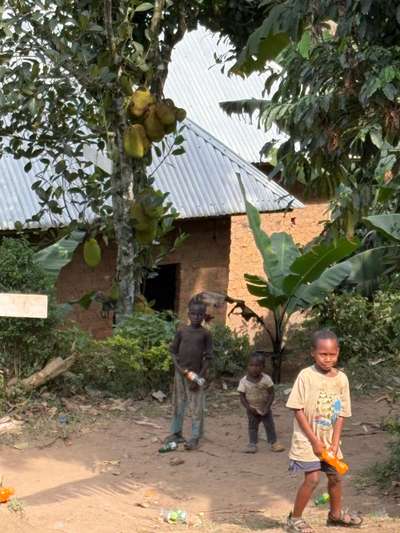
This youthfulness has significant implications. The children and teenagers of the Batwa settlements near Buhoma have never lived in the forest. Their parents were born or grew up outside it. For the youngest Batwa, the forest is something they know from stories and from brief, regulated visits under Collaborative Resource Management agreements. Their identity as a forest people is increasingly historical rather than lived.
Yet the same youth bulge also means potential. The Batwa Development Programme has enrolled 465 Batwa children in schools from pre-primary to tertiary level. As more young Batwa gain education, the foundation for long-term community development strengthens. Some community members have become teachers, health workers, and tour guides — the first generation of Batwa professionals.
Data Sources
- Uganda Bureau of Statistics — National Census 2014 and 2024
- Bwindi Mgahinga Conservation Trust (BMCT) — Batwa Population Census Report, 2016
- Mbarara University of Science and Technology (MUST) — The marginalization of the Batwa people of Southwestern Uganda, 2020
- World Bank IFPA-CD Project VMGP — Field Data from community consultations, June 2022
- Vulnerable and Marginalized Groups Plan for BINP, Ministry of Water and Environment / UWA, December 2025
Frequently Asked Questions
More About the Batwa
Last updated: September 2026