Source: VMGP for the Batwa around BINP, MWE/UWA, December 2025; BINP General Management Plan 2014-2024
Cultural Overview
The Forest as Identity
The Batwa do not simply come from the forest. In their self-understanding, they are the forest. The word batware — from which "Batwa" derives — means kings of the area. A 2020 study by Mbarara University found that more than one-third of Batwa still identify the forest as their origin. When asked where they come from, many elders point not to a village or a district, but to Bwindi.
This identification is not nostalgic. It is ontological. Before 1991, the Batwa's entire way of being — how they ate, how they healed, how they worshipped, how they raised children, how they understood themselves in relation to time and place — was structured by the forest. Every major cultural practice had its roots in forest ecology.
Men were recognized as men through their hunting ability. To trap or kill an animal was the proof of full male status. Fire-making — called gushingata — was a male responsibility as important as hunting. Women were makers: of ceramics, of medicinal preparations, of food. The forest provided the materials for all of this. Without the forest, the social roles that depended on it became difficult to enact.
Spiritual Life: Ancestors in the Forest
Batwa spirituality was rooted in specific forest places. They had burial sites near great trees, where the dead were interred standing upright — a practice that placed the ancestors literally at the base of the forest's most enduring life. They worshipped at specific sacred locations, offering appeasement gifts to their spiritual beings.
When the forest was closed in 1991, these spiritual sites became inaccessible. The connection between living community and buried ancestors was severed geographically. The VMGP document notes explicitly: "when they were driven out from the forest in the 1990s, their cultural practice of worshipping ancestors was interfered with."
The BINP General Management Plan now explicitly recognizes "access to cultural sites under agreed terms and conditions" as a permitted activity within the park's collaborative management zone. Some Batwa community members continue to access the forest for spiritual and medicinal purposes under CRM agreements with UWA. This regulated access is meaningful but limited — it is permission to visit a home, not permission to return to one.
What Has Survived
Culture is more resilient than displacement planners assumed. Three decades after eviction, Batwa culture has not been extinguished. It has been transformed. The most durable elements have been those that can exist outside the forest: music, story, dance, and the specific kinds of knowledge that can be transmitted in words.
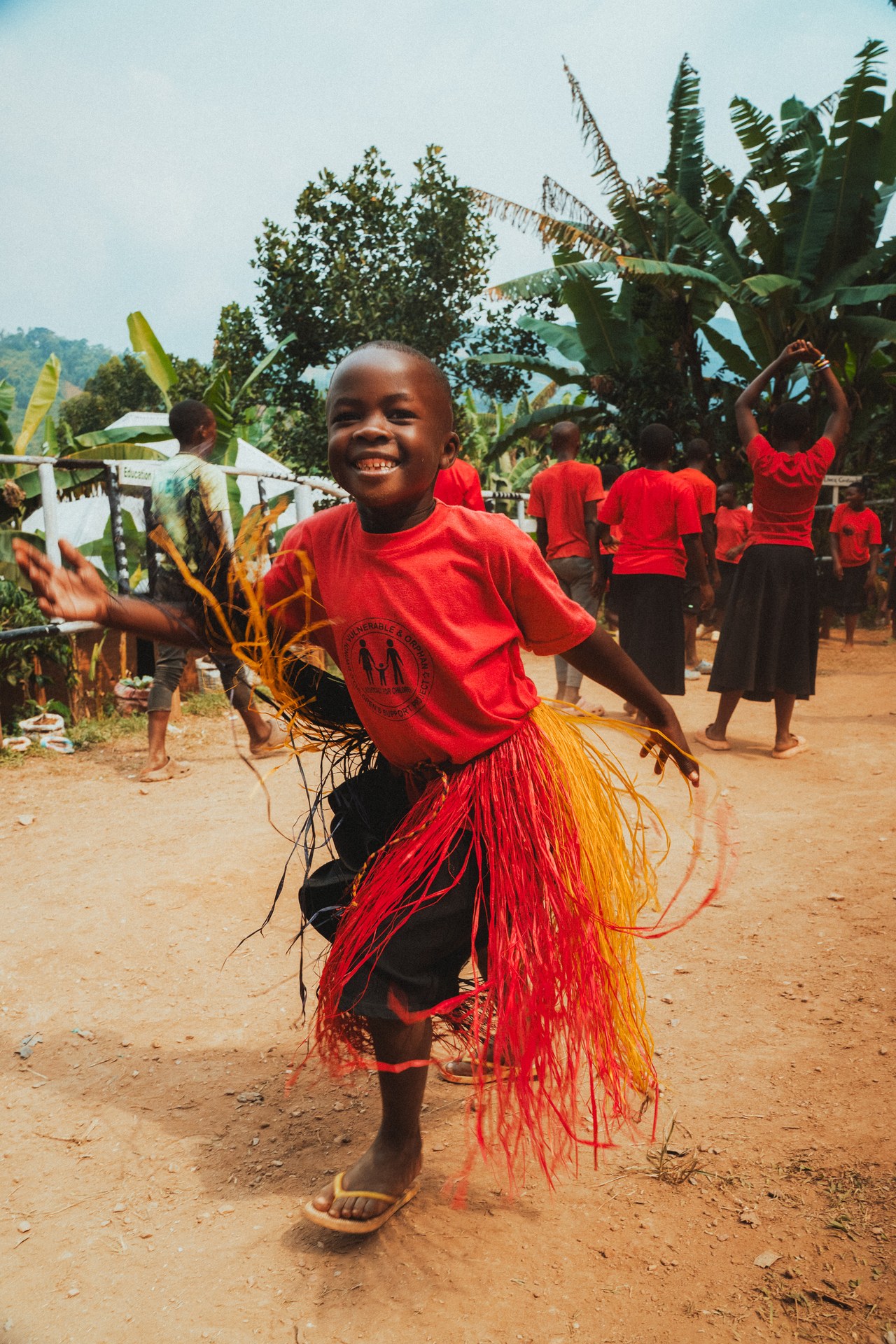
The Rutwa dance is perhaps the most visible survival. Rhythmic, communal, intensely physical — the Rutwa dance continues at community events, at the Batwa Trail, and at the Buhoma Visitor Information Centre where ABEG provides cultural performances. The dance preserves rhythm, community memory, and identity simultaneously.
Traditional songs carry specific cultural content — stories about forest life, about hunting, about relationships, about history. Even when sung by people who have never lived in the forest, these songs transmit orientation toward a particular past and a particular identity. The children who grow up hearing them know who they are.
Frequently Asked Questions
More About Batwa Culture
Last updated: September 2026