Uganda Wildlife Guide — Updated June 2026
Uganda Wildlife
Gorillas are the headline. But Uganda's wildlife runs much deeper — from savanna sunrises over the Nile to a white rhino grazing alone in tall grass.
~1,000
Mountain gorillas left worldwide
Half are in Uganda
1,000+
Bird species recorded
One of Africa's top birding nations
7 m
Minimum distance to gorillas
UWA regulation
10
National parks
Plus wildlife reserves
Gorilla Trekking — Uganda's Signature Wildlife Experience
Mountain gorilla trekking is unlike anything else in wildlife travel. You walk into a living rainforest — no tracks, no vehicle, no distance — and spend an hour with a habituated gorilla family going about their day. The closeness is what stays with you long after the permit expires.
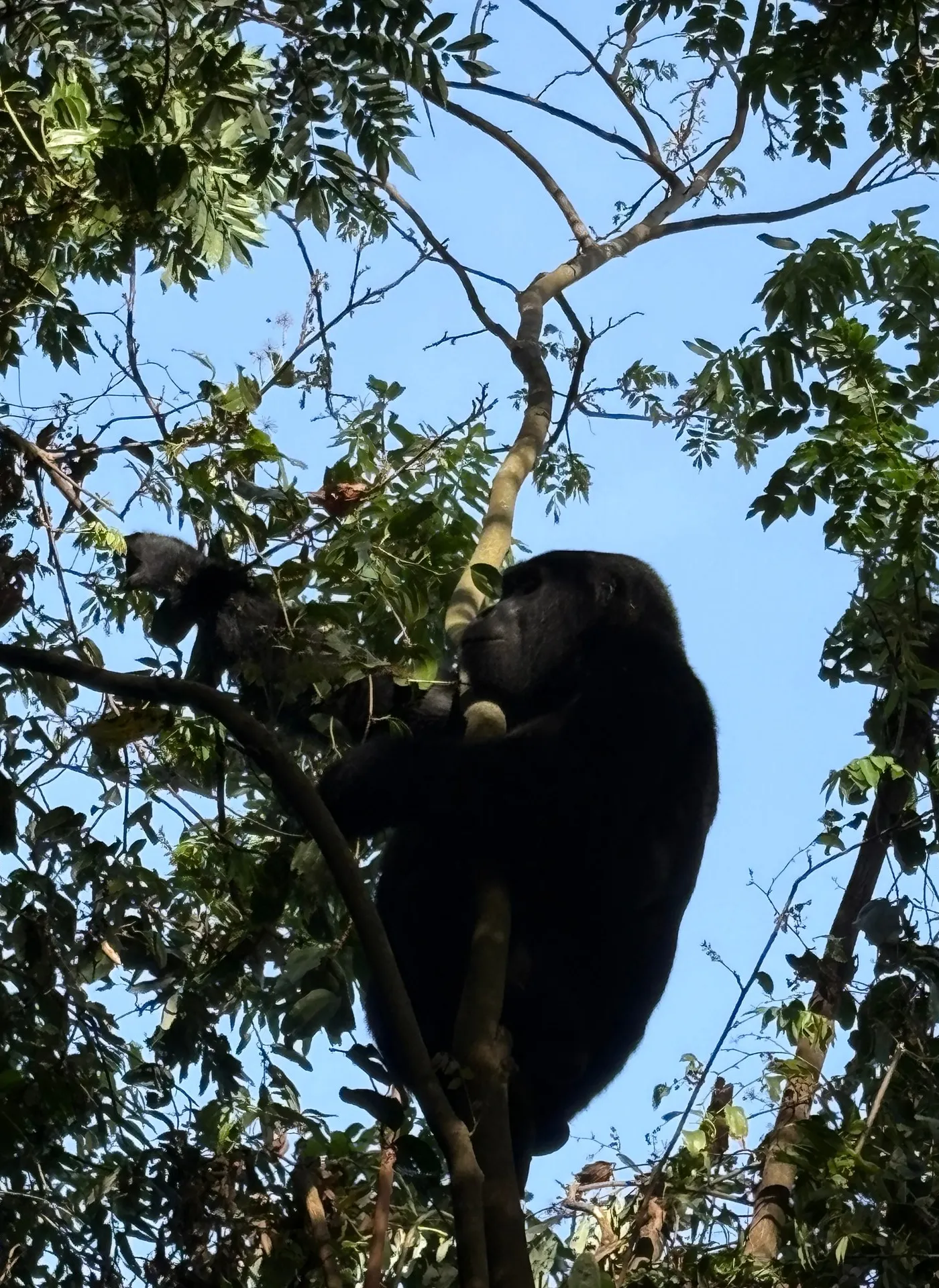
We have trekked gorillas in Bwindi Impenetrable National Park twice: in January 2026 and again in June 2026. The first trek took just under an hour of walking before we reached the family — unusually quick. The first gorilla we saw was sitting in a tree, eating leaves, entirely unconcerned by our presence below. On our June 2026 trek, we found a different family after roughly an hour, with a silverback high in the canopy, still feeding. Both times, the one-hour limit felt unreasonably short.
Bwindi Impenetrable National Park holds approximately 400 mountain gorillas — a genetically distinct population isolated from the Virunga gorillas some 50 kilometres to the south. The Virunga Conservation Area (spanning Uganda, Rwanda and the DRC) recorded 604 gorillas in the 2016 census, the largest count ever recorded for the species (source: Reiseführer Uganda, 2020). Together, these two populations represent virtually the entire mountain gorilla population on earth.
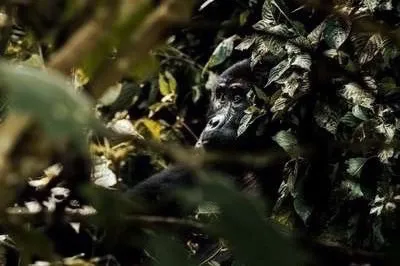
The regulation 7-metre minimum distance feels irrelevant when a gorilla decides to move closer of its own accord. Bwindi Impenetrable National Park.
UWA Gorilla Trekking Rules
- •Permit price: $800 USD per person (2026, all sectors and parks)
- •Minimum age: 15 years — no exceptions
- •Group size: Maximum 8 visitors per gorilla family, per day
- •Contact time: Exactly 1 hour with the gorilla family
- •Minimum distance: 7 metres at all times
- •Advance booking: Up to 24 months ahead (source: Reiseführer Uganda, 2020)
- •Porter hire: Available at the trailhead, approximately $20 USD (source: Reiseführer Uganda, 2020)
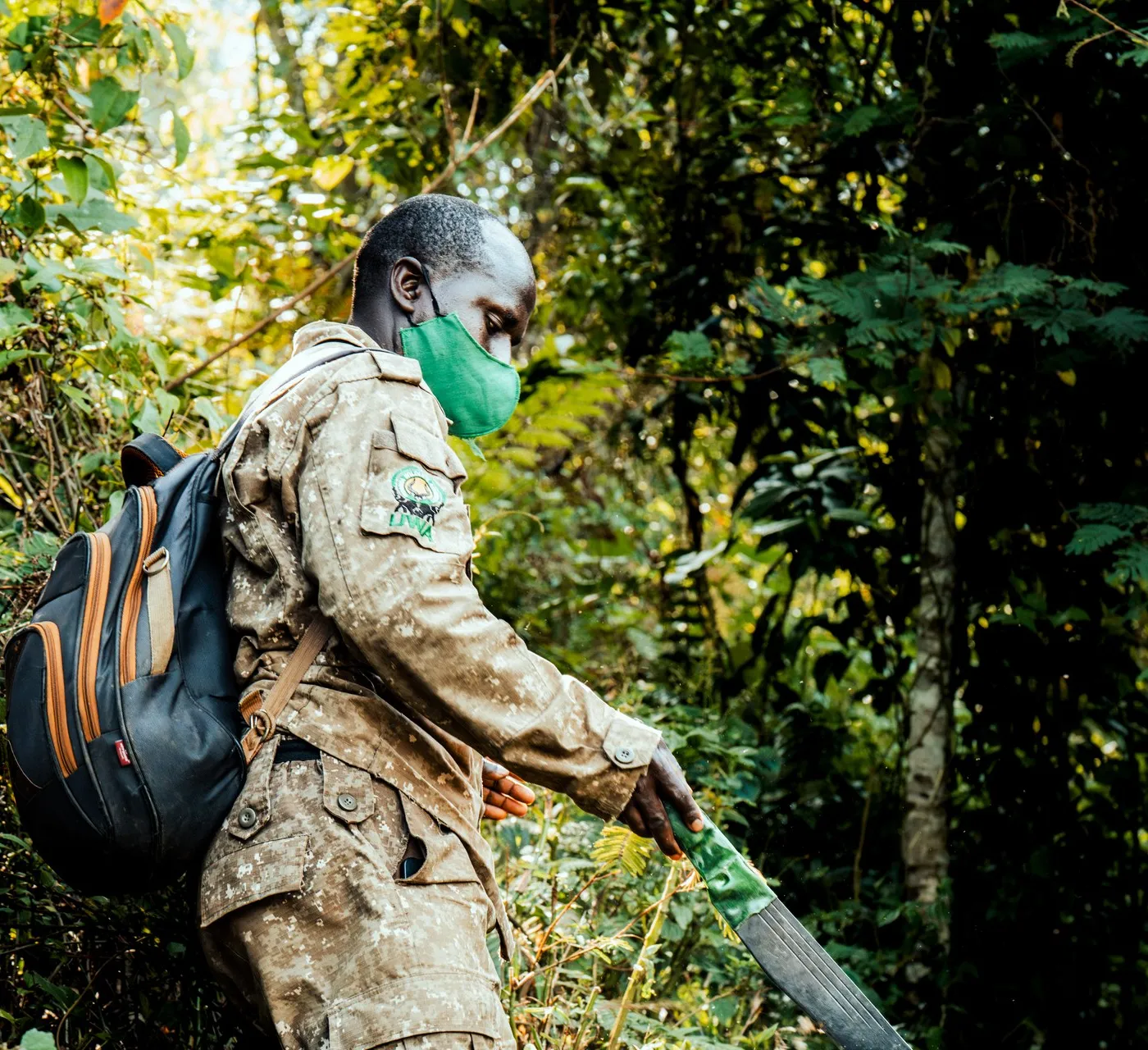
Each trekking group is accompanied by a tracking guide and two UWA rangers. The rangers are armed — unusual if you're not used to it, but their role is mainly pathfinding and forest navigation. Buhoma sector, January 2026.
The Savanna Circuit — Murchison Falls and Beyond
Uganda's north is a different country from its south-west. Where Bwindi is steep, dark and dense, Murchison Falls National Park is open, golden and loud with the sound of the Nile. The wildlife is correspondingly different: elephants, giraffes, hippos, buffalo, lions, leopards and Nile crocodiles in a savanna landscape that stretches to the horizon.
We visited in October 2024. We left our lodge very early for the morning game drive — early enough to watch the sun rise over the savanna. The light at that hour turns the entire landscape gold, with acacia silhouettes against a red sky. It is the kind of scene that appears in photographs so often it risks feeling clichéd, until you are standing in it.
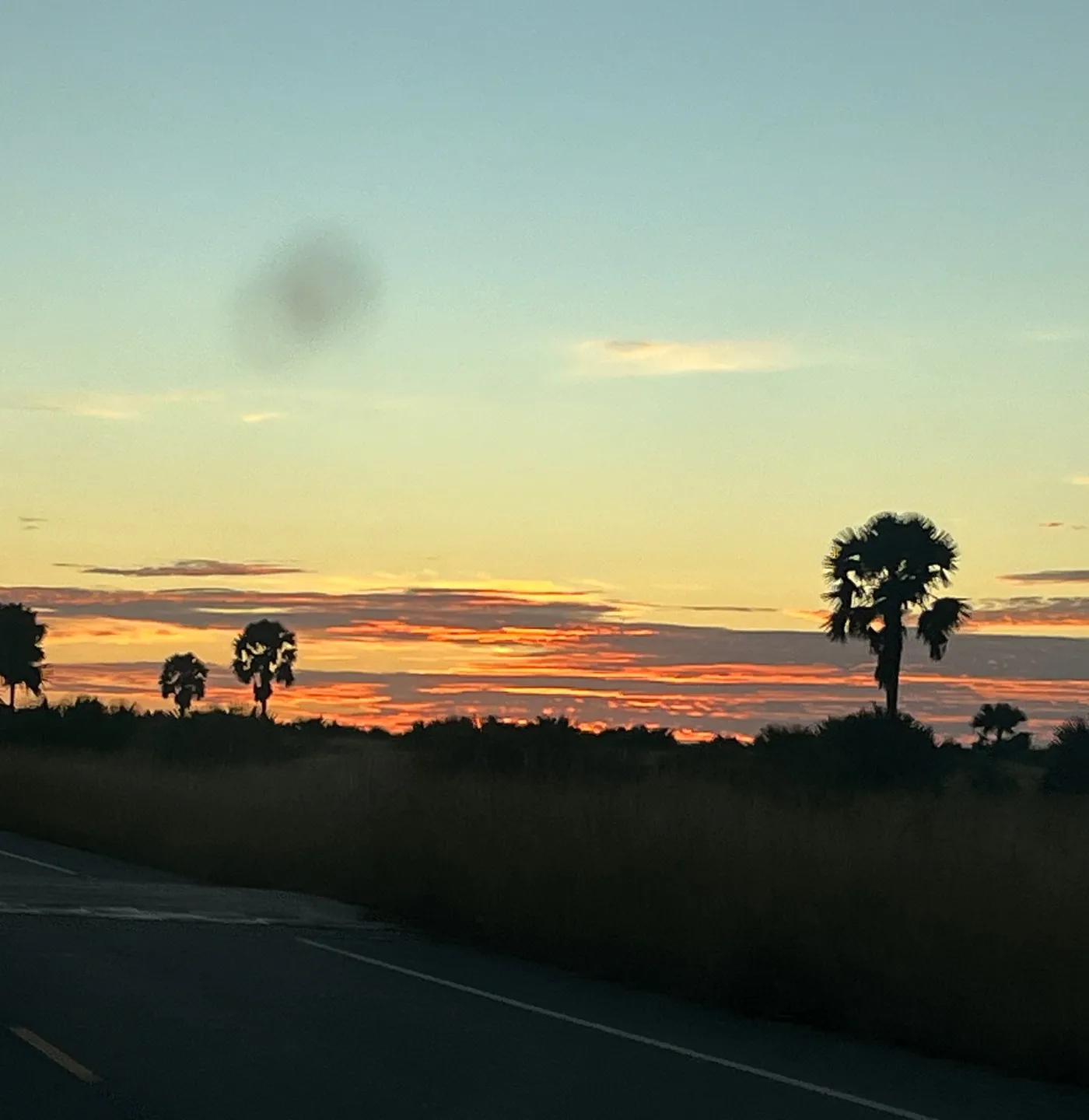
Leaving the lodge before dawn for a game drive means catching this. Murchison Falls National Park, October 2024. Photo: Mark Suer.
On that same morning drive we encountered a Rothschild giraffe — a subspecies found only in Uganda and Kenya, one of the rarest giraffe subspecies in the world. It moved through the grassland with the particular unhurried confidence that large animals have when nothing threatens them.
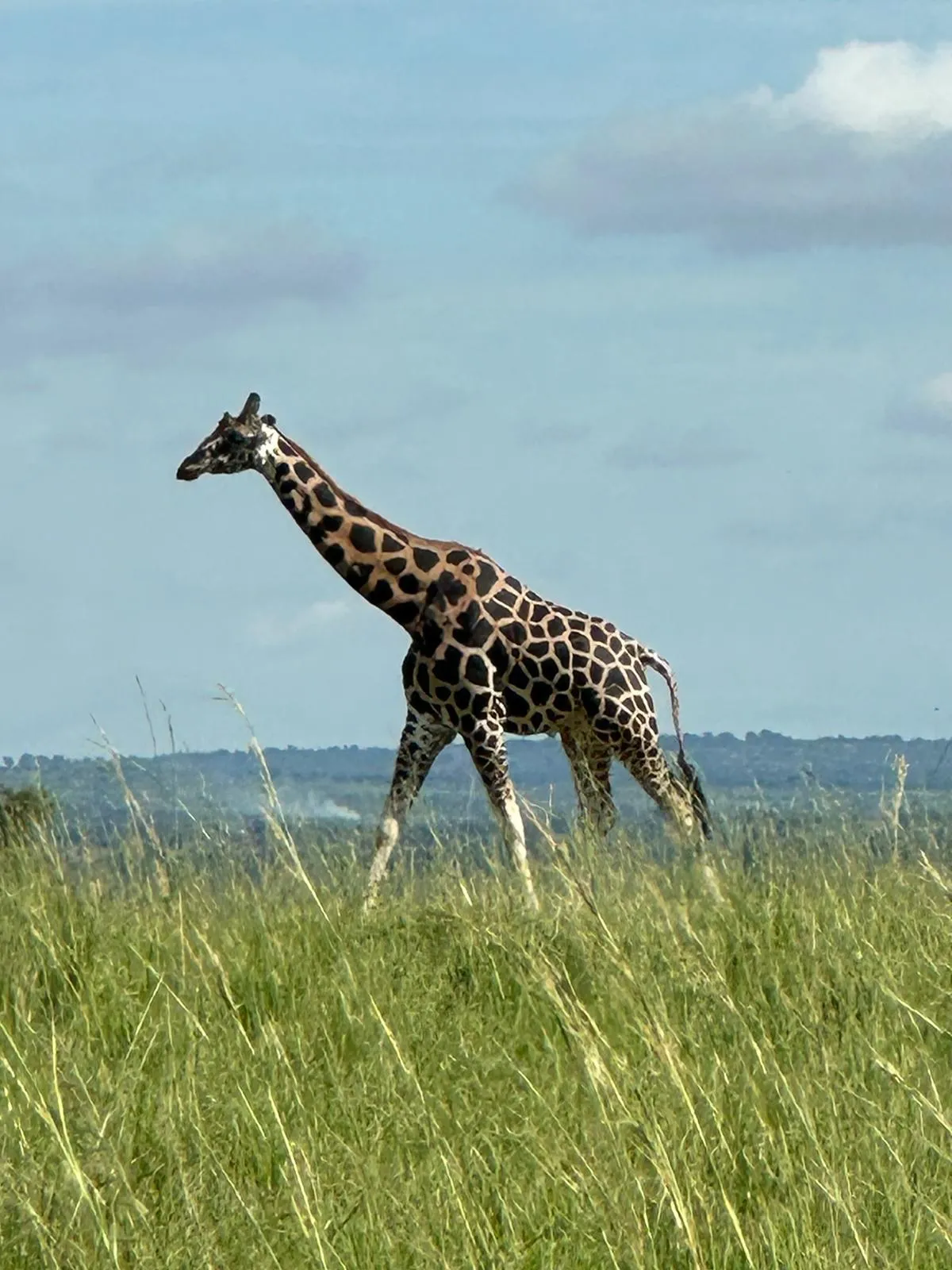
Rothschild giraffe, Murchison Falls National Park, October 2024. One of the rarest giraffe subspecies — found in Uganda and Kenya. Photo: Mark Suer.
The afternoon boat safari on the Nile below the falls is a different kind of wildlife encounter — slow, water-level, close to the bank. Hippos surface a few metres from the hull. We watched a Nile crocodile resting on the sandy shore, massive and motionless. Even from a safe distance on the water, the size of the animal is startling. Crocodiles look smaller in photographs than they do in person.
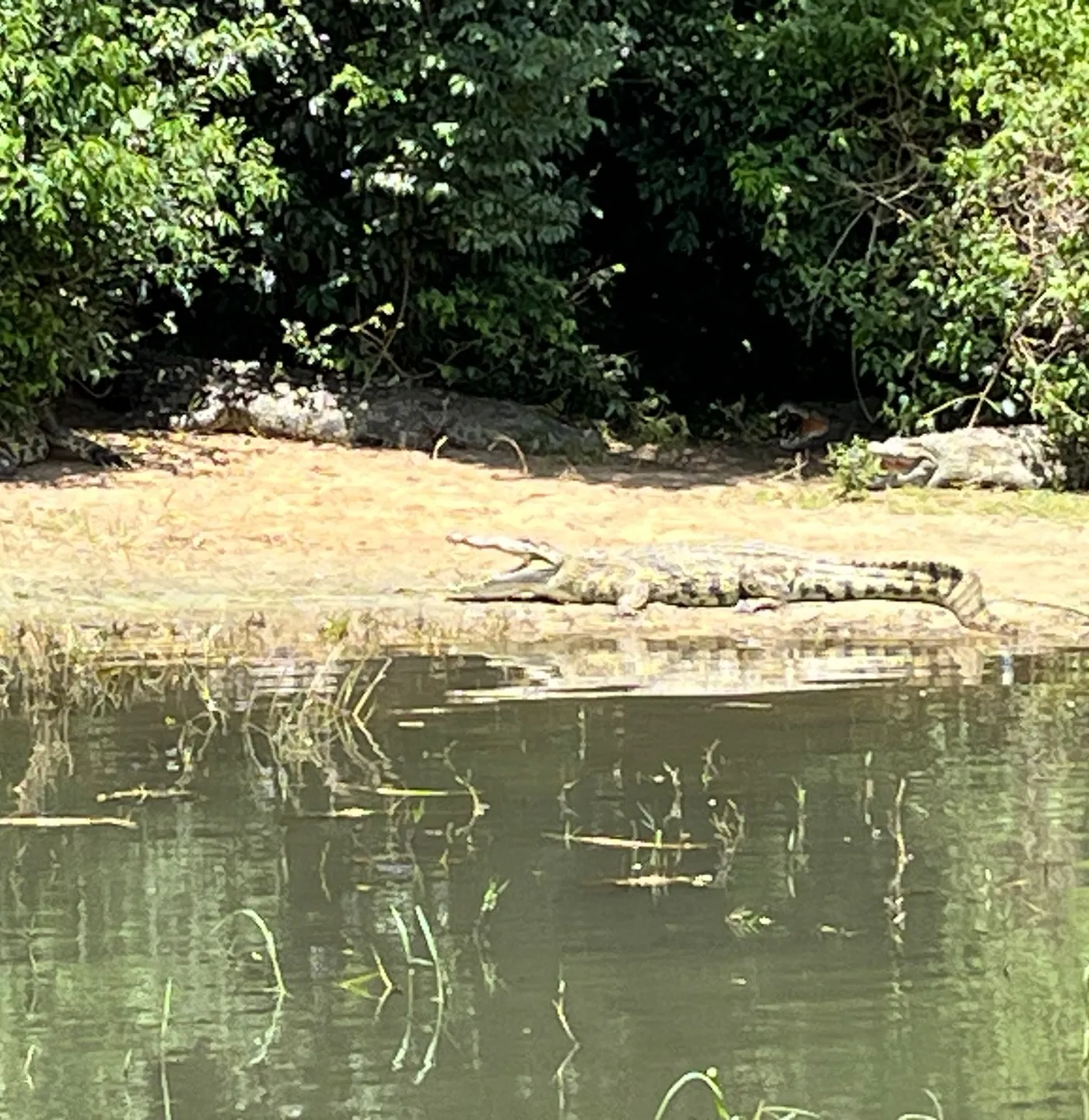
Nile crocodile on the riverbank during the boat safari below Murchison Falls. October 2024. Photo: Mark Suer.
The Rhino — Uganda's Rarest Wildlife Encounter
Uganda's white rhinos were hunted to local extinction by the 1980s. The Ziwa Rhino Sanctuary, established with support from Rhino Fund Uganda and the Uganda Wildlife Authority, has been reintroducing the species since 2005. It is now the only place in Uganda where you can encounter wild white rhinos.
We visited on a guided walk during our October 2024 trip north. The rangers track the rhinos on foot each morning and guide small groups to wherever the animals have settled. We found one alone in a clearing, head down, grazing. The sheer physical scale of a white rhino at close range is genuinely disorienting — it is a very large and heavy animal in a way that photographs do not communicate.
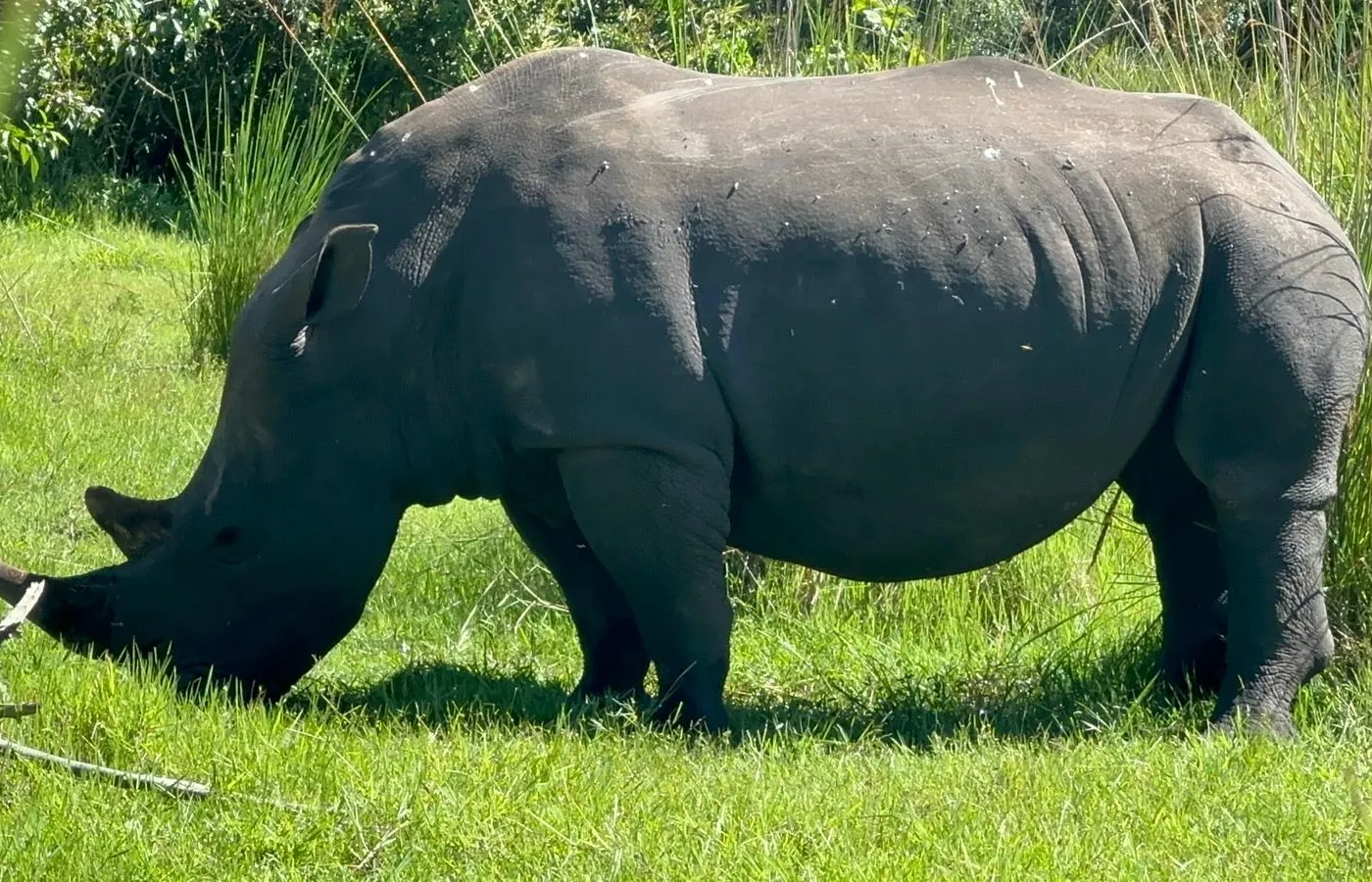
White rhino at Ziwa Rhino Sanctuary — the only place in Uganda where rhinos roam free. October 2024. Photo: Mark Suer.
Planning a Uganda Wildlife Circuit
Uganda's geography makes a combined gorilla-and-safari itinerary more practical than it sounds. Bwindi Impenetrable National Park is in the extreme south-west; Murchison Falls National Park is in the north-west. Both are accessible by road from Kampala, though the drives are long (8–9 hours to Bwindi, 4–5 hours to Murchison).
A workable 12-to-14-day circuit from Kampala could look like this:
- 1
Kampala / Entebbe — 1–2 days
Arrival, optional Lake Victoria day trip
- 2
Ziwa Rhino Sanctuary — Half day en route north
Rhino tracking walk — 2 hours
- 3
Murchison Falls National Park — 2–3 days
Game drive + Nile boat safari + falls hike
- 4
Return south via Kibale Forest — 1 day
Optional: chimpanzee tracking, Fort Portal
- 5
Bwindi / Buhoma sector — 3–4 days
Gorilla trekking + community walks + Buhoma village
- 6
Kisoro / Mgahinga — 2 days
Optional: golden monkey tracking, volcano hike
Buhoma is the natural anchor point for the southern section. The village sits at the park gate, lodge options range from budget to luxury, and the community life around the park makes extra days here worthwhile even without a second gorilla permit. The Gorilla Bluff Lodge's terrace at dawn — coffee, African tea, the hills of Bwindi beyond — is a particular memory from our January 2026 stay.
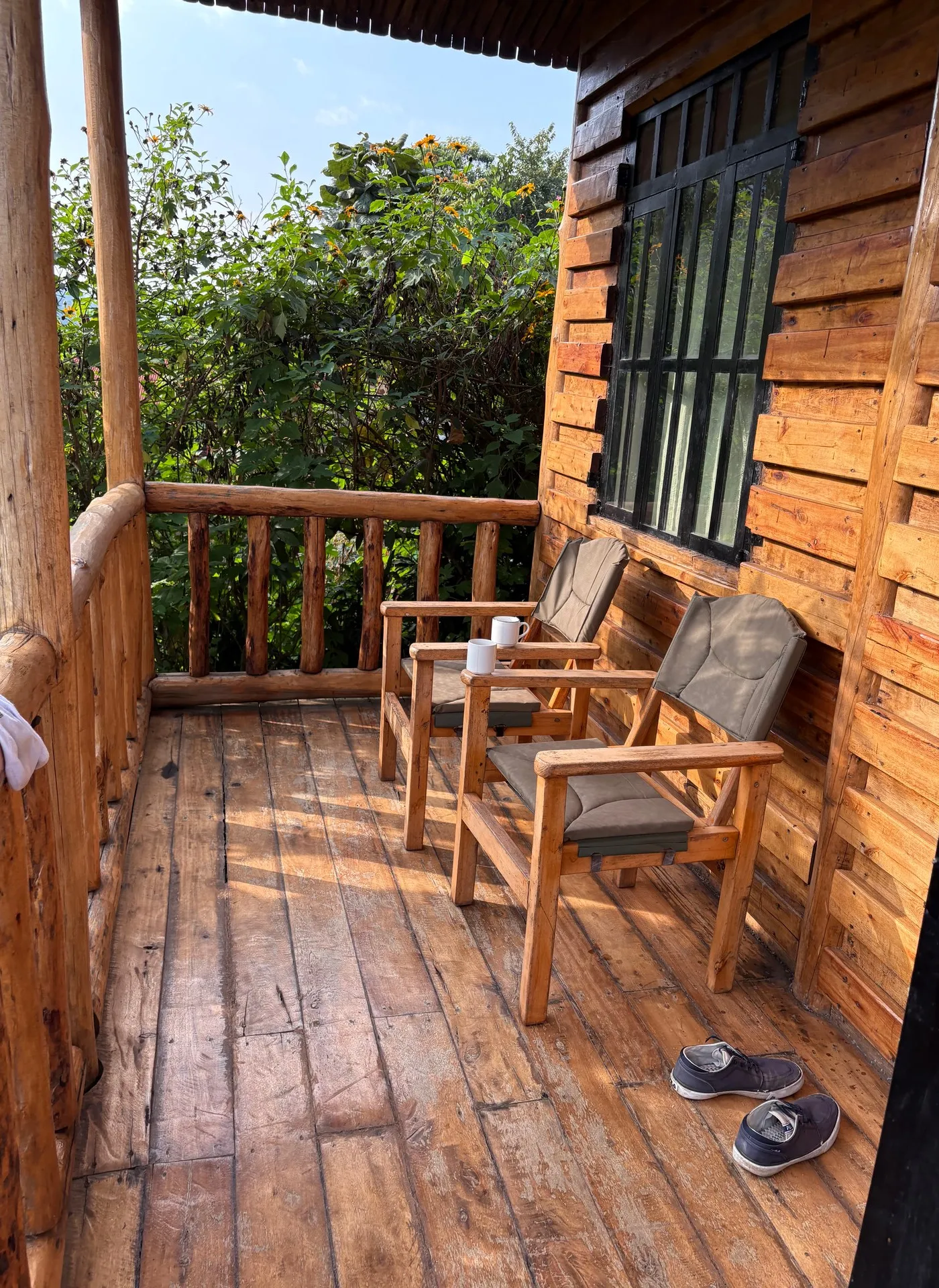
The Gorilla Bluff Lodge terrace, Buhoma — morning coffee before the trek. January 2026. Photo: Mark Suer.
What Makes Uganda Different as a Wildlife Destination
The comparison visitors most often make is with Kenya and Tanzania. Uganda does not have the Serengeti's scale of open plains or the annual wildebeest migration. What it has instead is primate density, forest complexity, and the particular experience of gorilla trekking — which no savanna safari can replicate.
Primate diversity
13 primate species in Bwindi alone. Uganda as a whole has more primate species than any other country in East Africa — including chimpanzees, red colobus, olive baboons, L'Hoest's monkeys and the mountain gorilla.
Compact geography
Unlike a Tanzania or Kenya circuit, Uganda's main wildlife areas are reachable overland without domestic flights. Most serious itineraries can be done in 10 to 14 days from one country.
Gorilla exclusivity
Mountain gorilla trekking is available in only three countries: Uganda, Rwanda and the DRC. Uganda offers the most permits, the lowest price ($800 vs $1,500 in Rwanda), and access to two separate gorilla populations.
The Nile
The White Nile runs through Murchison Falls National Park. The boat safari below the falls is one of the most distinctive wildlife experiences in Africa — and unique to Uganda.
Common Questions
What wildlife can you see in Uganda?
Uganda's wildlife highlights include mountain gorillas (Bwindi, Mgahinga), chimpanzees (Kibale), Rothschild giraffes and Nile crocodiles (Murchison Falls), white rhinos (Ziwa Sanctuary), lions, leopards and hippos (Queen Elizabeth National Park), and golden monkeys (Mgahinga). Over 1,000 bird species have been recorded across the country.
How close can you get to gorillas in Uganda?
The Uganda Wildlife Authority requires a minimum distance of 7 metres at all times. The gorillas move freely and occasionally come closer of their own accord — you step back when they do. The one-hour contact period gives sustained, unobstructed observation.
What is the minimum age for gorilla trekking?
The Uganda Wildlife Authority sets the minimum age at 15 years. This applies to both Bwindi Impenetrable National Park and Mgahinga Gorilla National Park. No exceptions are made.
Can I combine gorilla trekking with a safari in Uganda?
Yes — and it's one of Africa's most rewarding wildlife circuits. A typical route goes from Kampala north to Murchison Falls (game drive + Nile boat safari), south to Bwindi for gorilla trekking, and optionally across to Kisoro/Mgahinga. Most of this can be done overland in 10 to 14 days.
How far in advance should I book a gorilla permit?
Gorilla permits can be booked up to 24 months in advance through the Uganda Wildlife Authority (source: Reiseführer Uganda, 2020). For peak season (June–September, December–February), book 3 to 6 months ahead. Buhoma sector permits sell out earliest.
Plan Your Trek
What to Expect on the Trek
The briefing, the walk, the one hour with a gorilla family — what actually happens on a gorilla trekking day in Bwindi.
Gorilla Permit Guide
How to book an $800 UWA gorilla trekking permit — when to book, how, and what to watch for.
Mountain Gorillas of Bwindi
The biology, behaviour and conservation status of Bwindi's mountain gorilla population — and why the numbers matter.