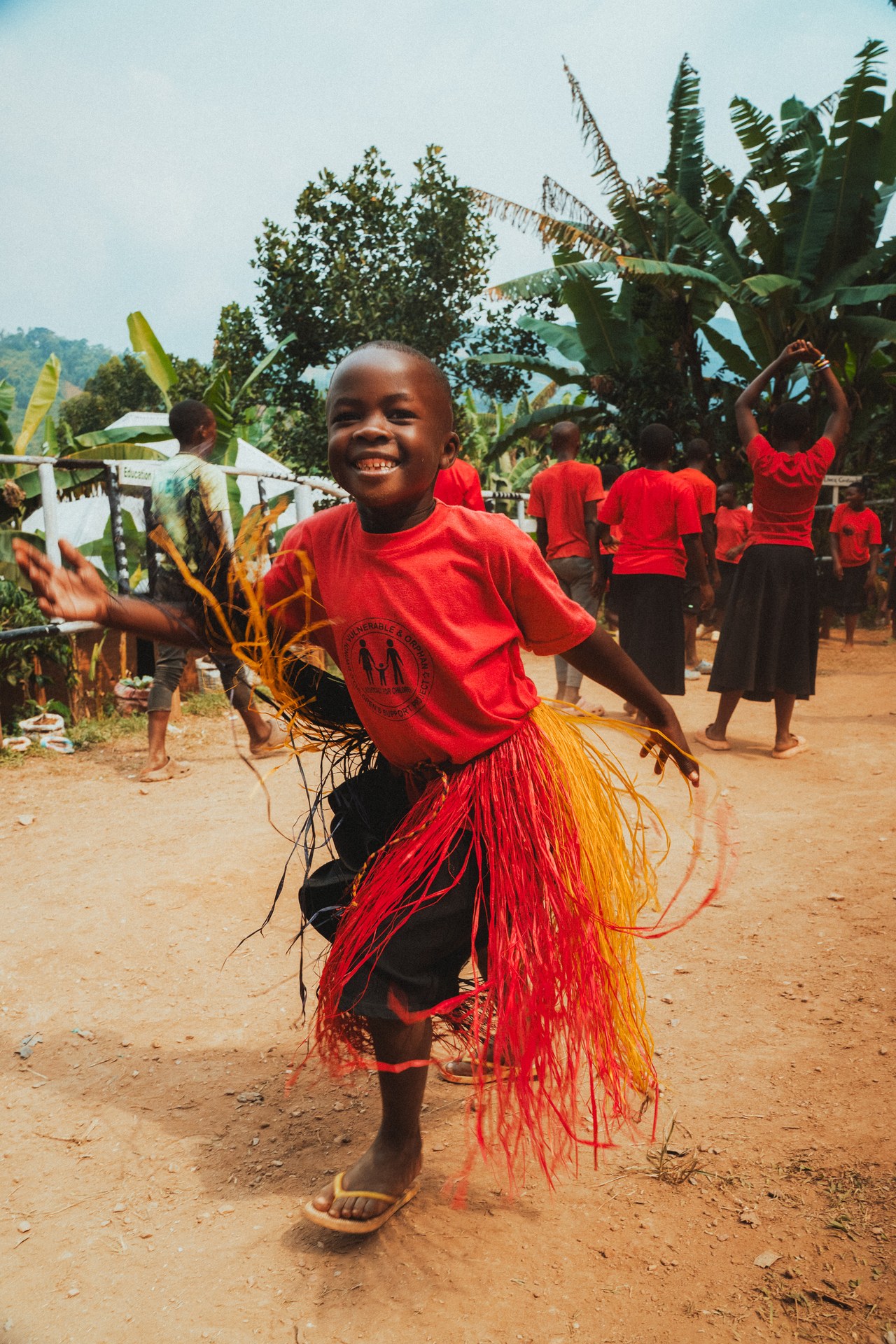
Buhoma's history stretches from the ancient Batwa hunter-gatherers who lived in the Bwindi forest for millennia, through Bakiga agricultural settlement, British colonial forest protection, the creation of Bwindi Impenetrable National Park in 1991, and the launch of gorilla trekking in 1993 — an event that transformed this remote village into a globally recognized conservation destination.
Quick Facts
- Original Inhabitants:
- Batwa (Twa) hunter-gatherers, present for millennia
- Bakiga Settlement:
- Gradual migration over several centuries
- Forest Reserve Status:
- 1932 (under British colonial administration)
- National Park Gazetted:
- 1991 — Bwindi Impenetrable National Park
- UNESCO World Heritage:
- 1994 — inscribed for outstanding biodiversity
- First Gorilla Trekking:
- 1993 — Buhoma sector opened to tourists
- Gorilla Permit Fee (Current):
- $800 USD for foreign non-residents
- Habituated Gorilla Groups:
- Multiple families trackable from Buhoma
The Batwa: Original People of the Forest
Long before the name Buhoma appeared on any map, the Batwa people inhabited the Bwindi forest. As one of Africa's oldest indigenous groups, the Batwa lived as semi-nomadic hunter-gatherers for an estimated 60,000 years. They built temporary shelters from leaves and branches, hunted small game with nets and bows, gathered wild honey, dug for roots, and harvested medicinal plants from the forest floor.
The Batwa had an intimate and sustainable relationship with the forest. Their knowledge of plant species, animal behavior, and seasonal patterns was encyclopedic. They coexisted with the mountain gorillas, whom they regarded with a mixture of respect and avoidance. The forest was not just their home — it was their pharmacy, supermarket, church, and identity.
This way of life, sustained for millennia, came to an abrupt end in 1991. The Batwa's story is inseparable from the history of Buhoma and Bwindi, and it carries painful lessons about the human cost of conservation when indigenous voices are excluded.
Bakiga Settlement and Agricultural Expansion
The Bakiga (meaning "people of the mountains") migrated into the highlands surrounding Bwindi over several centuries. Unlike the Batwa, the Bakiga were settled agriculturalists. They brought with them techniques for terracing steep hillsides, cultivating bananas, beans, sorghum, and millet, and raising livestock.
As Bakiga communities grew, they gradually cleared patches of forest edge to create farmland. The boundary between cultivated land and wild forest shifted over generations, pushing deeper into what is now the national park. This pattern of gradual encroachment was common across the Albertine Rift highlands and set the stage for later conservation conflicts.
By the early twentieth century, the area around Buhoma was a patchwork of Bakiga farms, Batwa forest camps, and dense primeval forest. The two communities existed in an uneasy but functional cohabitation, with the Bakiga dominant in numbers and political power and the Batwa increasingly marginalized.
Colonial Protection: The Bwindi Forest Reserve
In 1932, the British colonial administration in Uganda designated the Bwindi forest as a Crown Forest Reserve. The primary motivation was to protect the forest's watershed functions and timber resources rather than wildlife conservation in the modern sense. Nonetheless, this designation placed the first formal restrictions on forest clearance and settlement.
Under the forest reserve system, the Batwa were officially allowed to continue living inside the forest, though their rights were poorly defined and increasingly curtailed. Bakiga farmers along the forest edge were prohibited from further encroachment. Colonial forest guards patrolled to enforce boundaries, sometimes with harsh methods.
After Uganda's independence in 1962, the forest reserve status was maintained, but enforcement fluctuated with political instability. During the turbulent years of the Idi Amin regime (1971–1979) and the subsequent civil conflicts, poaching and illegal logging increased. The mountain gorillas, largely unknown to science until the mid-twentieth century, were particularly vulnerable.
The Discovery of Bwindi's Mountain Gorillas
Mountain gorillas were first scientifically described in 1902 from specimens collected in the Virunga volcanoes to the south. Bwindi's gorilla population, separated from the Virunga groups by about 25 kilometers of farmland, was recognized as a distinct population only after systematic surveys in the 1950s and 1960s.
Researchers discovered that the Bwindi gorillas differed in several ways from their Virunga relatives — they lived at lower elevations, in a denser forest, and showed behavioral and genetic variations that made their conservation critically important. By the late 1980s, as mountain gorilla numbers dropped to an alarming low across all habitats, international attention turned urgently to Bwindi.
The combination of a globally endangered species, an ancient and biodiverse forest, and growing international conservation momentum created the conditions for Bwindi's transformation from a little-known forest reserve to one of Africa's most important protected areas.
1991: The Birth of Bwindi Impenetrable National Park
In 1991, the Government of Uganda officially gazetted the Bwindi Impenetrable Forest as a national park. This was a watershed moment — it elevated the forest's protection to the highest level under Ugandan law and opened the door for international support and tourism development.
The decision, however, came at a significant human cost. The Batwa were evicted from the forest, losing not only their physical home but their entire way of life. Bakiga farmers along the forest boundary lost access to resources they had traditionally harvested — firewood, building poles, medicinal plants, and honey. The resentment was deep and real.
Uganda Wildlife Authority (UWA), with support from international conservation organizations, recognized that the park's long-term survival depended on winning community support. This realization led to pioneering revenue-sharing and community conservation programs that would become models for protected areas across Africa.
1993: Gorilla Trekking Begins in Buhoma
The Mubare gorilla group, ranging near the northern boundary of the park close to Buhoma, was the first family to be fully habituated for tourism. Habituation is a painstaking process that takes two to three years of daily, patient contact by trained trackers until the gorillas accept the presence of humans without alarm or aggression.
In 1993, the first paying tourists trekked into the forest from Buhoma to visit the Mubare group. Those early treks were rudimentary by today's standards — trails were rough, infrastructure was minimal, and the experience was genuinely pioneering. But the encounters were transformative for everyone involved, and word spread quickly among the global travel community.
Initial permit fees were modest, but as demand grew and Uganda refined its tourism model, prices rose. Today, a gorilla trekking permit costs $800 USD for foreign non-residents. The revenue generated has been crucial for funding park management, anti-poaching patrols, gorilla veterinary care, and community development.
UNESCO Recognition and Tourism Growth
In 1994, just one year after tourism began, Bwindi Impenetrable National Park was inscribed as a UNESCO World Heritage Site. The citation recognized the park's outstanding universal value for its biological diversity, including over 400 plant species, 350 bird species, and critically, nearly half the world's remaining mountain gorillas.
The UNESCO designation brought international prestige and attention. More gorilla groups were habituated in additional sectors — Ruhija, Rushaga, and Nkuringo — but Buhoma remained the flagship. The village grew organically: the first permanent lodges were built, local guides were trained, craft cooperatives formed, and a tourism economy took root.
Through the 2000s and 2010s, gorilla trekking became Uganda's top tourism earner. Buhoma, once reachable only by rough tracks, gained improved road connections. By the time the COVID-19 pandemic temporarily halted international travel in 2020, Buhoma had become a well-established destination welcoming thousands of visitors each year.
Buhoma Today and Looking Forward
The COVID-19 pandemic exposed Buhoma's dependence on international tourism. When visitors stopped coming, the economic impact on lodges, guides, porters, and craft sellers was severe. The experience reinforced the importance of diversifying the local economy and building resilience.
Today, Buhoma is recovering and evolving. There is growing emphasis on community-based tourism experiences that spread benefits more widely, on sustainable practices at lodges, and on ensuring that the Batwa community shares meaningfully in tourism opportunities. The gorilla population continues to grow — now exceeding 1,000 individuals across all habitats — validating the conservation model.
Buhoma's history is a story of transformation: from ancient forest to farmland frontier, from colonial outpost to conservation landmark, from a village that resented the park to one that proudly protects it. It is also an ongoing story, with new chapters being written by every community member, every ranger, and every visitor who walks the forest trails.
Frequently Asked Questions
Explore More

About Buhoma
Location, people, climate, infrastructure, and daily life in Buhoma today.

Community and Conservation
How tourism revenue funds schools, health centers, and forest protection around Bwindi.
Gorilla Trekking
Complete guide to tracking mountain gorillas from Buhoma sector.
Tourism in Buhoma
All the experiences, activities, and adventures awaiting visitors.
Wildlife of Bwindi
Gorillas, primates, birds, and the extraordinary biodiversity of the forest.
Travel Guide
Practical information for planning your trip to Buhoma.