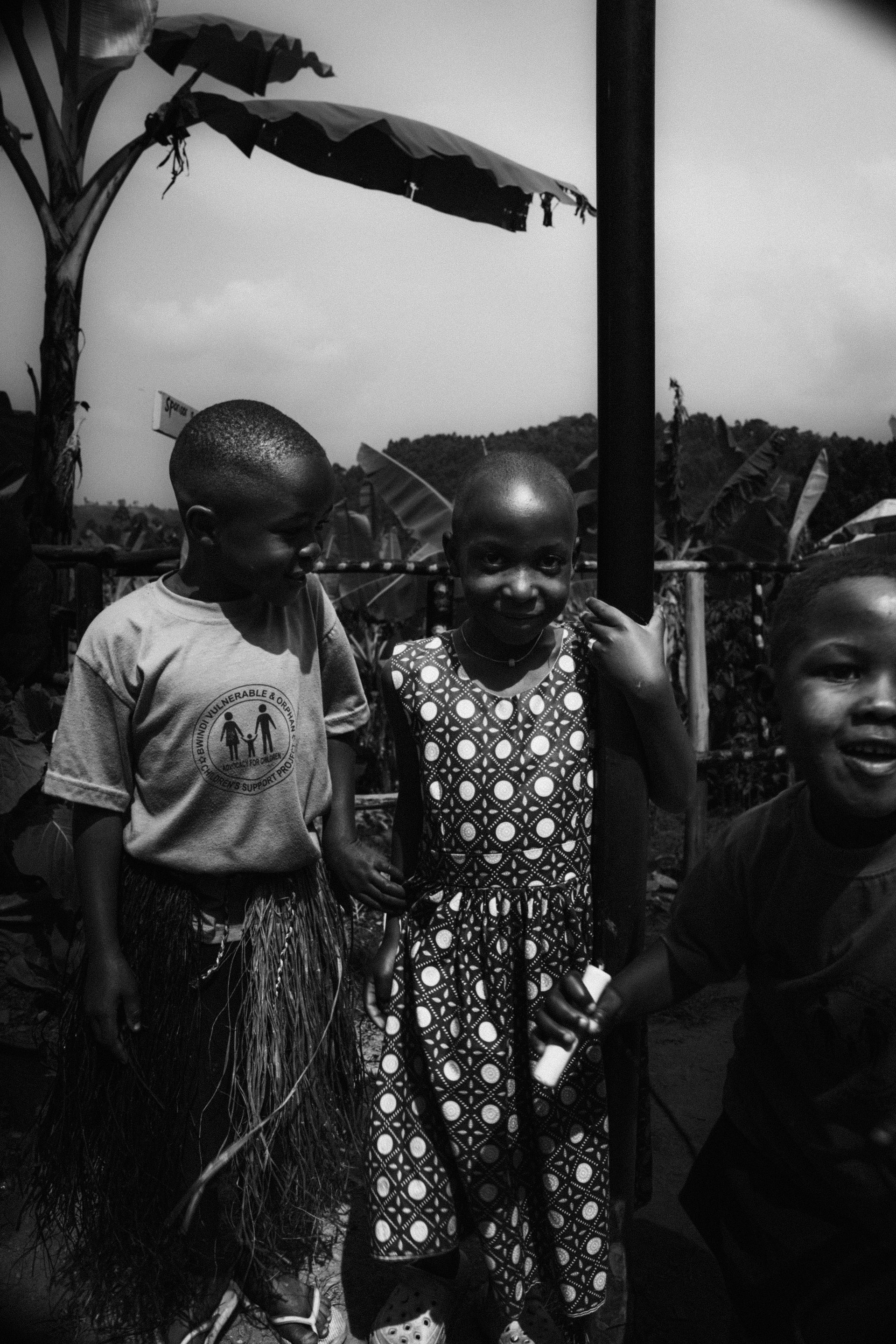
Human-wildlife conflict in Uganda occurs when wildlife damages crops, kills livestock, or threatens human safety — and communities respond, sometimes lethally. Near Bwindi Impenetrable National Park, where mountain gorillas share a boundary with densely farmed land, managing this tension is one of the most critical conservation challenges in East Africa. Community-based livelihood projects, revenue sharing from gorilla trekking permits, and livestock protection programmes are among the most effective tools reducing retaliatory killings.
Quick Facts
- Key conflict species:
- Leopard, elephant, chimpanzee, baboon, gorilla
- Primary damages:
- Crop raiding, livestock predation
- National framework:
- Uganda Large Carnivore Action Plan 2024-2034
- Revenue sharing:
- 20% of park entry fees to adjacent communities
- Gorilla permit price:
- USD 800 per person (standard)
- Author visits:
- October 2024, January 2026, June 2026
- Photo location (GPS):
- Buhoma, -0.9713, 29.6142 (verified)
- Uganda population:
- Approx. 46 million
Where Wildlife and People Share the Same Edge
On the morning of 21 June 2026, I walked along a narrow dirt path outside Buhoma village to visit a local poultry farmer. The GPS coordinates — approximately -0.9713, 29.6142 — placed us well within the buffer zone between the park boundary and the nearest homesteads. It is a strip of land no wider than a few hundred metres in places, and it tells you everything about why human-wildlife conflict persists here. On one side: Bwindi Impenetrable National Park, one of the most biodiverse patches of tropical forest remaining on Earth. On the other: small farms, cooking fires, children walking to school, goats tethered to wooden stakes.
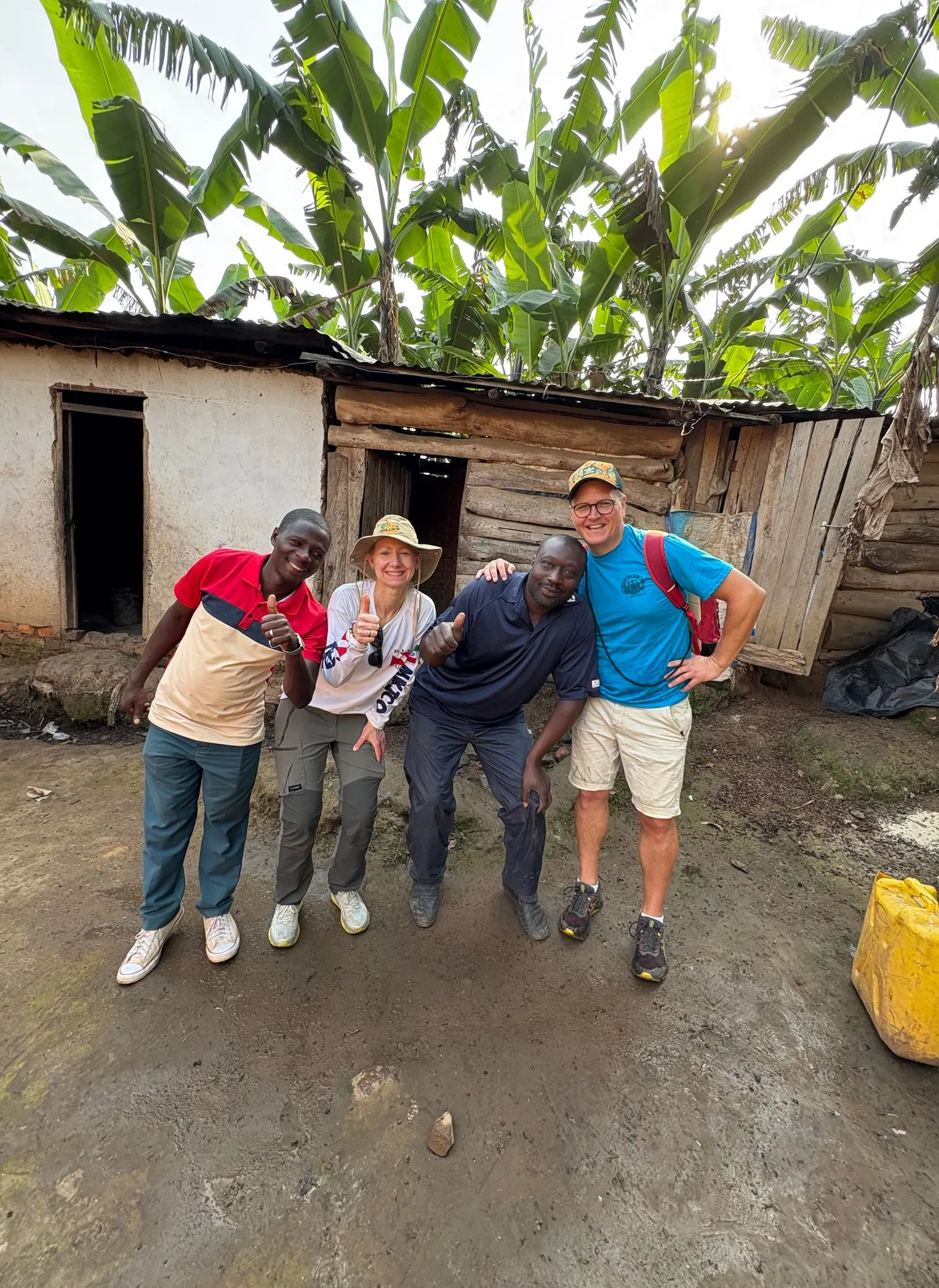
The farmer we visited that morning was proud of what he had built. He kept his chicks in clean, dry conditions, handled them carefully, and could speak knowledgeably about feed ratios and egg yields. We had purchased chickens from him on multiple occasions for the nearby orphanage — sometimes for eggs, sometimes for meat, though he noted with quiet satisfaction that chicken on the table was always treated as something of a celebration. What struck me most was not the enterprise itself but what it represented: a family generating sustainable income within the village, reducing the economic pressure that pushes people into conflict with the park.
Uganda is home to extraordinary wildlife diversity — more than 1,100 bird species, several dozen mammal species including all of Africa's great apes, and some of the continent's last intact montane rainforest. But that biodiversity does not exist in isolation. It exists inside and around a country of approximately 46 million people, most of whom depend on smallholder agriculture for food and income. Where forest meets farm, conflict is almost inevitable without deliberate and sustained intervention.
The Economics of Conflict: Why Communities Retaliate
To understand retaliatory killings, you have to understand what a single night of crop raiding actually costs a subsistence farming family. An elephant moving through a maize field does not take a single cob — it flattens an entire section. Baboons move in groups and strip gardens methodically. A leopard that takes a goat may not sound like a catastrophe in the abstract, but for a household where three goats represent several months of savings and a year's school fees, the loss is devastating.
In that context, the impulse to retaliate is not irrational — it is a response to real economic pain. Poisoning a predator, setting wire snares, or shooting an animal that has repeatedly targeted a family's livelihood can feel like the only available tool when formal compensation mechanisms are slow, underfunded, or simply inaccessible. Uganda has worked to strengthen its legal framework through instruments like the Uganda Wildlife Regulations, which set out penalties for wildlife crimes, but enforcement in remote areas like the Bwindi corridor remains genuinely difficult.
The large carnivore action plan framework running through 2034 reflects an understanding at the national level that enforcement alone cannot resolve this tension. Leopards and other predators continue to be killed in retaliatory incidents across Uganda, and the same dynamic plays out at smaller scale in the Bwindi region, where chimpanzees and baboons are the more common crop raiders. Mountain gorillas themselves occasionally enter farms near the forest edge, but their encounters with humans tend to be less frequent than those involving smaller primates or mid-sized carnivores.
Community-Based Solutions: From Conflict to Coexistence
The shift from conflict to coexistence rarely happens through a single intervention. What field experience across East Africa consistently demonstrates is that durable solutions require communities to have a material stake in wildlife survival. If the mountain gorilla is worth more alive — through tourism income, employment, and community projects — than dead or displaced, then communities become allies of conservation rather than adversaries.
Uganda Wildlife Authority distributes a portion of park entry revenues directly to communities adjacent to national parks. Around Bwindi, this mechanism has funded schools, health centres, and infrastructure in villages that border the forest. The logic is straightforward: if gorilla trekking generates income that flows back into the community, then protecting the gorillas becomes a shared interest. Standard gorilla trekking permits are priced at USD 800 per person, with the premium Gorilla Habituation Experience costing USD 1,500. A single permit sale generates revenue that, through the sharing mechanism, reaches the communities whose cooperation makes conservation viable.
Beyond revenue sharing, livestock protection programmes have proven effective in reducing retaliatory predator killings. Predator-proof enclosures — reinforced bomas built to keep carnivores out at night — remove the trigger event that leads to retaliation. Community ranger schemes, where local residents are employed as conservation monitors, create a further alignment of incentives: a community member drawing a wage from wildlife protection has a direct financial reason to report snares and discourage illegal activity rather than participate in it.
Sustainable livelihood projects of the kind operating in Buhoma address a different dimension of the same problem. Families with diversified income sources — poultry enterprises, vegetable gardens, small manufacturing — are less exposed to the catastrophic impact of a single crop-raiding event. They are better placed to absorb a loss without feeling that lethal retaliation is their only recourse.
On the Ground in Buhoma: What Local Projects Actually Look Like
During my June 2026 visit, the chicken farmer we worked with was operating at a scale typical of Buhoma's small rural enterprises. He was not supplying supermarkets or export markets — he was supplying the village, the orphanage, and a handful of guesthouses. That scale matters. It means income stays local, skills transfer through direct contact, and the model can be replicated by neighbouring families without requiring substantial capital or formal training infrastructure.
The orphanage project works on a similar principle. Chicks purchased from local farmers are raised on-site. Some hens are kept for eggs that supplement the children's diet directly. Others are sold when market prices are favourable, generating cash that covers school materials or medical costs. On the days when meat appears on the table, it is genuinely celebratory — a marker of how rarely protein reaches the plates of children living in difficult circumstances. I have seen this firsthand across multiple visits: October 2024, January 2026, and again in June 2026.
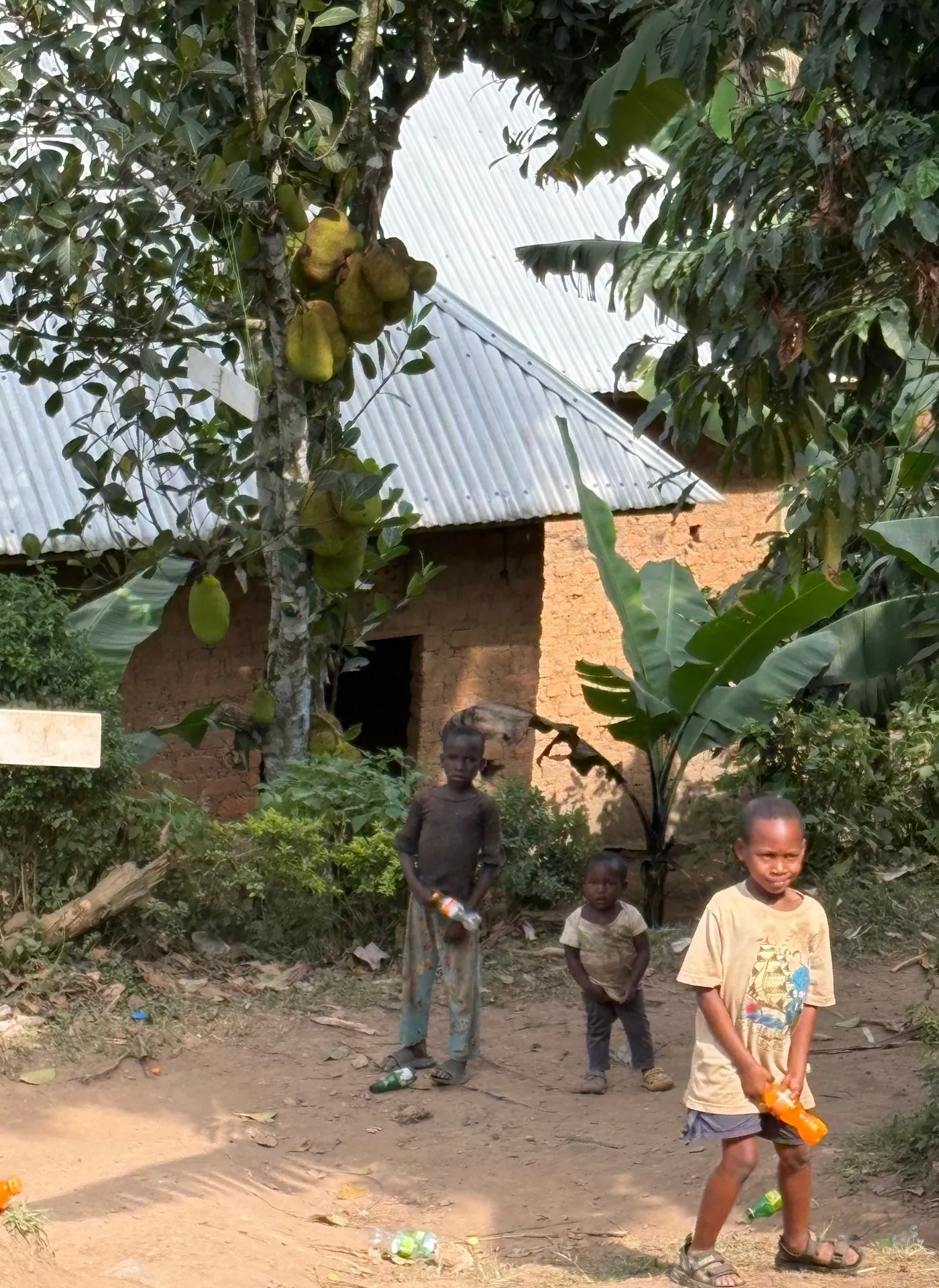
During that June morning, we also encountered three children from the surrounding neighbourhood who had come to the orphanage. They were shy, their clothing worn. They did not look well-nourished. We invited them to eat with us — not as a grand gesture but as the ordinary, immediate response that the situation called for. That moment encapsulates something important about human-wildlife conflict that rarely surfaces in policy documents: the problem is not abstract. It is children and families under economic pressure, living metres from a protected forest, making decisions daily about how to survive.
Conservation cannot be separated from that context. In Buhoma and the communities around Bwindi's southern sector, the most effective wildlife protection work is the work that makes people's lives more secure — not by lecturing families about biodiversity values, but by building the kind of economic stability that makes retaliatory killing an unnecessary and unaffordable risk.
What This Means for Gorilla Trekking Visitors
Visitors who travel to Buhoma to trek mountain gorillas are, almost without realising it, participants in this wider system. The USD 800 permit fee is not simply an entry charge for an extraordinary experience — it is one of the primary financial mechanisms sustaining both the gorilla population and the communities that live alongside it. That fee, combined with taxes and employment generated by lodges and guiding services in Buhoma, represents a substantial economic argument for keeping the forest intact and the gorillas habituated and protected.
Choosing a community-owned lodge, purchasing crafts from local cooperatives, or arranging a guided village walk with a community guide are not incidental tourism extras. They are additional inputs into the economic logic that makes coexistence possible. The gorillas of Bwindi survive in part because there are enough people in the surrounding villages for whom the gorillas — alive, habituated, and trackable — represent greater value than any alternative use of the land they occupy.
Uganda's approach to this challenge has evolved considerably over the past three decades. The country now has one of the more developed community conservation frameworks in East Africa, with formal revenue sharing mechanisms, employment pathways in conservation, and an active large carnivore management strategy extending through 2034. None of this eliminates conflict entirely — the pressures of population growth, land scarcity, and variable rainfall continue to push wildlife and people into contact — but it has shifted the baseline meaningfully in favour of coexistence. For any visitor arriving in Buhoma, understanding this context transforms the trekking experience from a single extraordinary hour into a window onto one of conservation's most important ongoing experiments.