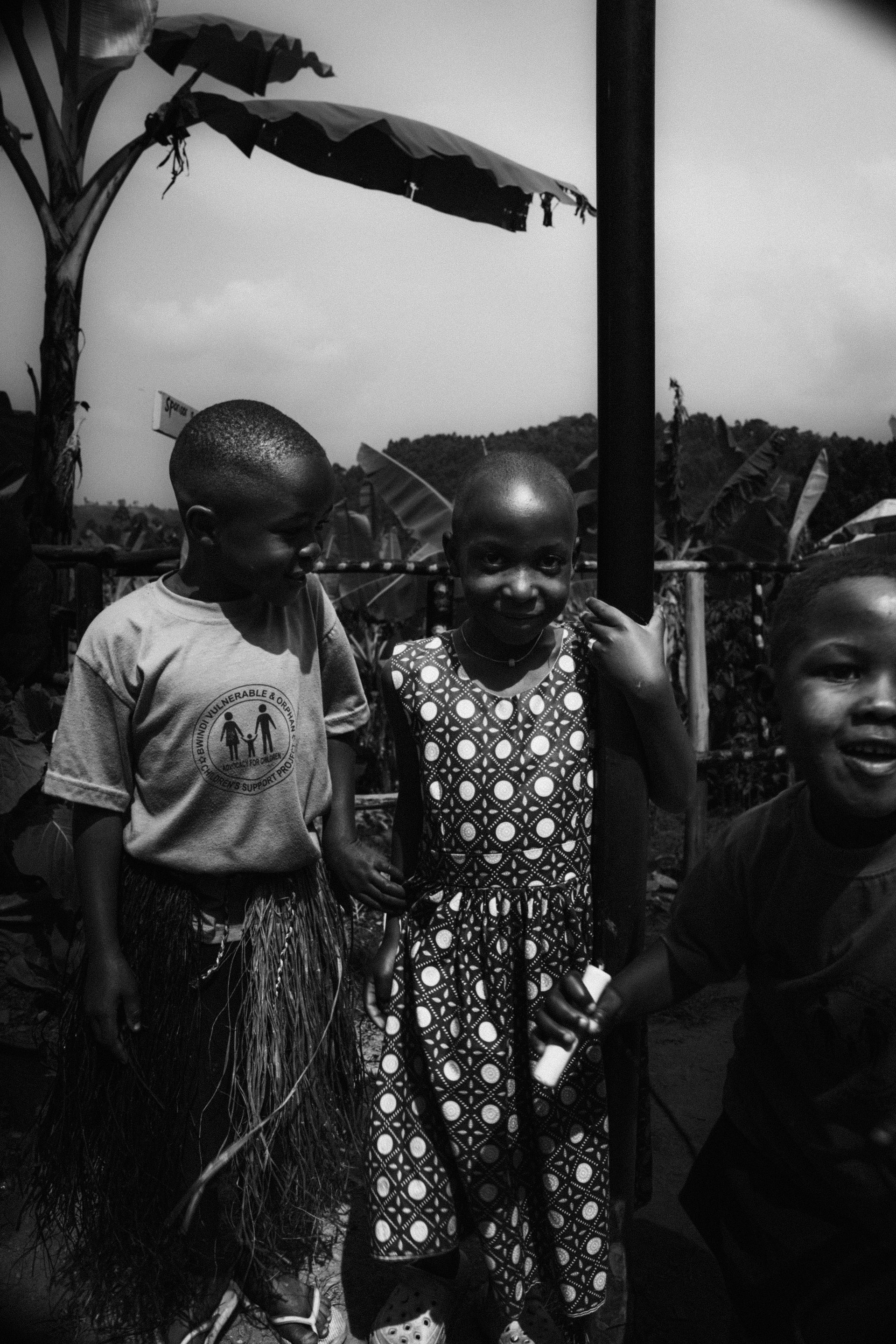
A standard gorilla trekking permit in Uganda costs USD 800 per person. The premium Gorilla Habituation Experience (GHE), which allows up to four hours with a semi-habituated family, costs USD 1,500. Permits are issued by the Uganda Wildlife Authority and must be booked in advance. Buhoma, in the northern sector of Bwindi Impenetrable National Park, is the most established starting point for buhoma gorilla trekking.
Quick Facts
- Standard permit price:
- USD 800 per person
- GHE permit price:
- USD 1,500 per person
- Issued by:
- Uganda Wildlife Authority (UWA)
- Valid for:
- One trekking session (one gorilla family)
- Time with gorillas:
- 1 hour (standard); up to 4 hours (GHE)
- Maximum group size:
- 8 visitors per family per day
- Minimum age:
- 15 years
- Best sector for first visits:
- Buhoma, Bwindi Impenetrable NP
- Author's visit:
- June 2026 (GPS: -0.9665, 29.6125)
On a warm June morning in 2026, we drove a few kilometres from the centre of Buhoma to visit a local chicken farmer the orphanage had been working with for some time. He walked us through his operation with evident pride — small pens, clean water, attentive feeding schedules. The chicks were healthy. We had bought hatchlings from him on previous visits; some grew into laying hens, others into meat birds that fed the children at the Buhoma orphanage. It was a small transaction with an outsized impact, and it captured something essential about Buhoma: this is a community where the gorillas in the forest and the people in the village are part of the same story.
I was in Buhoma on 21 June 2026, with GPS coordinates logged at -0.9713, 29.6142 during that farm visit and at -0.9617, 29.6109 later in the day when we met children from the neighbourhood of the orphanage. It was my third trip to Bwindi — earlier visits in January 2026 filled in gaps I had left from previous seasons. This guide on gorilla permit costs for Uganda is written from those accumulated days in the field, not from a desk.
Buhoma gorilla trekking is one of the most sought-after wildlife experiences in East Africa. The permit price reflects that status. Here is exactly what you need to know — what it costs, why it costs that, how to book, and what happens on the day.
What a Uganda Gorilla Permit Actually Costs
The Uganda Wildlife Authority sets the gorilla permit price at USD 800 per person for the standard trekking experience. This grants you access to one of Bwindi's habituated gorilla families for a tracked session that culminates in a one-hour encounter once the family is located. The price is uniform across all four trekking sectors — Buhoma, Ruhija, Rushaga, and Nkuringo — and applies to foreign nationals regardless of where the permit is purchased.
A separate permit tier exists for the Gorilla Habituation Experience (GHE), which costs USD 1,500 per person. The GHE is available only in Rushaga sector and involves accompanying researchers and rangers as they spend time with a semi-habituated gorilla family — one that is still adjusting to human presence. The interaction time is up to four hours rather than one, and the experience is significantly more raw and unpredictable. For first-time visitors, the standard USD 800 permit in Buhoma is generally the better starting point.
It is worth stating clearly what the permit does not cover. Transport to the park, accommodation, ranger tips (customarily USD 20–30 per guide plus USD 10–20 per ranger), a porter fee if you choose to hire one, and park entry fees are all separate costs. Accommodation in Buhoma ranges from basic community guesthouses to mid-range lodges positioned at the forest edge. Budget travellers can manage a night in Buhoma for under USD 50; a mid-range lodge runs USD 150–250 per person per night including meals.
Citizens of Uganda, Rwanda, and other East African Community member states pay a significantly lower permit fee — a local pricing structure intended to make the national parks accessible to the region's own residents. If you hold an EAC passport, ask the UWA directly for the current resident rate.
Why Gorilla Permits Cost USD 800 — The Conservation Case
The permit price is not arbitrary. Uganda's mountain gorillas — a distinct subspecies found only in Bwindi Impenetrable National Park and the Virunga Massif shared with Rwanda and DR Congo — numbered approximately 459 individuals across the Ugandan range in the period 2018 to 2020. That figure places the entire population at a scale where a single disease outbreak or sustained poaching pressure could cause measurable and permanent damage.
Revenue from gorilla permits funds ranger salaries and patrol equipment, veterinary support for gorilla health monitoring, anti-poaching operations, and the habituation research that makes trekking possible in the first place. A gorilla family does not simply accept human proximity by default. Habituation is a multi-year process in which researchers and rangers spend progressive hours in the family's presence, at increasing closeness, until the gorillas treat human observers as neutral background. That process requires sustained staffing and field time before a single paying visitor ever arrives.
Beyond direct conservation, a portion of UWA revenue is channelled back into communities surrounding the park. Buhoma has benefited from this in concrete ways — school construction, health facility improvements, and small enterprise support. The chicken farmer we visited in June 2026 operates partly within a supply chain that connects to the orphanage, itself embedded in a web of community relationships that gorilla tourism revenue helps sustain. The USD 800 you pay for a permit travels further than the park gate.
How to Book a Gorilla Permit for Buhoma Trekking
Booking a gorilla permit is straightforward in principle but requires advance planning. Buhoma sector allocates a fixed number of permits per day across the gorilla families that have been habituated in the northern part of Bwindi. During peak season — June through September and December through January — those slots fill months in advance. If you are planning a trip around the June dry season, as I did in 2026, aim to have your permits confirmed at least three months before travel.
There are two routes to securing a permit. The first is to book directly through the Uganda Wildlife Authority, either at their Kampala office or through the UWA online portal. Direct booking requires upfront payment in full and gives you a permit document that you present at the Buhoma trailhead. The second route is to use a licensed tour operator, who handles the permit booking as part of a broader safari package. Operators often have pre-purchased permit allocations for peak dates, which can make last-minute planning more feasible — though at a premium.
When booking, you will select a date and a sector. You are not guaranteed a specific gorilla family in advance; assignment happens the morning of the trek, typically when all permit holders have gathered at the briefing point at Buhoma UWA headquarters. Factors such as group size, fitness level, and recent family location are taken into account when rangers make assignments.
Permits are non-refundable in the event of a no-show. If a trek is cancelled by UWA due to ranger safety concerns or genuine emergency conditions, rescheduling or refund options are available, but this is handled case by case. Travel insurance that covers gorilla permit costs is worth considering for any significant trip investment.
What Happens on the Day of Your Buhoma Gorilla Trek
Trekking in Buhoma begins early. The UWA briefing at the trailhead typically starts at 07:30, and groups are expected to be present beforehand. The briefing covers health protocols — you must maintain a minimum distance of seven metres from the gorillas at all times, and if you are visibly unwell with a respiratory illness, you will not be permitted to proceed — as well as behaviour guidelines and photography rules.
After the briefing, tracker-ranger teams who have been in the forest since before dawn radio in the family's current position. Your group — a maximum of eight visitors plus assigned rangers and a guide — sets off from the trailhead. In Buhoma, the terrain is generally steep and forested. Trails are not paved; you are walking through primary rainforest on paths that wet-season rain has turned to mud. Gaiters, good waterproof boots, and a light rain layer are not optional extras — they are core kit.
Trek duration varies enormously. On days when the trackers find the family close to the forest edge, you may reach the gorillas within 45 minutes. On other days, the family may have moved deeper into the forest overnight, and a three-hour or even longer approach becomes necessary. Buhoma's families have been habituated for decades and their ranges are well understood, so extreme outlier situations are uncommon, but physical fitness makes a real difference to the quality of the experience. If you have any knee or back concerns, hire a porter — they also double as physical support and local employment.
The one-hour encounter itself is timed from the moment the lead ranger signals that the gorillas are visible and at rest. Photography is allowed without flash. The silverback may move toward the group, which is normal — rangers will direct you to crouch, avoid direct eye contact, and stay together. Do not run. These animals are habituated to human presence but they are not tame, and the protocol exists for good reason. The hour passes with a speed that surprises almost everyone who has done it.
Buhoma, the Community, and Why the Gorillas Matter to Both
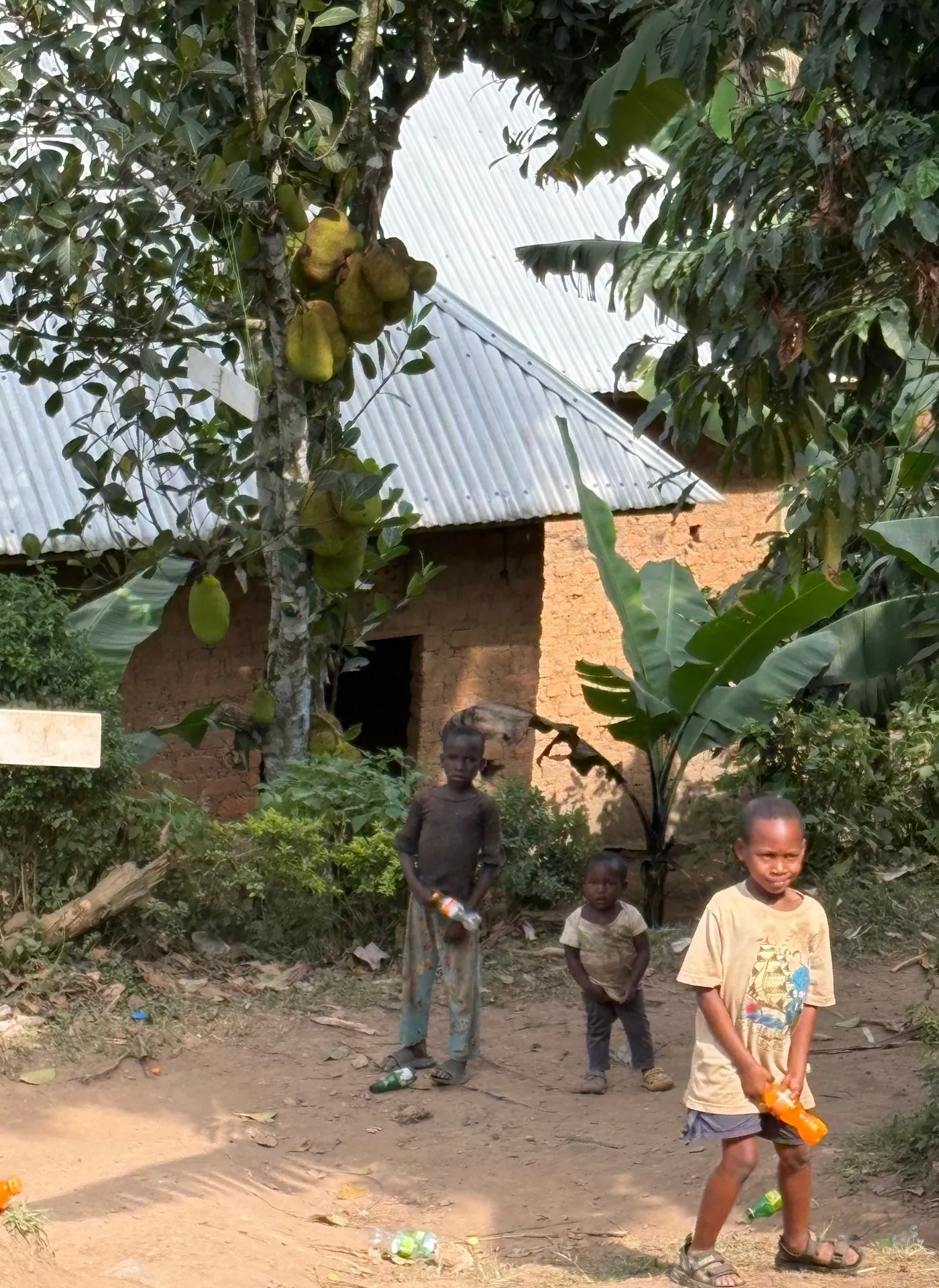
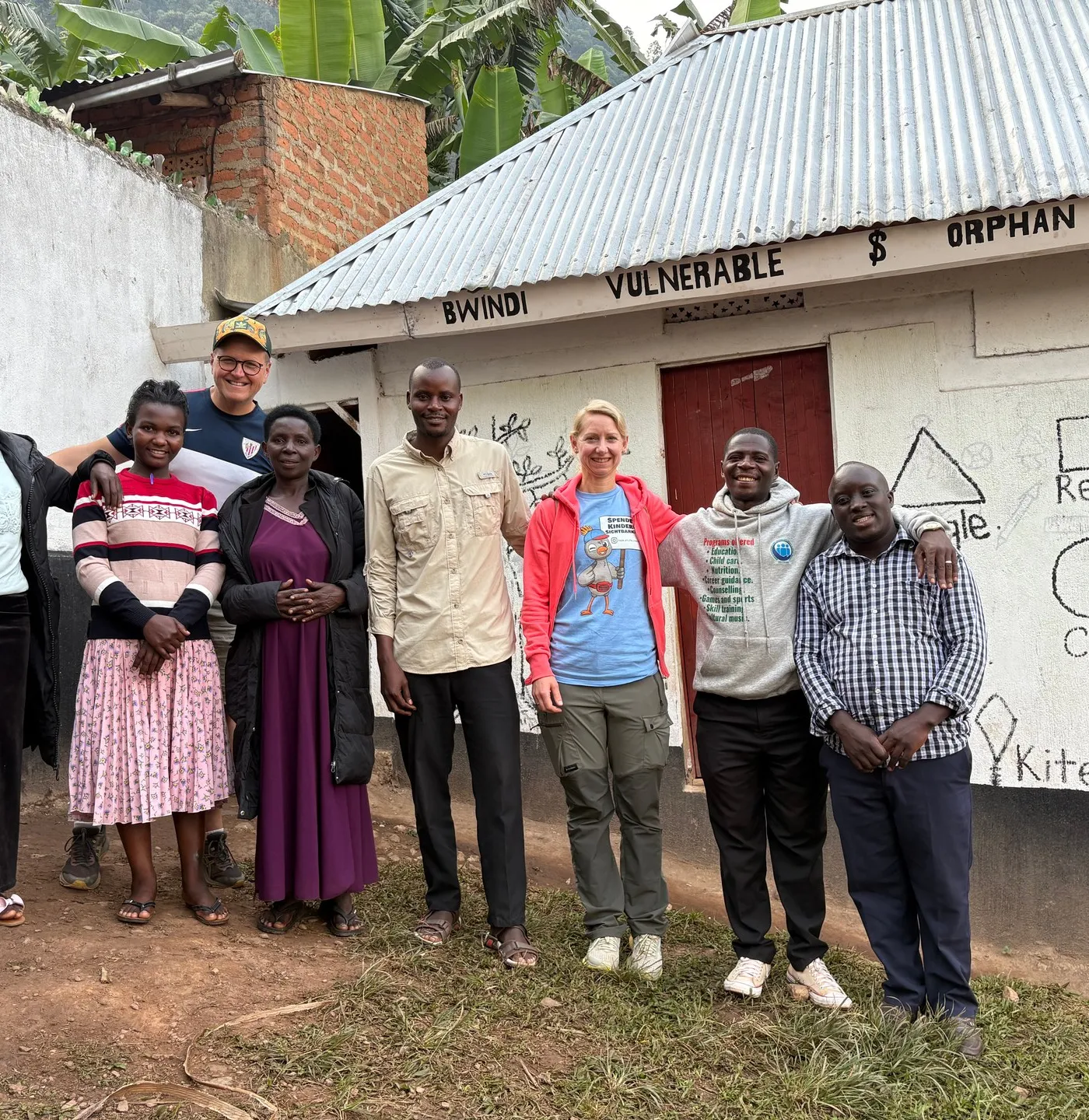
Buhoma is more than an access point for gorilla trekking. It is a village with its own internal logic — farmers, traders, teachers, a clinic, an orphanage, guesthouses run by local families. During my visits in January and June 2026, I spent time away from the lodge circuit, in the parts of the village that most trekkers never see. The children we met near the orphanage on 21 June — some of them shy, some poorly dressed, all of them curious — illustrated something the permit-and-trekking literature rarely addresses: the distance between the USD 800 experience at the forest edge and the daily life of the people who live in its shadow.
That distance is not unbridgeable. The chicken farmer whose operation supplies the orphanage is one example. Community revenue sharing from UWA is another. Small NGOs and social enterprises working in the Bwindi region add a third layer. The argument for gorilla tourism as a conservation tool depends on this connection holding — on the gorillas remaining alive and habituated, the park remaining intact, and the community around it receiving enough material benefit to prefer protection over encroachment.
Uganda's mountain gorilla population has grown since the species was at its most endangered point in the 1980s. The approximately 459 individuals counted in the Ugandan range during 2018–2020 represent a recovery that is genuinely extraordinary in the history of large mammal conservation. That recovery is inseparable from the permit system, the revenue it generates, and the political will that made Bwindi a protected area in the first place. When you pay USD 800 for a permit in Buhoma, you are participating in a system that is, by the evidence of the past four decades, working.
This does not mean the system is beyond criticism or improvement. Revenue distribution, ranger working conditions, and the long-term balance between visitor numbers and gorilla welfare are active debates. But the baseline position — that gorilla trekking as practiced in Bwindi has been net positive for the gorillas — is supported by population data in a way that few wildlife tourism models anywhere in the world can claim.
If you are weighing whether the USD 800 is worth it, the honest answer is that it depends entirely on what you value. As a wildlife encounter, buhoma gorilla trekking is without parallel — there is no zoo exhibit, no safari vehicle sighting, no wildlife documentary that replicates standing in primary forest seven metres from a silverback at rest. As a conservation contribution, the money goes to a system with a documented track record. And as a reason to spend time in Buhoma and encounter the community as well as the gorillas, the permit is the entry point to something considerably larger than an hour in the forest.