Mountain gorillas are highly social primates that live in stable family groups of five to thirty individuals, led by a dominant silverback male. They spend the majority of their day foraging for vegetation, resting, and engaging in social bonding behaviors such as mutual grooming. Gorillas in habituated groups in Bwindi have been gradually accustomed to human presence over two to three years, which allows visitors to spend one permitted hour in close proximity to a wild family — typically reached after one to six hours of trekking through the forest.
Quick Facts
- Mountain gorillas worldwide:
- ~1,100
- Standard permit per person:
- USD 800
- GHE permit per person:
- USD 1,500
- Maximum time with gorillas:
- 1 hour
- Gorillas counted in Uganda (2018–2020):
- 459
- Maximum visitors per group per day:
- 8
A Morning in Buhoma That Changed the Frame
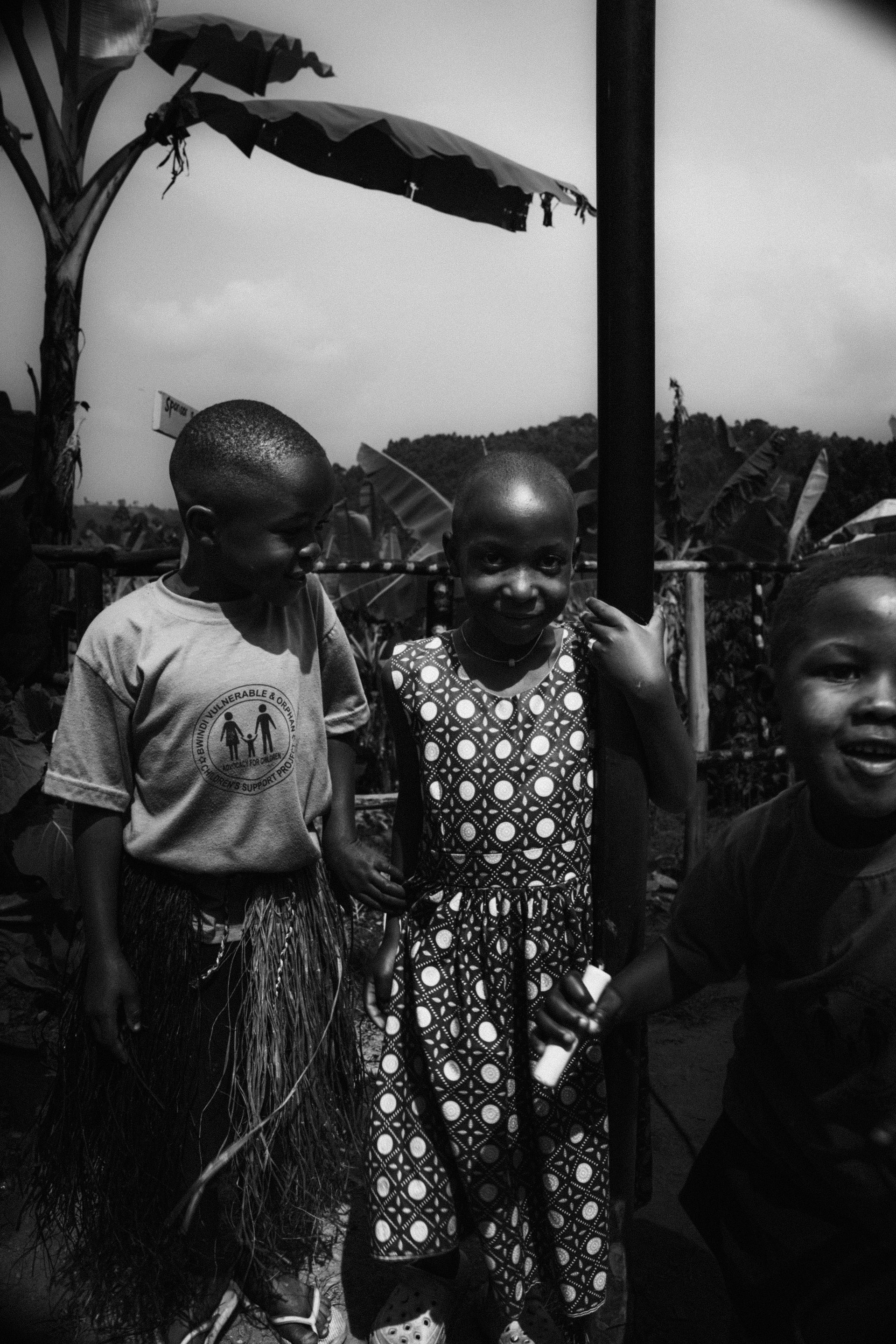
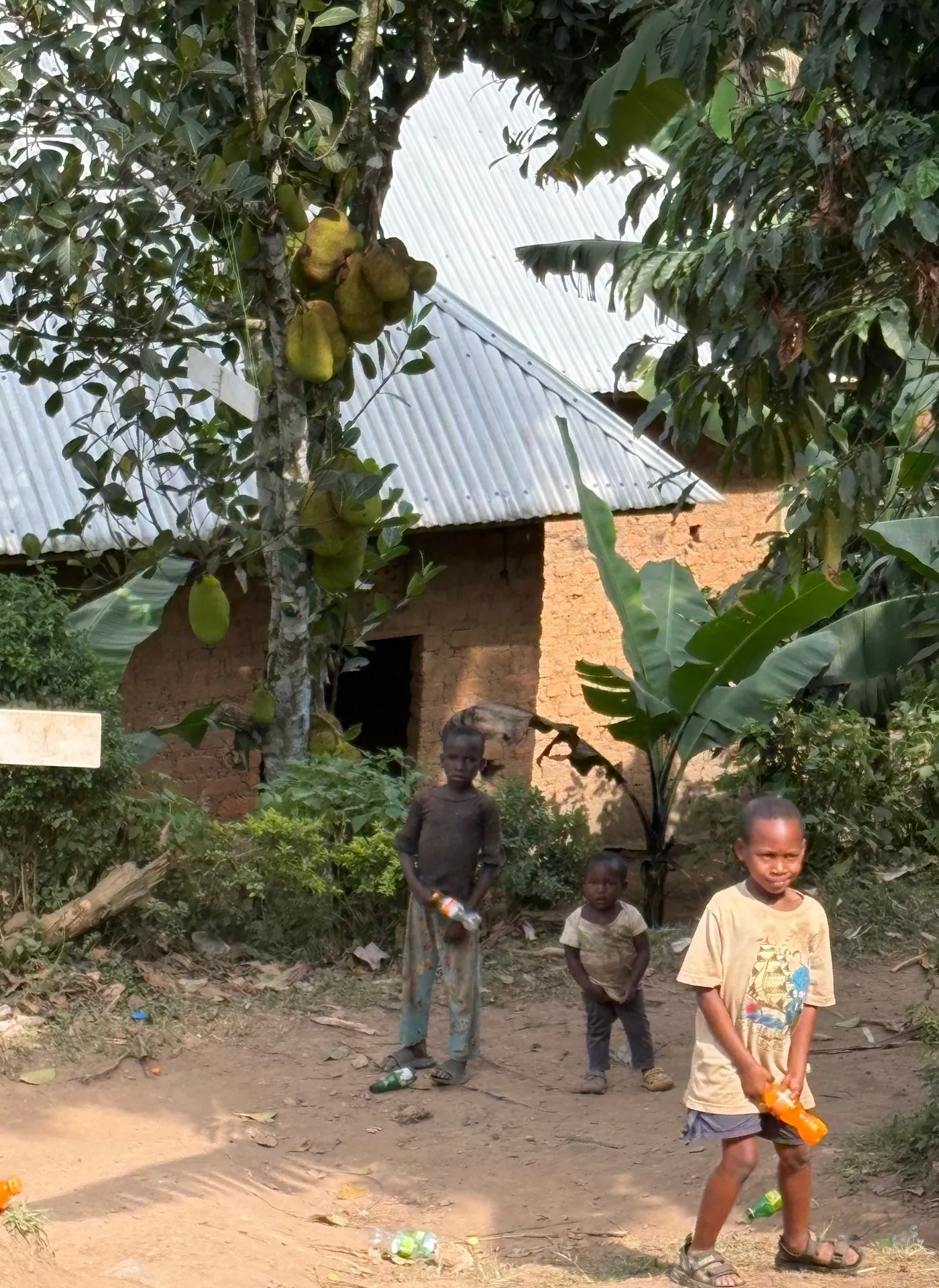
Early on the morning of 21 June 2026, at coordinates -0.9617°N, 29.6109°E on the edge of Buhoma village, three children from the neighborhood near the local orphanage appeared at the gate of the compound where we had set up for breakfast. They were slightly shy, hesitant to step forward. Their clothing was worn, their posture carried the particular quietness of children who have learned not to ask too loudly. We invited them without a second thought to sit and eat with us. In that moment — the forest ridge of Bwindi rising green and dense just beyond the rooftops, the morning cool still present in the air — the proximity between extraordinary wildlife and ordinary, fragile human life became very clear. Buhoma is both of these things at once.
Those GPS-tagged photos from that morning, taken between 06:32 and 06:36, document something I think is important to acknowledge honestly: the village that serves as the primary gateway to the world's most celebrated gorilla trekking experience is also a community with its own pressures, its own rhythms, its own children who deserve a full breakfast. Keeping that double reality in mind is part of traveling honestly in this part of Uganda.
Then we drove to the park headquarters, laced our boots, and walked into the forest.
Mountain Gorilla Social Structure: The Logic of the Group
Mountain gorillas are not solitary animals. They live their entire lives within the structure of a family group — sometimes called a troop — that typically numbers between five and thirty individuals. At the center of every group is the silverback: the adult male, usually over fifteen years old, whose graying back fur is the most visible marker of his status. He is not a tyrant but a coordinator, the individual whose decisions about where to move, when to rest, and how to respond to perceived threats shape the group's daily experience. Younger adult males, called blackbacks, may remain in the group or eventually split off to form their own families as they mature.
Females typically move between groups during their lifetimes, transferring to join a silverback they find compelling — a behavior quite different from many other primate species where females tend to remain in their natal group. Infants stay close to their mothers for the first three to four years of life, often riding on their backs, and juveniles play extensively with one another in patterns that appear, to any observer who has watched them for more than a few minutes, deeply familiar. The social intelligence visible in gorilla families — the way they read one another's body language, de-escalate tensions, and comfort distressed members — is one of the things that stays with trekkers long after they return from the forest.
The groups in Bwindi Impenetrable National Park are among the best-studied in the world precisely because of the long-running habituation and monitoring programs maintained by the Uganda Wildlife Authority and its research partners. The data gathered over decades has produced a detailed picture of how individual gorillas age, how family compositions change, and how groups split and form alliances. For the visitor on a trekking permit, this infrastructure of knowledge is invisible — but it is what makes the encounter safe and reliably possible.
Daily Rhythms: Foraging, Rest, and the Nest
A gorilla's day is organized around food and rest in roughly equal measure. Mountain gorillas are herbivores and consume a wide range of plants — leaves, stems, bark, roots, and fruit when seasonally available. An adult male may consume more than thirty kilograms of vegetation daily. Because Bwindi's forest is dense and species-rich, groups do not need to travel especially far to meet their nutritional requirements; daily ranging distances are often modest, sometimes only a few hundred meters when food is abundant.
The morning hours tend to be the most active period for feeding. As midday approaches, groups often settle for a long rest — adults dozing, juveniles wrestling and chasing, mothers nursing infants. Late afternoon brings another round of foraging before the group constructs its nests. Every night, each individual gorilla builds a fresh sleeping platform from bent branches and leaves. Nests are rarely reused. This daily nest-building is one of the behaviors that trackers look for when following a group: fresh nests are a clear sign that the animals slept nearby and are likely still in the area.
When our trekking group finally reached the gorilla family on my first visit in October 2024, after roughly three hours of climbing through increasingly steep and wet terrain, I was not prepared for how still they were. The silverback was sitting with his back partially turned, an infant visible on the ground beside him. Several females were feeding at the forest edge about ten meters away. The rangers kept us in a loose arc, maintaining the required seven-meter distance as best the terrain allowed. The gorillas registered our presence — they glanced at us — but did not alter what they were doing in any significant way. That indifference, earned through years of habituation work, is perhaps the most profound thing about the encounter.
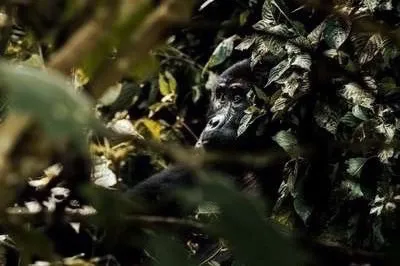
By January 2026, when I returned with Susanne and spent two days in the Buhoma area, I had a better sense of what to notice during the hour. The way juveniles play — tumbling, mock-charging, retreating — mirrors behavior described in decades of field research. The way a silverback shifts his weight when he stands briefly signals something to the rest of the group that none of us fully understand. The hour passes quickly. No one who has done it would say it is long enough.
I returned again in May and June 2026, and the forest was noticeably greener after the long rains, the trails muddier, the air carrying the particular density of a rainforest in full growth. The gorillas, by contrast, seemed entirely unbothered by conditions that left the human visitors breathless and mud-covered.
Habituation: The Process Behind the Permit
The calm behavior of gorilla groups during trekking visits does not occur naturally. It is the product of a multi-year habituation process in which rangers and researchers spend time near a wild group every day — initially at a distance, gradually closer — until the animals learn that human presence does not represent a threat. This process typically takes between two and three years, sometimes longer, depending on the temperament of the silverback and the group's prior experiences. Groups that have had negative contact with humans — through poaching incidents or snare injuries — may take considerably longer to habituate, or may never fully do so.
Bwindi currently has a number of habituated groups, some designated for standard trekking permits and others for the Gorilla Habituation Experience. The GHE allows four visitors per day to spend up to four hours with a partially habituated group alongside the researchers who continue the habituation work. The GHE permit costs USD 1,500 per person, compared to USD 800 for a standard trekking permit. For anyone with a serious interest in primate behavior or conservation research, the additional time — and the opportunity to observe the habituation process in action — makes the price difference worth considering.
Once a group is fully habituated, its contact with tourists is carefully managed: no more than eight visitors per group per day, a maximum of one hour in the gorillas' presence, a minimum approach distance of seven meters, and strict health protocols that include mask requirements when closer proximity is unavoidable. These rules exist because mountain gorillas are highly susceptible to human respiratory diseases. Even a common cold can spread through a group and prove fatal to individuals with compromised immunity, particularly infants and elderly animals.
Conservation Status and Bwindi's Global Significance
Mountain gorillas are one of the few large mammal species whose population has grown in recent decades despite being classified as endangered. The global population currently stands at approximately 1,100 individuals, split between two populations: one in the Virunga Massif spanning Rwanda, Uganda, and the Democratic Republic of Congo, and one entirely within Bwindi Impenetrable National Park. A count conducted across Uganda between 2018 and 2020 documented 459 individuals in Uganda alone.
Bwindi's position in this story is singular. It is the only place in the world where mountain gorillas and chimpanzees share the same forest habitat. That biological fact — two endangered great ape species coexisting in a single protected area — is part of what led to Bwindi's designation as a UNESCO World Heritage Site. The park spans roughly 331 square kilometers of montane and lowland forest at altitudes ranging from 1,160 to 2,607 meters above sea level, creating a mosaic of habitats that supports exceptional biodiversity.
Revenue from gorilla trekking permits has been central to the financial model that supports this conservation. A significant share of permit fees flows back to the Uganda Wildlife Authority for ranger salaries, anti-poaching operations, and community benefit programs. The logic is straightforward: gorillas alive and accessible to responsible tourism generate more sustained income than any alternative land use, which gives both the government and neighboring communities a direct economic stake in the gorillas' survival.
Organizations including the International Gorilla Conservation Programme, the Dian Fossey Gorilla Fund International, and the Frankfurt Zoological Society have contributed decades of support — funding ranger infrastructure, veterinary interventions, and long-term population monitoring. The habituation of multiple gorilla families in the Virunga region is in part a result of the Frankfurt Zoological Society's long-term engagement in the Parc National des Virunga. These overlapping efforts, coordinated across three countries with genuinely complex political histories, represent one of the more remarkable examples of international conservation cooperation of the past forty years.
The human-wildlife conflict dimension remains the most difficult part of this picture. Communities living along Bwindi's boundaries experience crop raiding from gorillas and other wildlife. Managing the tension between park conservation goals and the legitimate needs of those communities — many of whom have historical ties to the forest that predate the park — is an ongoing process that no permit fee alone resolves.
During my visits in May and June 2026, I was again struck by how different the pressures look from within the community versus from the perspective of an arriving tourist. The children near the orphanage, the guides who have hiked these trails for fifteen years, the women selling produce at the Buhoma junction — they live with the consequences of conservation policy in ways that visitors, however well-intentioned, experience only briefly. The best trekking operators in the area are those who keep this context visible, not hidden behind an aspirational version of the experience.
Gorilla Vocalizations: How Family Groups Communicate
Mountain gorillas communicate through an elaborate system of vocalizations, facial expressions, and body postures. For visitors during the one-hour encounter, recognizing the most common sounds provides a framework for understanding what is happening within the family group in real time.
Belch vocalizations — a low, rumbling sound that researchers transcribe as “mmwaa” — are the most frequently heard sound during a calm gorilla encounter. They are contact calls: individuals produce them continuously while foraging and resting to signal their location to one another. When the group is settled and relaxed, steady soft belch vocalizations from the feeding members are among the first sounds visitors hear on arrival at the family.
Chest beats are the most visually dramatic of gorilla displays. The silverback rises and rapidly strikes his cupped palms against his chest, producing a resonant sound audible at considerable distance in the forest. Chest beating accompanies displays of dominance, responses to perceived threats, or excitement during intragroup tension. It is not exclusively aggressive — younger males and even females chest beat in play — but a silverback chest beat during a trekking encounter typically indicates that the group's distance tolerance has been approached and that the silverback is establishing his authority.
Screams, grunts, and cough-barks signal alarm or intragroup conflict. These sounds are jarring when heard close up and indicate that something has disturbed the group — a sudden noise, unexpected human movement, or a tension between individuals. They are rarely sustained and typically resolve quickly, but they serve as a reminder that the calm of a typical encounter depends on the group remaining undisturbed.
Hoot series — a sequence of increasingly loud hoots building toward a roar and culminating in chest beats — represent the silverback's full display and are heard most often at dawn or in response to a perceived external threat. Researchers studying habituated groups at Bwindi have documented that experienced silverbacks adjust the intensity and duration of hoot series depending on the nature of the challenge — an intragroup dispute draws a different response than a perceived threat from outside the family.
Diet and Foraging in Bwindi's Forest
Mountain gorillas are almost entirely herbivorous, and their diet in Bwindi reflects the exceptional plant diversity of the forest. Studies of habituated groups have documented consumption of more than 100 plant species, though a smaller core of plants makes up the bulk of daily intake. Leaves, stems, and bark constitute the majority — fibrous, calorie-low foods that require substantial volume. An adult male may consume more than thirty kilograms of vegetation daily.
Fruit is consumed opportunistically when seasonally available, and its presence significantly increases group energy and social activity — fruit-feeding periods are associated with higher movement, more play, and sometimes encounters between groups near the same fruiting trees. Bwindi's forest is unusual among mountain gorilla habitats in containing both lowland and highland zones, giving resident groups access to a wider range of plant species and seasonal food sources than gorilla populations in the Virunga Massif.
Gorillas also consume insects, particularly ants and termites, which provide protein supplementation. They are documented eating mineral-rich soil in certain locations — a behavior called geophagy — which may compensate for mineral deficiencies in their primary plant diet. These behavioral details, accumulated through years of research alongside the habituated groups at Bwindi, form part of a scientific record that continues to grow with each generation of researchers working in the park.
Lifespan, Development, and the Gorilla Life Cycle
Mountain gorillas live approximately 35 to 40 years in the wild, with individuals in some habituated groups documented into their early forties. Development is slow: infants are carried by their mothers for the first three to four years, remain close through juvenility, and reach sexual maturity at around eight to ten years. Males continue growing into their mid-teens, when the silver hair that gives the dominant male his name begins developing across the back and flanks.
Females typically give birth to a single infant every four years, which means reproductive rates are low even under favorable conditions. This slow reproduction is one of the primary reasons mountain gorilla populations recover so gradually from disruption: a generation lost to disease, habitat loss, or poaching takes decades to replace. The growth of the global mountain gorilla population from fewer than 700 individuals in the early 2000s to approximately 1,100 today has been achieved through sustained conservation effort across multiple decades and three countries — and it remains fragile.
Infants born to habituated groups at Bwindi are monitored closely by researchers. Birth records, growth milestones, and family lineages are tracked across years, creating long-term datasets that inform both conservation planning and our broader understanding of great ape biology. The gorilla family a visitor encounters at Buhoma carries a known history — named individuals, documented relationships, recorded health events — that extends back decades and will continue to be studied long after any particular trek.