The essential dishes of Uganda: Matooke (steamed green plantains) is the undisputed national staple. Beyond it, you will encounter rolex — a chapati-wrapped egg roll that defines Ugandan street food — alongside posho, groundnut stew, beans, roasted meat, and regional specialties that shift dramatically from south to north. This guide covers the ten most important dishes, with first-hand notes from repeated visits to Buhoma in the Bwindi region.
Quick Facts
- Author visits:
- 14 documented stays
- Days on site:
- 59 days total
- Last visit:
- June 2026
- Region covered:
- Buhoma / Bwindi
- GPS verified:
- -0.9665 N, 29.6125 E
- Cuisine type:
- East African staples
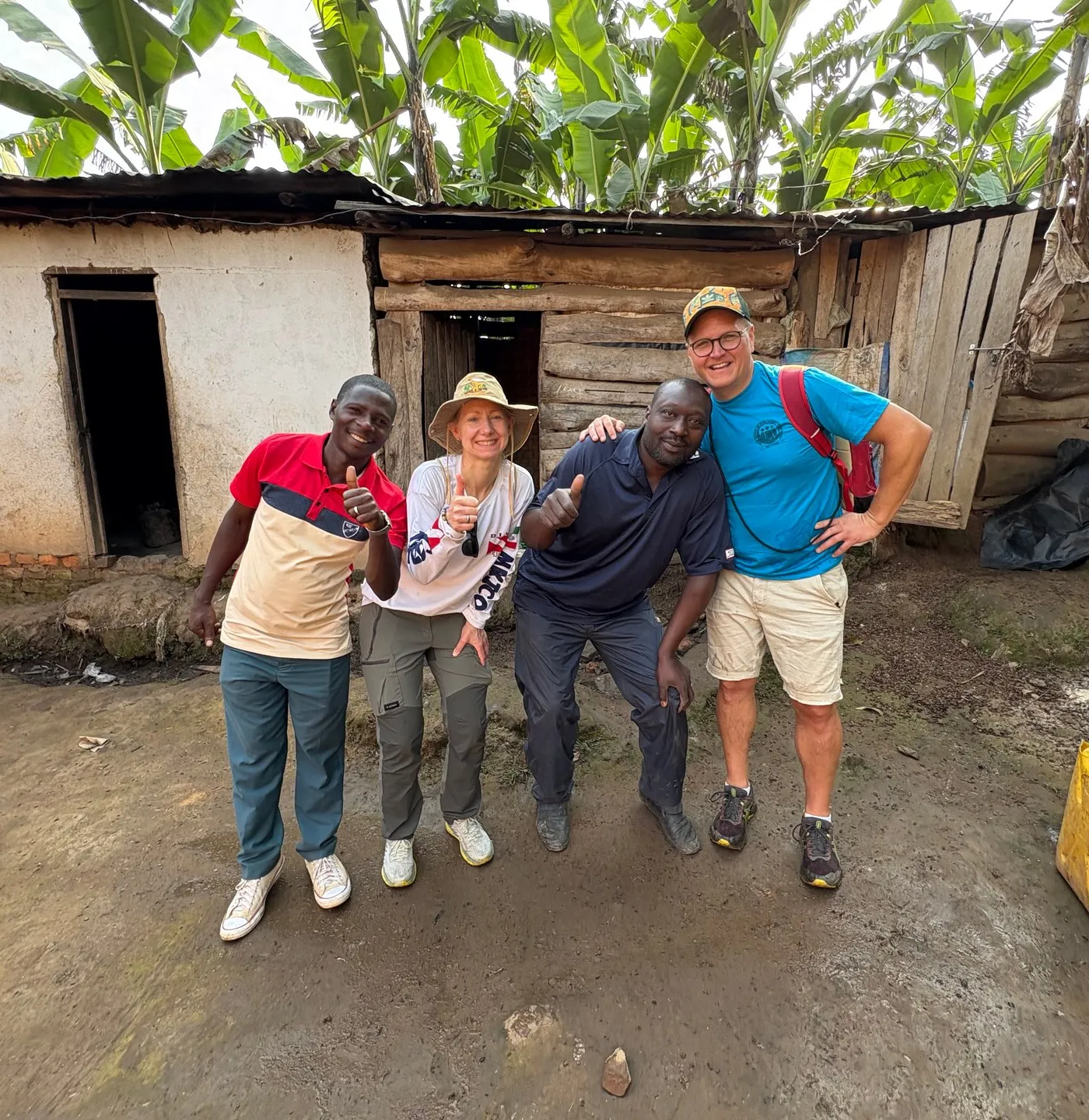
It started with chickens. During my visit to Buhoma in June 2026, we drove out to a local poultry farmer whose small holding sits on the edge of the village, GPS-tagged at roughly -0.9713, 29.6142. The farmer keeps his birds with visible care — the chicks are raised in clean, shaded pens, fed on local feed, and handled gently. We had visited him several times before: the orphanage nearby buys chicks from him regularly, raising them either for eggs or meat. That practical, close relationship between farming and feeding people is not incidental to Ugandan food culture. It is exactly what defines it.
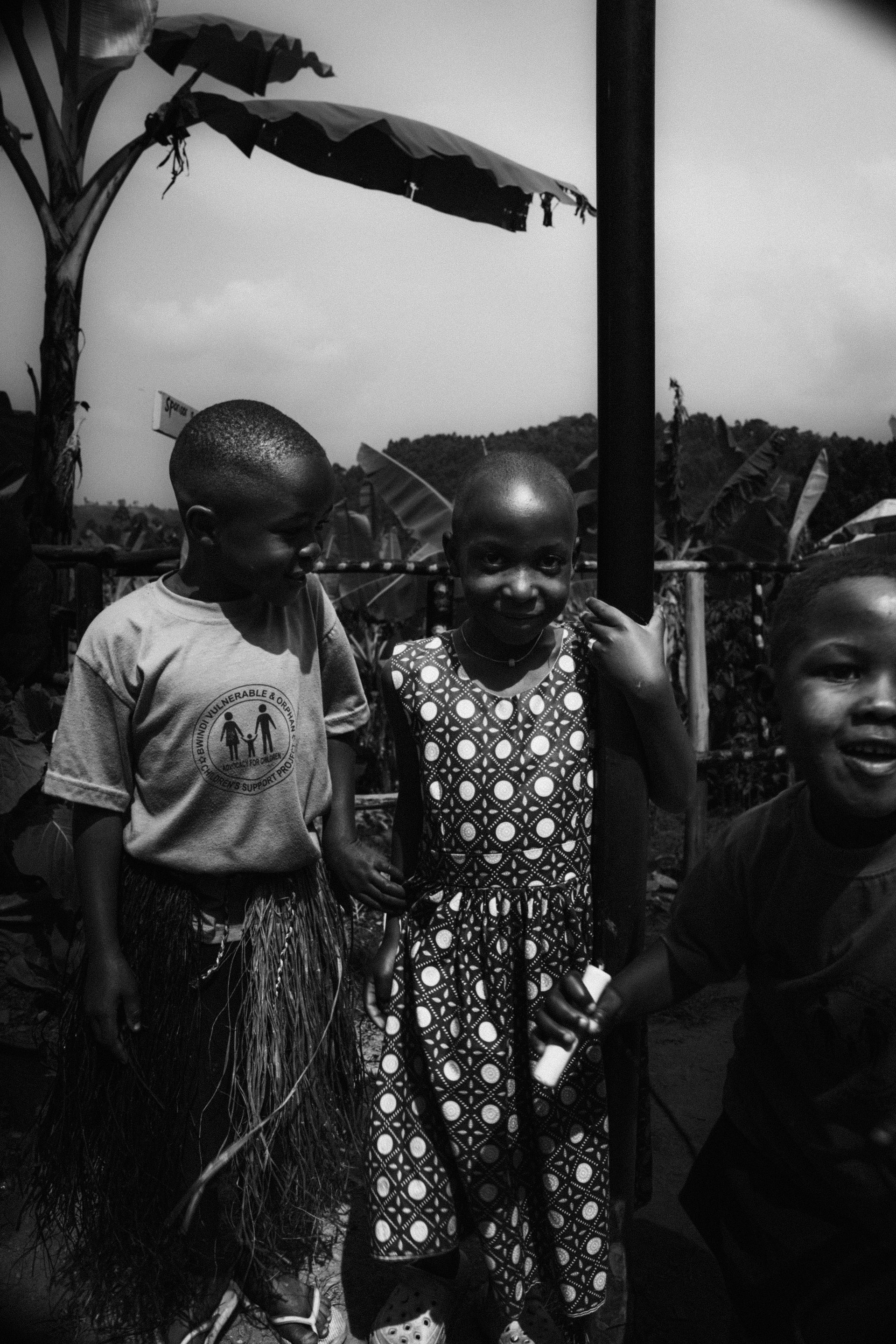
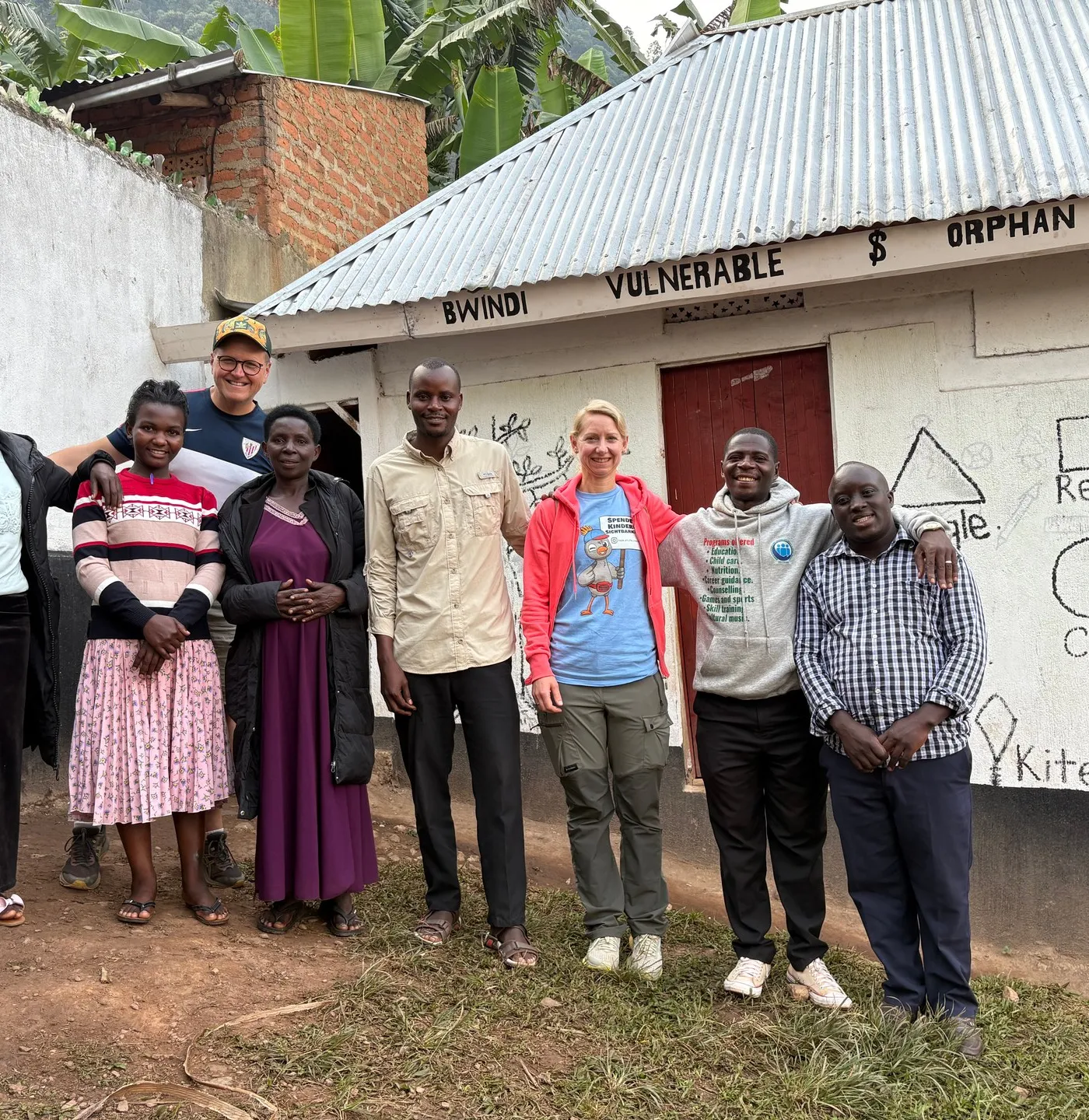
Later the same day, three children from the neighbourhood came to the orphanage compound. They were shy and looked underfed — their clothes worn, their posture a little too careful, the way children carry themselves when they have learned not to expect much. We invited them to eat without hesitation. That meal — simple, shared, cooked in a kitchen attached to the orphanage — was one of the most honest expressions of Ugandan hospitality I have encountered across fourteen visits and nearly sixty days on the ground in this country.
Ugandan food is not celebrated the way West African or North African cuisines are. What exists instead is a kitchen built on abundance — banana groves, bean fields, sorghum, millet, sweet potato — and on a deep regional identity that shifts almost district by district. This guide covers the ten dishes any visitor should know, with practical notes from the Bwindi area and beyond.
1. Matooke: The National Staple
If you eat one thing in Uganda, it will almost certainly be matooke. The dish is made from unripe green plantains — a banana variety distinct from the sweet bananas sold in supermarkets elsewhere. The plantains are peeled, bundled in their own leaves, and steamed for several hours until soft. The result is a starchy, mildly flavoured mash with a pale yellow colour and a dense, satisfying texture. In the southwest of the country, including the Bwindi region around Buhoma, matooke appears at virtually every meal.
What makes matooke interesting is not the dish in isolation but what accompanies it. At the orphanage in Buhoma, matooke typically arrives alongside a groundnut sauce — a thick, aromatic stew of crushed peanuts cooked with onion, tomato, and sometimes dried fish. During my visits in October 2024, January 2026, and most recently June 2026, this combination appeared at the table more consistently than anything else. It is not monotony; it is reliability, which in a community feeding context means something different entirely.
Matooke cultivation is also one of the defining features of the Ugandan agricultural landscape. The plantain groves that cover the hillsides around Bwindi Impenetrable National Park represent a land-use pattern that has shaped the relationship between farming communities and the forest for generations. Eating matooke in Buhoma is, in a small way, eating the landscape itself.
2. Rolex: Uganda's Defining Street Food
The rolex has nothing to do with the watch. The name is a phonetic compression of "rolled eggs" — a description of its basic form. A vendor prepares a thin chapati on a flat griddle, cracks two eggs onto it while it cooks, adds sliced tomato, onion, and cabbage, then rolls the entire thing into a tight cylinder. The result is a portable, filling, affordable meal that can be bought at roadside stalls across the country.
In Kampala, the rolex has become something of a civic symbol. The capital hosts an annual Rolex Festival in which vendors compete with elaborate variations — eggs beaten with spices, chapatis enriched with different flours, fillings that extend well beyond the classic vegetable combination. The festival is a genuine expression of how seriously Ugandans take their street food, and how much pride Kampala takes in this particular dish.
In the Bwindi region, rolexes are less theatrical but just as good. The roadside stalls along the main route into Buhoma typically open before dawn to serve workers and guides heading out early. If you are taking a morning drive to the park headquarters, stopping at one of these stalls is not just convenient — it is one of the more honest ways to start a day that will otherwise be shaped by very different kinds of wealth.
3. Posho, Beans, and the Architecture of the Ugandan Plate
Posho — also called ugali in some regions — is a stiff porridge made from maize meal cooked with water until it becomes a dense, smooth mound. It is the carbohydrate companion to virtually everything else on the Ugandan table in areas where matooke is less dominant. The Acholi and Langi communities of northern Uganda rely heavily on posho; in the west and south, matooke takes its place. Understanding which starch is on the table tells you roughly where you are in the country.
Beans are the protein backbone of Ugandan everyday cooking. Red kidney beans, black-eyed peas, and a range of local varieties are cooked slowly, often with onion and tomato, into a thick stew. In the southwest, beans frequently accompany matooke; in the north, they are eaten with posho or alongside Akaro — a traditional grain preparation made from sorghum, millet, and manioc that is specific to communities north of the Nile.
The regional differentiation of Ugandan food is sharper than most visitors expect. In the east, matooke and beans remain the default. In the south, cassava appears more prominently. In the west, smaller fish from local lakes supplement the standard carbohydrate-bean combination. At a practical level for visitors staying around Buhoma, lodge and community dining options tend to serve the southwestern Ugandan plate: matooke, beans, sometimes rice, groundnut sauce, and a protein if available. It is genuinely good food — nutritious, carefully prepared, and produced almost entirely from local ingredients.
4. Groundnut Stew, Chicken, and Local Protein Sources
Groundnut stew — a sauce made from crushed, roasted peanuts dissolved into a broth with tomatoes, onion, and spices — is one of the most versatile elements of Ugandan cooking. It serves as the base for chicken stew, fish dishes, and vegetable preparations alike. The stew has a rich, earthy flavour and a texture that thickens as it cooks. It is nothing like the peanut butter one might expect; it is deeper, more savoury, and considerably more complex.
Chicken is the most accessible meat protein in the Buhoma area. Local breeds, raised as free-range birds on household compounds or small farms like the one we visited in June 2026, produce smaller carcasses than industrial birds but with considerably more flavour. When the orphanage buys chicks from the local farmer, some are raised for egg production and some for eventual slaughter — a dual-use logic that is pragmatic, effective, and deeply embedded in how rural communities manage food security.
Roasted meat — nyama choma — is the festive protein of choice. Goat is most common; beef also appears. The meat is grilled over charcoal, often simply salted, and served with roasted plantain or chips. In towns like Kisoro and Kabale near the Bwindi area, nyama choma restaurants open in the evening and draw a reliable crowd of locals. If you find yourself in one of these towns after a trekking day, following the charcoal smoke is rarely a poor decision.
Fish — tilapia and Nile perch primarily — are significant protein sources in Uganda, particularly in areas near Lake Victoria, Lake Albert, and Lake Bunyonyi. Dried and smoked fish travel further inland and appear in northern dishes like Lakotokoto, a soft-cooked pounded sesame preparation served with dried fish or dried meat. In the Bwindi area specifically, fresh fish is less common, but dried fish appears in stews as a consistent pantry ingredient.
5. Regional Specialties and the Full List of 10
Northern Uganda has a food culture that is genuinely distinct from the southwest where Buhoma sits. The communities north of the Nile — Acholi, Langi, Madi, and others — belong to Nilotic and Sudanese cultural groups whose agricultural traditions diverge significantly from the Bantu communities of the south and west. The crops differ: groundnuts, sesame, sorghum, millet, and sweet potato feature far more prominently than plantains.
Odi is perhaps the most distinctive northern preparation: a thick paste made from groundnuts and sesame, still ground by hand in many households. It serves as a base for other dishes but also as a standalone accompaniment to cassava, pumpkin, or plantain. The flavour is intensely nutty, with sesame adding a roasted depth that groundnut-only preparations lack. Markets across the north sell Odi in small quantities; it is worth seeking out if your route takes you into Gulu or Lira.
Malakwang is a slightly sour groundnut paste served with sweet potato. The sourness comes from the processing of the peanuts — a controlled fermentation that produces a flavour profile quite unlike the fresh groundnut sauces of the south. Firinda, a bean dish enriched with onion and a butter-fat sauce, is common in western Uganda and shares characteristics with dishes found across the border in Rwanda.
Kampala stands apart from all regional traditions. The capital is a genuinely cosmopolitan food city, drawing influences from the Indian subcontinent, from West Africa, and increasingly from European food culture. For visitors spending time in Kampala before heading southwest to Bwindi, the restaurant scene can be genuinely surprising in its range.
Ten Essential Ugandan Dishes at a Glance
- 1. Matooke
Steamed green plantains, mashed and served with groundnut sauce or bean stew. The national staple of southwestern Uganda.
- 2. Rolex
Chapati rolled around eggs, tomato, onion, and cabbage. The definitive Ugandan street food, available at roadside stalls countrywide.
- 3. Posho (Ugali)
Stiff maize porridge, served as a neutral base for stews and sauces. Dominant in northern and central Uganda.
- 4. Groundnut Stew
A thick, earthy peanut sauce cooked with onion and tomato. Served with matooke, posho, rice, or chicken.
- 5. Beans
Slow-cooked kidney beans or black-eyed peas in tomato and onion sauce. The everyday protein source across all regions.
- 6. Nyama Choma
Charcoal-grilled goat or beef, salted simply and served with plantain or chips. The festive meat dish.
- 7. Tilapia / Nile Perch
Fresh or dried fish from Uganda's major lakes. Fried, grilled, or incorporated into stews.
- 8. Chapati
Unleavened flatbread introduced via Indian trade routes, now fully absorbed into Ugandan everyday cooking.
- 9. Odi
Northern Ugandan peanut-sesame paste. Dense, richly flavoured, ground by hand. Found at markets in Gulu and Lira.
- 10. Fresh Fruit
Pineapple, passion fruit, jackfruit, papaya, and multiple banana varieties appear year-round across the country.
Eating in Buhoma: What to Expect
Buhoma is a small village, not a culinary destination. The lodges that serve the gorilla trekking market all provide food, but the range of options outside lodge walls is limited. What exists are a handful of small eating places along the main road, a market selling fresh produce, and the domestic kitchens of the community itself.
During my stays across October 2024, January 2026, and June 2026, food available in the village was consistent: matooke, beans, rice, chapati, eggs. Occasionally chicken. Fruit when in season. The quality of ingredients was high — this is a high-altitude agricultural area with rich volcanic soil and reliable rainfall. The cooking was simple and competent.
Food in Uganda is deeply social. A meal is rarely a solitary transaction. At the orphanage, when children arrived from the neighbourhood looking underfed and uncertain, the immediate response was to pull up chairs and set plates. That instinct — to include, to share, to make space at the table — is not programmatic. It is cultural, and it runs deep. Visitors who spend time in Buhoma rather than simply passing through will find opportunities to eat with local families or community initiatives if they approach it correctly. The lodges with genuine community connections are the natural entry point.