Gorillas are divided into two species — the western gorilla (Gorilla gorilla) and the eastern gorilla (Gorilla beringei) — each containing two subspecies. The four subspecies differ in size, fur length, facial structure, habitat, and conservation status. The mountain gorilla, the subspecies found in Uganda's Bwindi Impenetrable National Park, is the only one to have grown in population over the past three decades.
Quick Facts
- Gorilla species:
- 2 (Western & Eastern)
- Total subspecies:
- 4
- Mountain gorilla range:
- Bwindi + Virunga Massif
- Mountain gorilla population:
- ~1,000 (2018 census)
- Most endangered subspecies:
- Cross River gorilla (~200–300)
- Uganda gorilla subspecies:
- Mountain gorilla (Gorilla beringei beringei)
- Mountain gorilla IUCN status:
- Endangered (downlisted 2018)
- DNA shared with humans:
- ~98.3%
Two Species, Four Subspecies
Until the late 1990s, all gorillas were classified as a single species. Genetic analysis revealed that western and eastern populations had diverged enough to be recognised as distinct species. The formal split, now reflected in the IUCN Red List and the standard zoological literature, gives us the western gorilla (Gorilla gorilla) and the eastern gorilla (Gorilla beringei).
The two species are separated by roughly 1,000 kilometres of Congo Basin forest — a gap large enough that the populations have been evolving independently for hundreds of thousands of years. Within each species, two further subspecies are recognised, based on differences in size, morphology, and geography.
All four subspecies are listed as either Critically Endangered or Endangered on the IUCN Red List. All face the same principal threats: habitat loss, poaching, and susceptibility to human diseases. The mountain gorilla is the only great ape whose wild population has increased — however modestly — over the past 40 years.
Comparison: All Four Gorilla Subspecies
| Subspecies | Scientific Name | Range | Population | IUCN Status |
|---|---|---|---|---|
| Mountain gorilla | Gorilla beringei beringei | Bwindi (Uganda), Virunga (Uganda/Rwanda/DRC) | ~1,000 | Endangered |
| Eastern lowland (Grauer's) | Gorilla beringei graueri | Eastern DRC | ~3,800 | Critically Endangered |
| Western lowland | Gorilla gorilla gorilla | Cameroon, Gabon, ROC, CAR, Equatorial Guinea, DRC | ~100,000+ | Critically Endangered |
| Cross River | Gorilla gorilla diehli | Nigeria–Cameroon border | ~200–300 | Critically Endangered |
Population estimates as of 2018–2023; figures vary by source and survey methodology.
Eastern Gorilla — Gorilla beringei
The eastern gorilla is the species found in Uganda. It was scientifically described in 1903 by the German officer Oscar von Beringe, who shot two individuals on the slopes of Mount Sabinyo in the Virunga Massif — hence the species name beringei. Both subspecies occupy higher elevations and denser, cooler forest than their western counterparts.
Mountain Gorilla
Gorilla beringei beringei
Found exclusively in two isolated mountain ranges: Bwindi Impenetrable National Park and the Virunga Massif (shared between Uganda, Rwanda, and the DRC). They inhabit montane and bamboo forests between 1,500 and 4,000 metres above sea level.
Their thick, long fur is an adaptation to cold temperatures — mountain gorillas regularly experience overnight temperatures near 0°C on the higher ridges. They are strict vegetarians, feeding on leaves, stems, bark, roots, and occasionally fruit.
The ~1,000 mountain gorillas worldwide represent the combined population of Bwindi (~460) and the Virunga Massif (~600). They cannot survive in captivity. Every encounter with them is a wilderness experience — there is no alternative.
Eastern Lowland Gorilla
Gorilla beringei graueri
Also known as Grauer's gorilla, named after the naturalist Rudolf Grauer who collected specimens in the early 20th century. These are the largest gorillas in the world — adult males can exceed 200 kg and stand over 1.8 metres tall when upright.
Found only in the tropical lowland forests of eastern DRC, their population has collapsed due to decades of armed conflict that disrupted conservation efforts and enabled intensive poaching. Surveys suggest a decline of over 77% since the 1990s.
Eastern lowland gorillas are not accessible to tourists in the current security environment in eastern DRC. They are Critically Endangered.
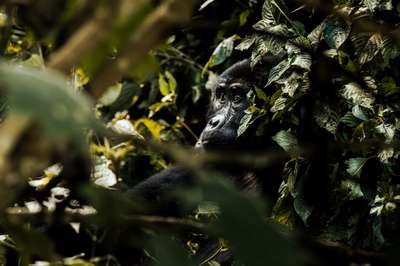
Mountain gorilla — Bwindi Impenetrable National Park, Uganda
Western Gorilla — Gorilla gorilla
The western gorilla inhabits the forests of Central and West Africa. Compared to eastern gorillas, they tend to be slightly smaller, with more brownish (rather than jet-black) fur, a more pronounced brow ridge, and a lighter face. They eat more fruit than eastern gorillas, reflecting the richer fruiting trees of lowland equatorial forest.
Western Lowland Gorilla
Gorilla gorilla gorilla
The most numerous gorilla subspecies, with an estimated population exceeding 100,000 across six countries. Gabon alone may hold more than half the global population. Despite their relative abundance, they are Critically Endangered due to ongoing habitat loss, bushmeat hunting, and periodic outbreaks of Ebola virus disease.
Western lowland gorillas are the subspecies found in virtually all the world's zoos — mountain gorillas and Grauer's gorillas have never been successfully maintained in captivity. They are accessible for wildlife watching in several protected areas in Gabon, Central African Republic, and Republic of Congo.
Their population is difficult to census accurately because they inhabit vast, dense forests. Surveys use nest counts and genetic sampling as proxies for population estimates.
Cross River Gorilla
Gorilla gorilla diehli
The world's most critically endangered great ape, with a wild population of approximately 200–300 individuals. They live in forested hills straddling the Nigeria-Cameroon border — a landscape increasingly fragmented by agriculture and human settlement.
Cross River gorillas are extremely shy and rarely encountered, even by researchers. Most knowledge of their behaviour comes from camera traps and genetic analysis. They are not habituated for tourism. Their small, scattered population size puts them at serious risk from inbreeding depression and stochastic events.
Named after the Cross River region of southern Nigeria, they were only formally distinguished as a separate subspecies in 2000.
Why the Mountain Gorilla Is the One to See
Of the four gorilla subspecies, the mountain gorilla is the only one accessible to visitors through a regulated, habituated-group trekking programme. Rwanda, Uganda, and the DRC (the DRC sector is currently not recommended for safety reasons) all issue permits to visit specific habituated families. In Uganda, these programmes operate in Bwindi Impenetrable National Park and — for a single family — Mgahinga Gorilla National Park.
The connection between tourism and conservation is direct. Permit revenue from gorilla trekking funds the Uganda Wildlife Authority (UWA), which pays for rangers, anti-poaching patrols, veterinary care, and the habituation of new gorilla families. The mountain gorilla's recovery from a low of roughly 600 individuals in the 1980s to over 1,000 today is widely attributed to this model. Prosper, a tracking guide based at the Buhoma sector, sees this dynamic daily — but the best evidence is in the numbers: every decade since intensive conservation began, the Bwindi count has risen. [VOICE FEHLT]
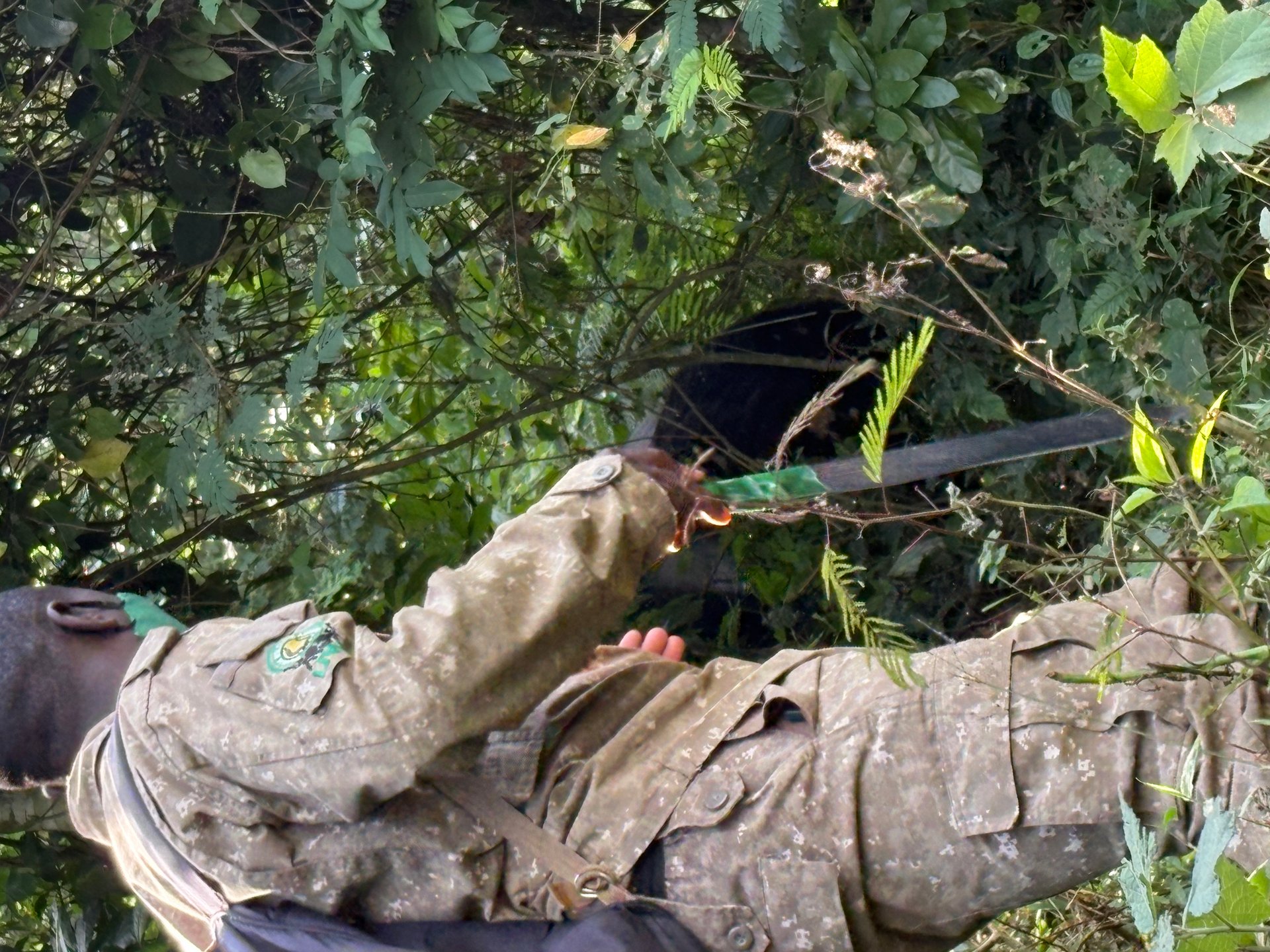
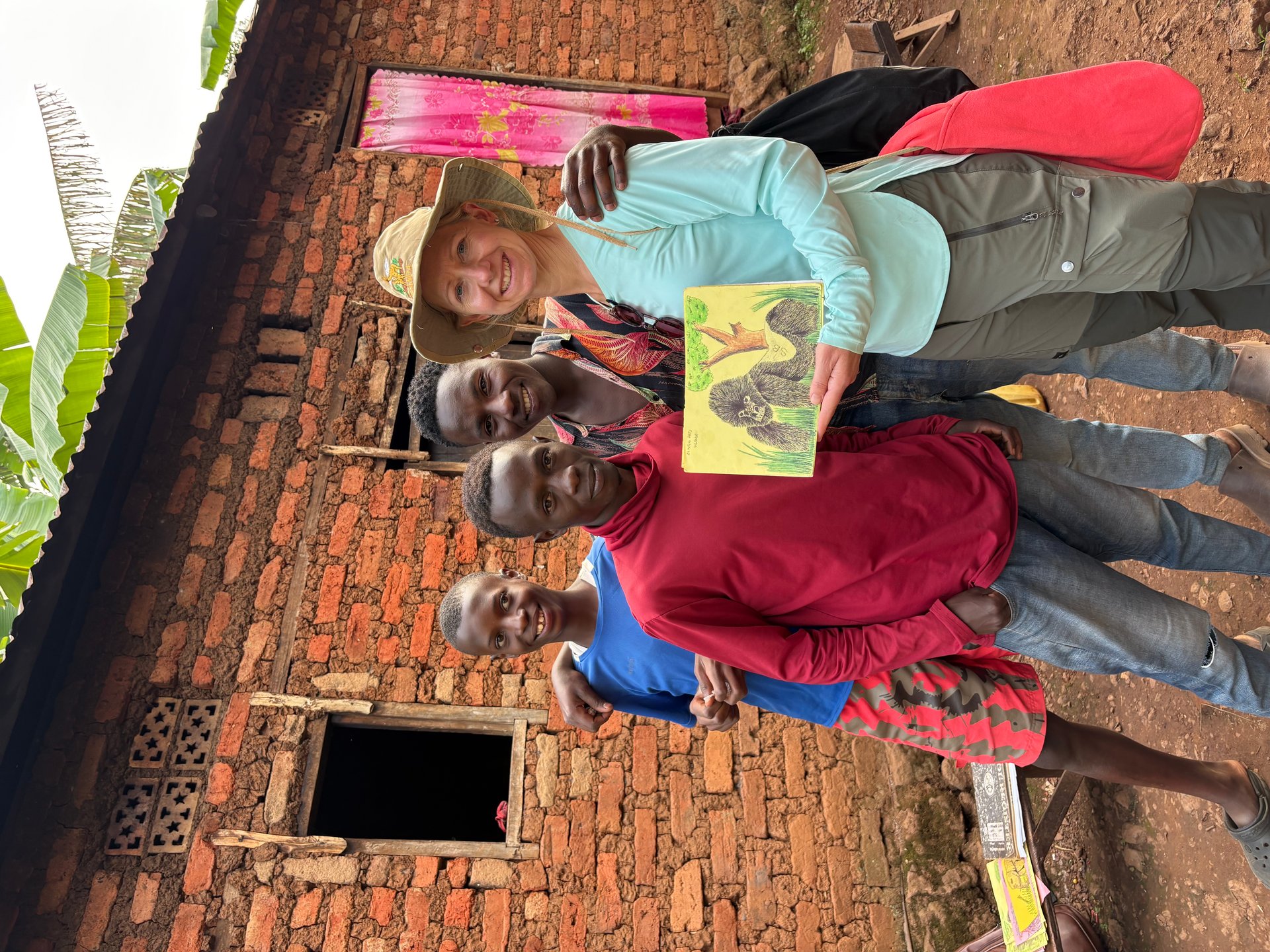
On the morning of our gorilla trek during a 12-day stay in October 2024, we sat at the Gorilla Bluff Lodge eating avocado, rolex (a chapati-egg wrap), and French toast. The forest was just visible through the lodge's open-air dining area. Within two hours, we were inside it — watching a silverback pull apart a wild ginger stem twenty metres away. That proximity, that ordinariness in the gorilla's movements, is what no zoo exhibit can replicate. Mountain gorillas exist here, in this specific forest, and nowhere else.