Akagera National Park in Rwanda lost more than half its area and all its lions after 1994. A public-private management partnership with African Parks Network from 2010 reversed that decline: poaching dropped sharply, lions were reintroduced in 2015, black rhinos arrived in 2017, and the park is now widely cited as one of the continent's most successful conservation recoveries.
Quick Facts
- Country:
- Rwanda
- Park established:
- 1934
- Current area:
- ~1,122 km²
- Management since:
- 2010 (African Parks / RDB)
- Lions reintroduced:
- 2015 — 7 from South Africa
- Black rhinos:
- Reintroduced 2017 & 2019
- Author visits:
- Oct 2024, Jan 2026, May 2026, Jun 2026
- GPS on site:
- -0.9676, 29.6195 (June 2026)
- Gorilla permit (Bwindi):
- USD 800 / USD 1,500 GHE
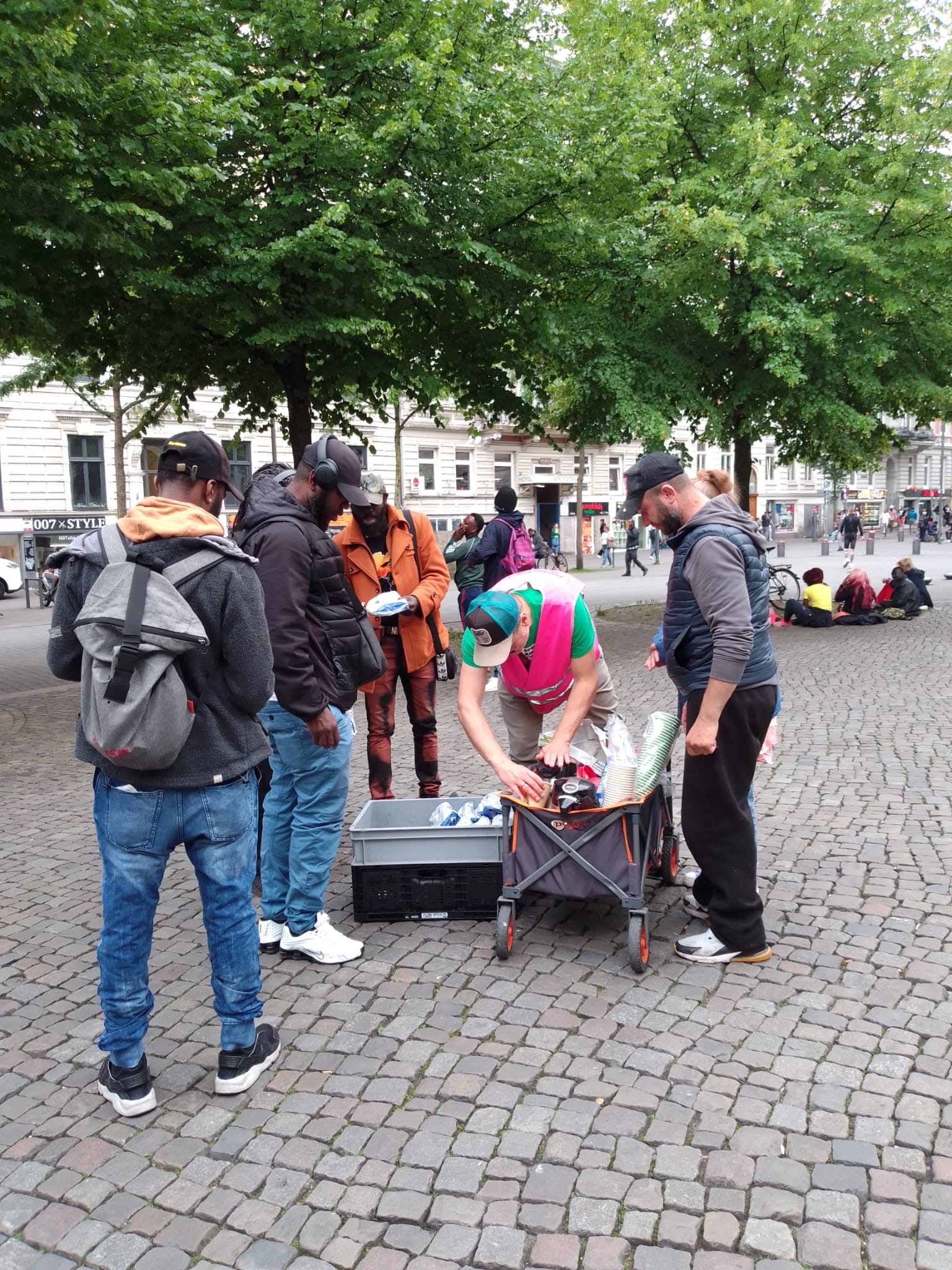
The morning I visited a chicken farmer on the edge of Buhoma village in June 2026, the conversation turned — as it often does around here — to animals. Not gorillas this time, but the humble chickens scratching in the red dust around us. The farmer knew every bird by temperament. He spoke about his chicks with genuine pride, explaining how he had built his feeding routine around the dry season, when grass seed grows scarce. He had sold several batches to the Hope on the Road orphanage nearby, where the birds provide both eggs and, occasionally, protein for the children. What struck me was not the agricultural detail but the underlying principle: careful stewardship, patient rebuilding, season by season, until something fragile becomes resilient.
That same principle — slow, deliberate, community-rooted restoration — is what turned Akagera National Park in Rwanda from a cautionary tale into one of Africa's most celebrated conservation success stories. The parallel is not accidental. Across East Africa, from the hills above Buhoma to the savannahs of eastern Rwanda, the parks that have recovered are the ones where local people found a genuine stake in the outcome.
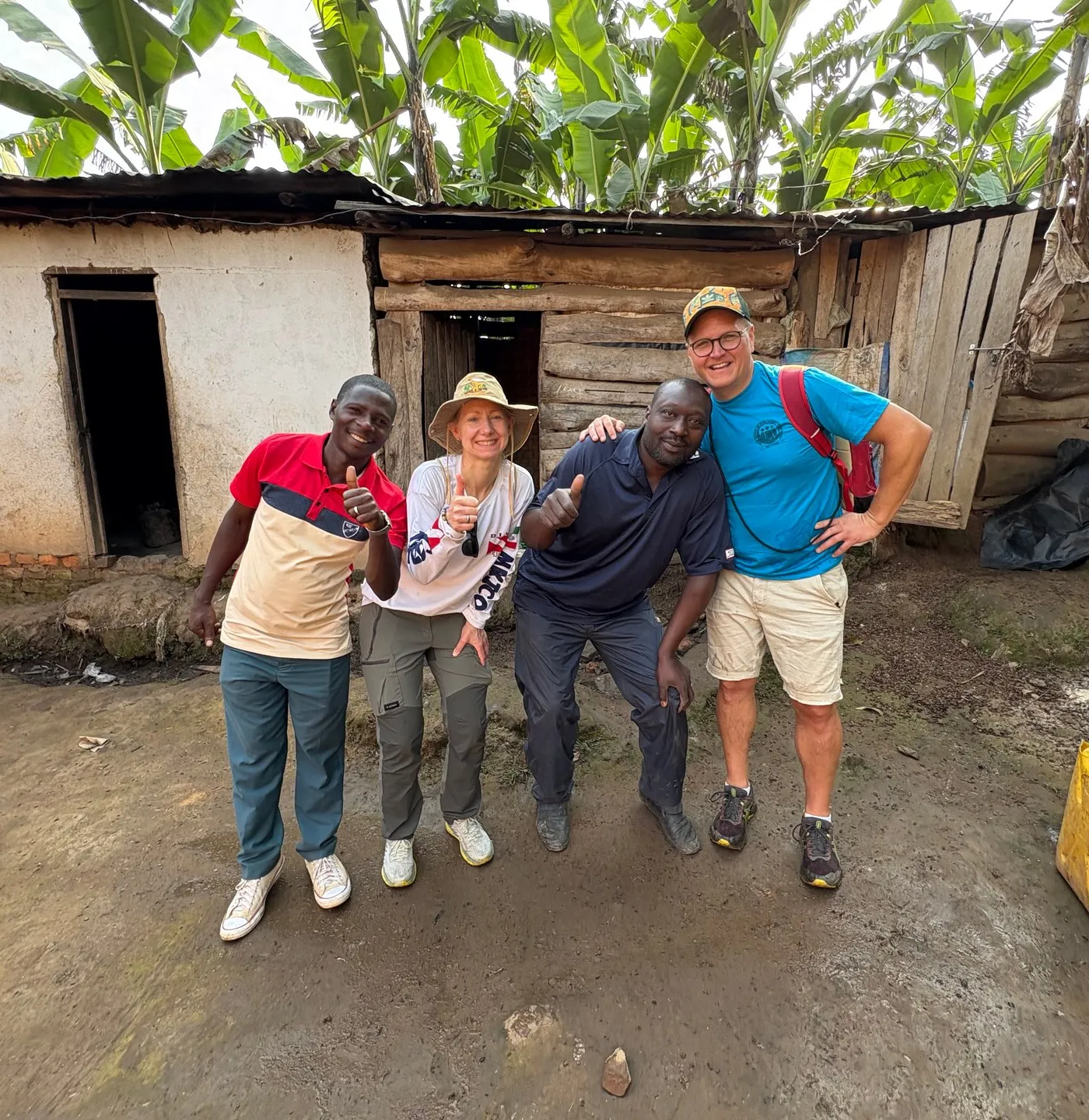
During my visit in June 2026, photographed at GPS coordinates -0.9676, 29.6195 on the Buhoma plateau, I spent time with farmers and community members whose livelihoods intersect directly with wildlife conservation. What they described — incremental trust, tangible benefit, shared ownership — mirrors the model that rescued Akagera. Understanding that model matters to anyone travelling through this part of the world, because Akagera's story is not a Rwandan curiosity: it is a blueprint.
A Park Brought to the Edge
Akagera National Park was established in 1934, taking its name from the Kagera River that forms its eastern boundary with Tanzania. At its founding it covered roughly 2,500 square kilometres of savannah, wetland, and woodland — an unusually diverse ecosystem for the region, containing hippos, elephants, buffalo, and the full complement of antelope species typical of East African grasslands. Lions and leopards completed the predator guild. For decades it functioned as a reasonably intact ecosystem.
The 1994 genocide changed everything. In the aftermath, an estimated 600,000 refugees and their livestock moved into the southern two-thirds of the park. By the late 1990s, the park had been formally reduced to approximately 1,122 square kilometres — less than half its former extent. Lions had been eliminated entirely, partly through retaliatory killings as livestock losses mounted. Poaching pressure on other species increased sharply as institutional oversight collapsed. The wetland complex along the Kagera remained relatively intact, but the terrestrial habitats that had once supported large predators were fragmented and degraded.
By 2009, Akagera was struggling to justify its protected status. Visitor numbers were modest, management capacity was limited, and the park's ecological integrity had deteriorated significantly. The Rwandan government, through the Rwanda Development Board, took a decision that would prove pivotal: rather than continue managing the park with limited public resources, it would seek a private management partner willing to invest in long-term recovery.
The Public-Private Partnership That Changed Everything
In 2010, African Parks Network signed a management agreement with the Rwanda Development Board, taking operational responsibility for Akagera. African Parks, a conservation NGO, had already demonstrated the model in Chad, Zambia, and the Central African Republic — assuming full management authority over a park, raising funding from international donors and governments, and running operations with professional standards while sharing revenue with the national partner and local communities.
The intervention at Akagera followed a clear sequence. In the first phase, law enforcement was transformed. Rangers were retrained, patrol routes systematised, and anti-poaching infrastructure — ranger posts, communication networks, aerial surveillance — built from the ground up. Poaching incidents dropped sharply within the first few years. Buffalo populations began to recover noticeably; elephant numbers stabilised after years of decline.
The management arrangement was explicitly not a privatisation. The Rwanda Development Board retained ownership and ultimate authority. Revenue from tourism was structured to flow back to the national government, to African Parks for reinvestment in operations, and to a community revenue-sharing fund covering buffer zone populations. This three-way architecture — government, professional manager, local community — distinguishes Akagera from earlier conservation models that had failed by excluding one of the three.
The community revenue-sharing component matters in detail, not just in principle. Around Akagera, communities within a defined boundary zone receive a portion of gate revenue. Those funds have financed school construction, borehole drilling, and small business support. The mechanism is imperfect and disputes over distribution have occurred — — but the core principle has held: people living adjacent to the park have a financial reason to support its existence rather than exploit it covertly.
Lions, Rhinos, and the Return of the Predator Guild
The reintroduction of lions in 2015 was the moment Akagera's recovery became internationally visible. Seven lions — five females and two males — were flown from Phinda Private Game Reserve in South Africa. The translocation was a logistical and ecological risk. The prey base was not yet fully re-established, and the fence enclosing the park had to be completed and electrified before the predators could be safely contained. Identifying compatible individuals, obtaining permits across two countries, and coordinating veterinary monitoring took more than two years of preparation.
The lions established themselves. By 2019 the population had grown to over thirty individuals, with multiple prides forming distinct territories across the park's savannah zones. Prey populations — particularly buffalo, topi, and waterbuck — adjusted as predation pressure returned for the first time in more than two decades. Ecologists noted changes in grazing patterns as herbivores began avoiding open areas during dawn and dusk: the classic landscape-of-fear effect that large predators generate, which paradoxically helps vegetation recover in previously overgrazed zones.
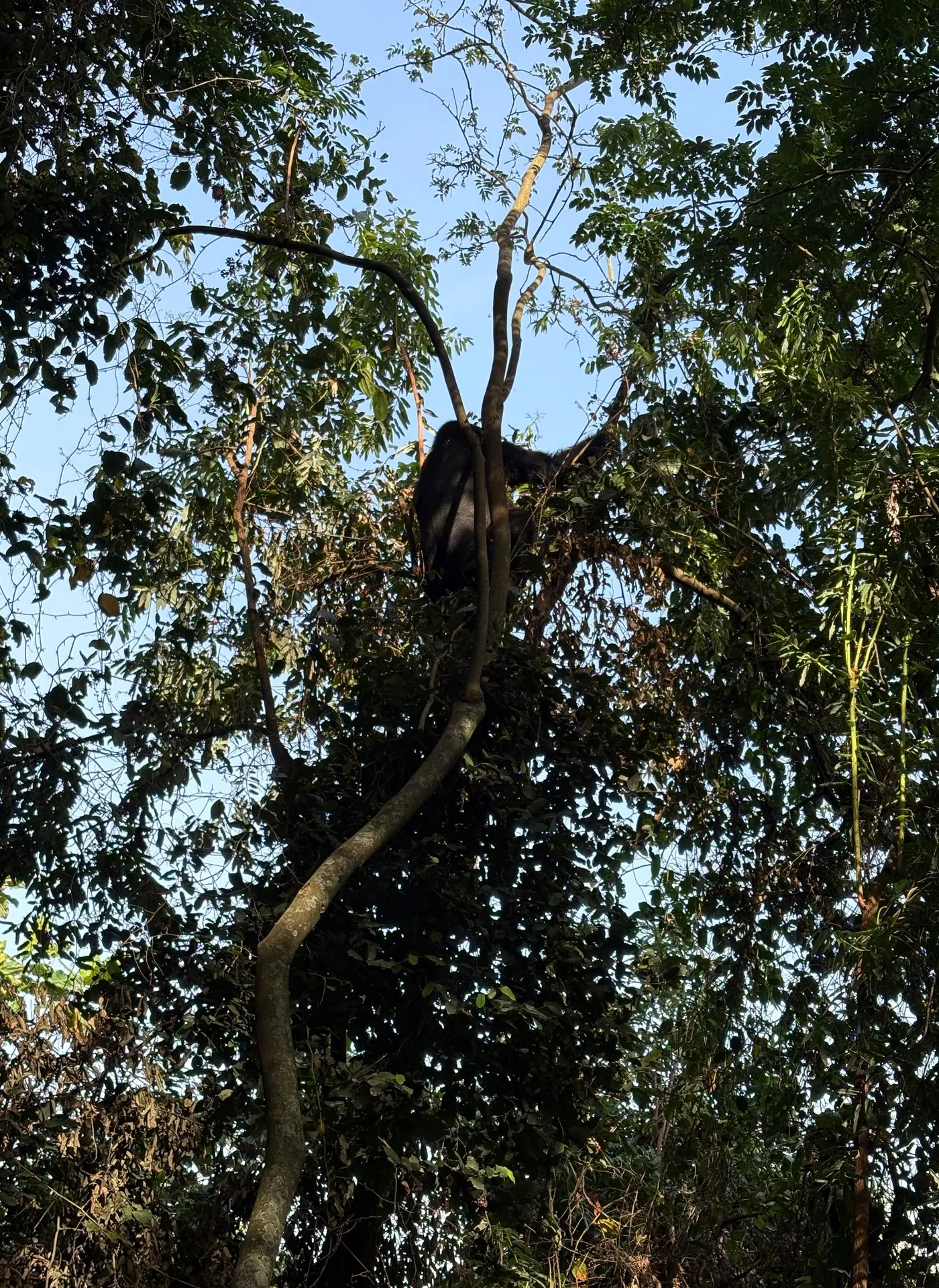
The black rhino reintroduction in 2017 was even more demanding. Five eastern black rhinos arrived from European conservation breeding programmes. Black rhinos had been absent from Rwanda for decades, and their return required not only physical infrastructure — intensive monitoring, twenty-four-hour anti-poaching patrols around known rhino territories — but sustained international fundraising, since each animal and its protection carries significant operational cost. A second translocation in 2019 brought the population to eighteen individuals, making Akagera one of the more significant black rhino populations outside southern Africa.
These reintroductions matter beyond their ecological effect. They signalled to the international conservation community that Rwanda was serious about its protected areas, which in turn attracted further funding, research partnerships, and high-value tourism. The before-and-after photographs that circulated on social media — showing predator-free, overgrazed grassland alongside images of lions and rhinos against the Kagera wetlands — did more for Akagera's visitor numbers than any marketing campaign could have managed.
Community at the Centre: What Makes the Model Work
Standing in the yard of the chicken farmer in Buhoma, watching him check each bird with the quiet confidence of someone who has done it thousands of times, I thought about what conservation economists call the local opportunity cost of living next to a protected area. For families in buffer zones, wildlife can mean crop damage, livestock loss, physical danger, and the frustration of watching land they might otherwise farm remain off-limits. If the park offers nothing in return, the incentive to protect it — or even tolerate it — is close to zero.
Akagera addressed this directly. Beyond the revenue-sharing fund, the management partnership created employment for local people as rangers, guides, hospitality staff, and maintenance workers. The park's lodges were designed with local procurement policies requiring that a defined proportion of food and materials be sourced from nearby communities. The chicken farmer analogy runs precisely: local suppliers became stakeholders in the park's commercial success.
The model is not without tension. Compensation schemes for livestock lost to lions are always contested: farmers argue that the process is slow, the amounts inadequate, and the burden of proof unreasonable. Communities on the boundary sometimes feel that their voices are heard in consultation meetings but not in actual decisions. These are legitimate criticisms, and they persist in Akagera as they do around every protected area in the region. But the overall trajectory — rising community income, declining poaching, stabilising wildlife populations — suggests that the architecture functions better than the alternatives that preceded it.
What the Akagera experience offers for travellers visiting Buhoma is a framework for understanding why gorilla permit fees, lodge choices, and even which coffee you buy at the airport matter. The communities around Bwindi Impenetrable National Park operate under comparable logic: a portion of gorilla permit revenue flows back to local development projects, lodges are incentivised to hire locally, and the forest's continued existence depends on the people surrounding it having more to gain from its protection than from its conversion. Akagera shows what happens when that bargain holds over fifteen years. It also shows what was lost when it did not.
What Akagera's Recovery Means for East African Conservation
Akagera belongs to a broader pattern across East and Central Africa in which parks that had deteriorated through conflict, mismanagement, or inadequate funding have been stabilised through professional management partnerships. The Virunga National Park in the Democratic Republic of Congo, managed by the ICCN with donor support, presents a contrasting and far more difficult case: persistent armed conflict, institutional instability, and vastly larger territory have made recovery far slower and more dangerous for the staff working there. The difference in outcomes between Akagera and Virunga illustrates how much the enabling political environment matters alongside the management model itself.
For East Africa specifically, Akagera's recovery contributes to a regional ecosystem argument: that the savannahs, wetlands, and forests from the Rwenzori highlands through Bwindi and down into the Kagera basin form an ecological continuum whose health depends on connected protected areas. The Nile drainage system, which collects runoff from these landscapes, carries the consequences of land use decisions made in individual parks across national boundaries. Degradation in one node affects water quality and flow downstream; recovery in Akagera contributes to catchment health that extends well beyond Rwanda's borders.
For travellers combining Bwindi gorilla trekking with a Rwanda circuit — a common itinerary from Kampala or Kigali — understanding Akagera's trajectory enriches what might otherwise be a passive wildlife experience. The lions you encounter on a game drive in Akagera are not the descendants of animals that always lived there; they are the product of a deliberate international effort that began with a management decision in 2010 and a translocation flight in 2015. The rhinos you might glimpse near the Kagera marshes are under twenty-four-hour guard and represent a population that did not exist in Rwanda within living memory. These facts transform a game drive from passive sightseeing into something closer to witnessing a living experiment in ecological restoration.
The social media before-and-after coverage that has drawn international attention to Akagera is accurate in what it shows, but it compresses a process that took more than a decade of operational work — daily patrols, community meetings, fence maintenance, donor reporting, veterinary emergencies, political negotiation. The photographs of lions at dawn and rhinos at the waterhole are the visible product of that invisible labour. Understanding the labour makes the photographs meaningful.
When I left the chicken farmer's yard in Buhoma on that June morning, the children from the neighbouring orphanage had gathered nearby, drawn by the smell of food being prepared. Some were shy, hanging back at the edge of the compound; others pressed forward with the direct curiosity of children who have learned to take opportunities when they appear. The farmer made space. The dynamic — cautious approach, patient acceptance, gradual integration — is not a bad description of how communities and protected areas learn, over years, to make room for each other. Akagera did not recover because a management company arrived with good intentions. It recovered because, slowly, enough people decided that the park's survival served their interests as well as the park's.