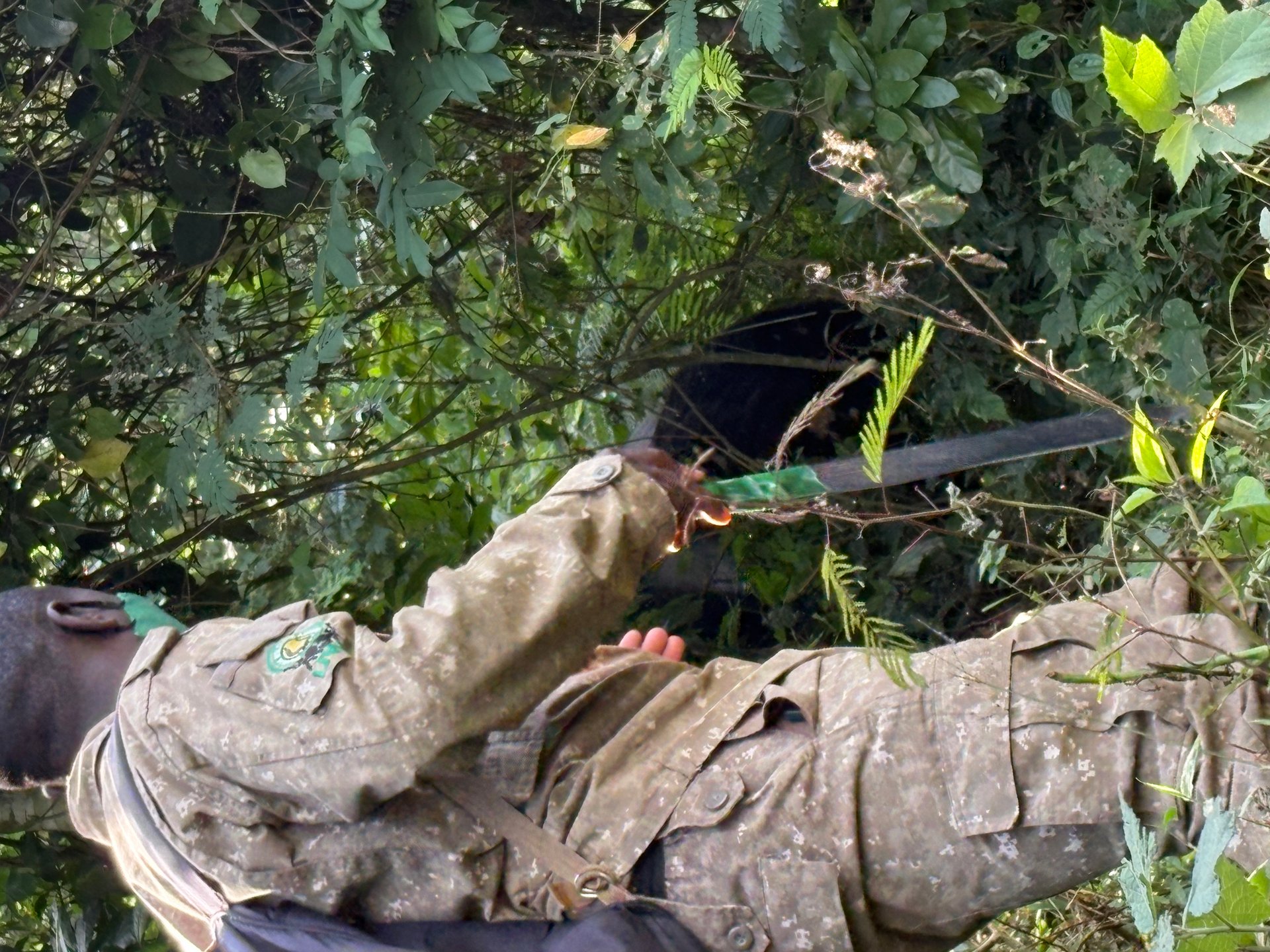
Source: VMGP for the Batwa around BINP, MWE/UWA, December 2025; UWA Batwa Ethnobotany Inventory Project, 2024
The Forest Pharmacy
When Batwa guides lead visitors through the forest on the Batwa Trail and stop to identify a plant, they are not performing a rehearsed script. They are demonstrating knowledge that runs deeper than memory — knowledge that lives in the body, in the trained attention that notices the particular shade of a leaf, the texture of bark, the smell of a crushed stem.
Bwindi Impenetrable Forest hosts approximately 1,000 plant species. The Batwa knew the medicinal properties of hundreds of them. A 2013 study by Fauna and Flora International documented Batwa cultural values in Bwindi and Mgahinga, finding that medicinal plant knowledge was considered one of the most important cultural values for park management — both for its spiritual and practical significance to the Batwa and for its potential contribution to sustainable resource use.
Men collected medicinal herbs for administration to male community members; women gathered them for women and children. This gendered division of medicinal knowledge meant that the system had built-in redundancy — different people held different parts of the pharmacopoeia. But displacement disrupted both streams of transmission simultaneously.
The Herbal Inventory Project
The most important active intervention for Batwa medicinal knowledge preservation is the community-led herbal inventory. Led by Batwa community members working with UWA, Mbarara University, and the World Bank IFPA-CD project, this inventory is documenting the full range of medicinal plants used by the Batwa across three parks: Bwindi Impenetrable, Semuliki, and Mgahinga Gorilla National Parks.
Phase 1 has been completed. The methodology uses Earth Ranger — a digital conservation management tool — to geo-reference each plant's location within the park, combined with high-resolution photographs for identification. The result is a spatially precise, visually documented record of each species and its Batwa-identified properties.
The World Bank VMGP allocates 140 million UGX (~$37,000) for the ongoing second phase of the inventory. Once complete, it will be translated into Rutooro and Rukiga (300 copies in each language) and English (100 copies), and distributed to Batwa communities for practical use — particularly by tour guides who explain plant knowledge to visitors on the Batwa Trail.
Phase 2 will continue. The participation of Batwa elders in taking inventory was explicitly requested by communities during the 2022 consultations and has been consistently supported. One of the notable side effects of the inventory process is that it has increased Batwa awareness of and engagement with sustainable resource use — giving the knowledge economic and conservation value simultaneously.
Demonstration Gardens: Knowledge Outside the Park
One of the agreed actions in the revised VMGP is the establishment of a medicinal plants demonstration plot in BINP's Nkuringo buffer zone — specifically at the edge of the park, where plants can be cultivated outside the strict protection zone. This addresses a critical gap: most of the Batwa's medicinal knowledge references plants that grow inside the park, which is inaccessible for daily use.
By establishing a demonstration garden with cultivated specimens of key medicinal plants, several goals are achieved simultaneously: healers have accessible specimens to harvest and use; teachers have a physical teaching resource; elders can demonstrate knowledge in a context separate from CRM-regulated park access; and documentation teams have plants to photograph and record systematically.
Mbarara University has piloted similar medicinal gardens in other locations. The Nkuringo plot, scheduled for establishment in March-April 2026, will build on this experience. Batwa elders involved in the inventory project will be central to the planting decisions.
Medicinal Plant Program Overview
Frequently Asked Questions
Related Pages
Last updated: September 2026