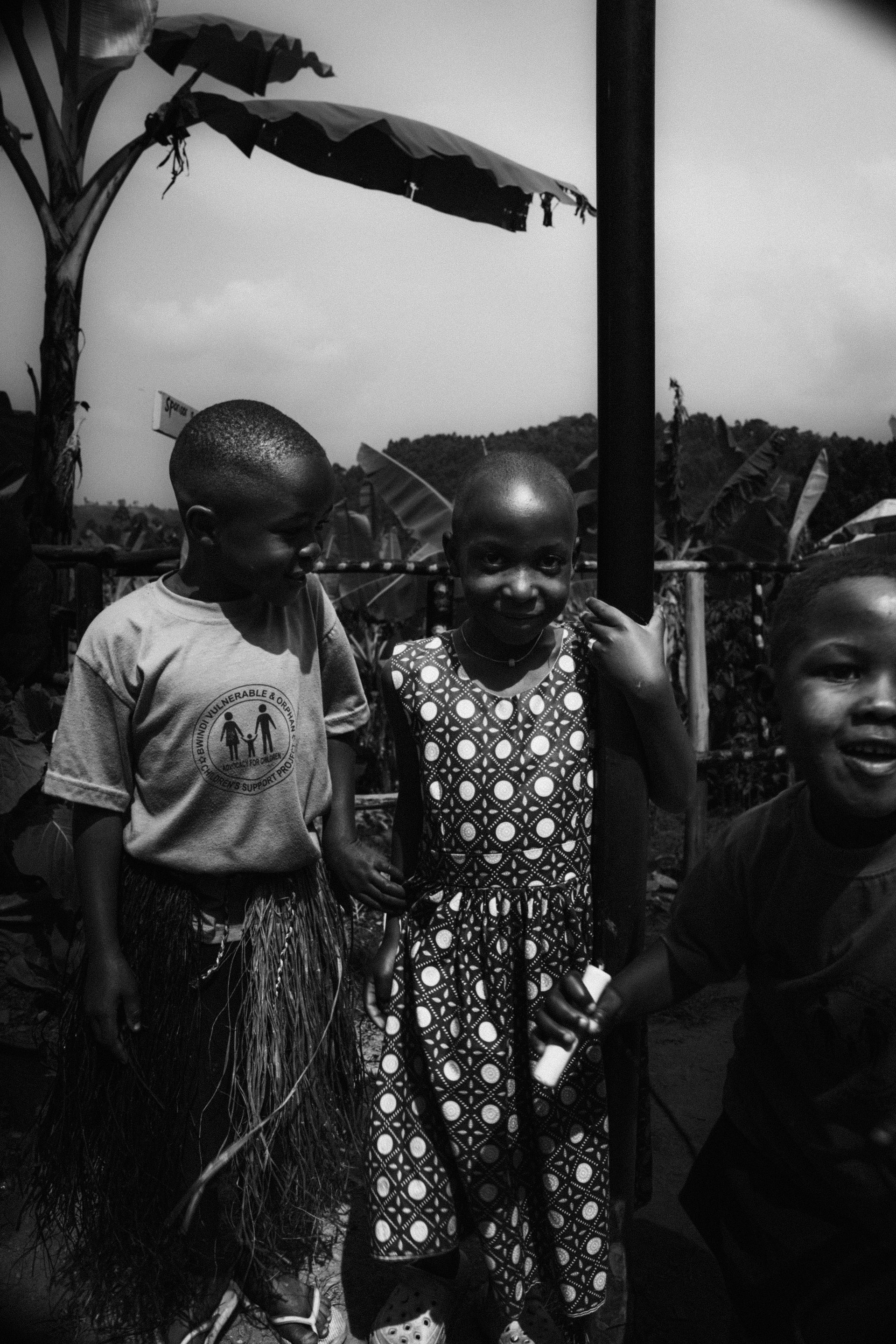
Tourism has fundamentally changed Buhoma. What was once a quiet subsistence farming community at the edge of Bwindi Impenetrable National Park now receives visitors from around the world every day gorilla permits are issued. The effects are tangible: new employment, rebuilt infrastructure, and a generation of young people who have grown up seeing their village as a destination rather than just a place to survive. But the change is not without friction. Residents describe both the opportunities and the pressures that come when an entire economy pivots around a single, permit-controlled wildlife experience.
Quick Facts
- Location:
- Buhoma village, northern sector of Bwindi Impenetrable National Park, southwest Uganda
- GPS (author-verified):
- -0.9735°N, 29.6281°E
- Gorilla permit price:
- USD 800 per person (standard); USD 1,500 for Gorilla Habituation Experience
- Community revenue share:
- 20% of UWA park fees distributed to surrounding communities
- Author visits:
- October 2024 and January 2026 (on-site stays)
- Photos:
- Taken on location by Mark Suer and Susanne Suer
How Tourism Entered the Daily Rhythm of Buhoma
Bags of Portland cement stacked on red laterite soil is not a typical travel photograph. When I documented the construction site of the HopeKitchen in Buhoma in January 2026, I was struck by how ordinary it looked — and how significant it was. Bricklayers were laying courses of red fired brick, pressing them into mortar in exactly the way masons do on construction sites in Europe or anywhere else in the world. The cement came from Kampala on the same trucks that carry supplies to the lodges. The labour came from the village. The initiative came from a partnership between a German NGO and the local community. That scene, mundane and meaningful at the same time, is a fair summary of how tourism development actually operates in Buhoma: it works through small, cumulative projects that visitors rarely see.
Buhoma became Uganda’s original gorilla trekking gateway when the Uganda Wildlife Authority formalised the permit system at Bwindi Impenetrable National Park. The northern sector of the park, accessible via the village, holds several habituated gorilla families. Every morning, groups of up to eight tourists per family set out with armed rangers and a community guide. The permit revenue flows partly to UWA for park management and conservation, and a statutory 20 percent is channelled back to communities surrounding the park. In Buhoma, that money has funded classroom construction, water points, and road maintenance in the years since the system was introduced.
During my visits in October 2024 and January 2026, I spent time in the village itself rather than only on the trails. The difference between arriving as a trekker and staying long enough to notice the texture of daily life is considerable. Children walk to school past lodges where international guests are eating breakfast. Motorcycle guides wait near the park headquarters for clients who want to explore the area between treks. Market stalls sell produce grown in gardens that border the forest boundary. Tourism here is not a separate economy running parallel to ordinary life — it has woven itself into the fabric of the community at every level.
Construction, Infrastructure, and the Visible Face of Development
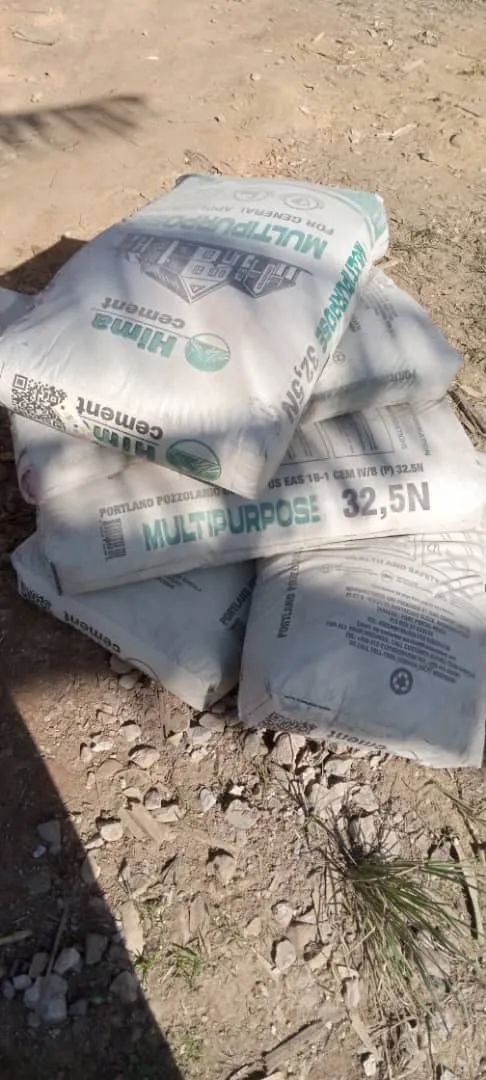
The HopeKitchen project is one of several community-linked infrastructure initiatives that have taken shape in Buhoma over the past decade. A shared kitchen facility can serve community gatherings, school feeding programmes, and training events. The construction I witnessed in January 2026 was using materials sourced partly through tourism-adjacent funding channels — a reminder that the economic reach of gorilla tourism extends well beyond the permit sale itself.
Infrastructure change in Buhoma has been gradual and uneven. The road from Butogota, the nearest sizeable town, was upgraded in stages as lodge traffic increased and international pressure mounted for accessible routes to the park headquarters. Electricity reached parts of the village, enabling lodges to offer reliable charging facilities and improving household living standards in areas where the grid extended. Mobile phone coverage, essential for the guides and motorcycle operators who manage bookings and logistics, improved significantly as demand justified the investment.
What residents describe, however, is a pattern where infrastructure investment tends to concentrate along the tourist corridor — the stretch from the park gate to the main lodges — and diminishes the further you move into the residential parts of the village. The benefit is real but not evenly distributed, and the community conversations around how the 20 percent revenue share should be allocated are ongoing.
This uneven geography of development is not unique to Buhoma. It is a pattern documented across multiple gorilla tourism destinations in East and Central Africa. The challenge for destination managers and local leaders alike is ensuring that the economic weight of tourism translates into benefits for households that are not directly employed in the industry. The community-based tourism initiatives visible in Buhoma — craft cooperatives, cultural performances, guided village walks — are one mechanism for broadening participation beyond the permit-adjacent jobs.
The Gorilla Economy: Who Works, Who Benefits
A single gorilla trekking permit at Bwindi costs USD 800 per person for the standard one-hour encounter with a habituated family. The Gorilla Habituation Experience, which allows visitors to spend up to four hours with a family still in the process of habituation, costs USD 1,500. On a full day at Buhoma’s sector, with permits issued for each habituated group, the revenue generated before a single lodge bed is occupied runs into tens of thousands of dollars. Understanding who captures that value and how much recirculates in the local economy is the central question in any honest conversation about tourism development here.
The jobs that tourism creates in Buhoma span a wide range. At the top of the formal employment ladder are lodge managers, head guides, and UWA ranger staff. Below them are a large number of porter-guides who carry equipment on treks and earn a daily fee that represents a meaningful income by local standards. Motorcycle operators run clients between accommodation and the park gate, to neighbouring communities, and on birdwatching circuits through the surrounding landscape. Market vendors, laundry workers, and construction labourers all receive some income that can be traced back to the presence of international visitors.
The employment picture changes when the park is closed. Disease outbreaks — Bwindi has experienced closure periods linked to Ebola alerts and other health emergencies — eliminate the daily income of hundreds of families without notice. The lesson that residents and operators alike have drawn from these episodes is that over-dependence on a single wildlife product creates structural vulnerability. The diversification efforts now visible in Buhoma — community walks, coffee farm visits, Batwa cultural experiences, multi-day hiking circuits — are in part a direct response to the economic shock that comes when gorilla trekking stops.
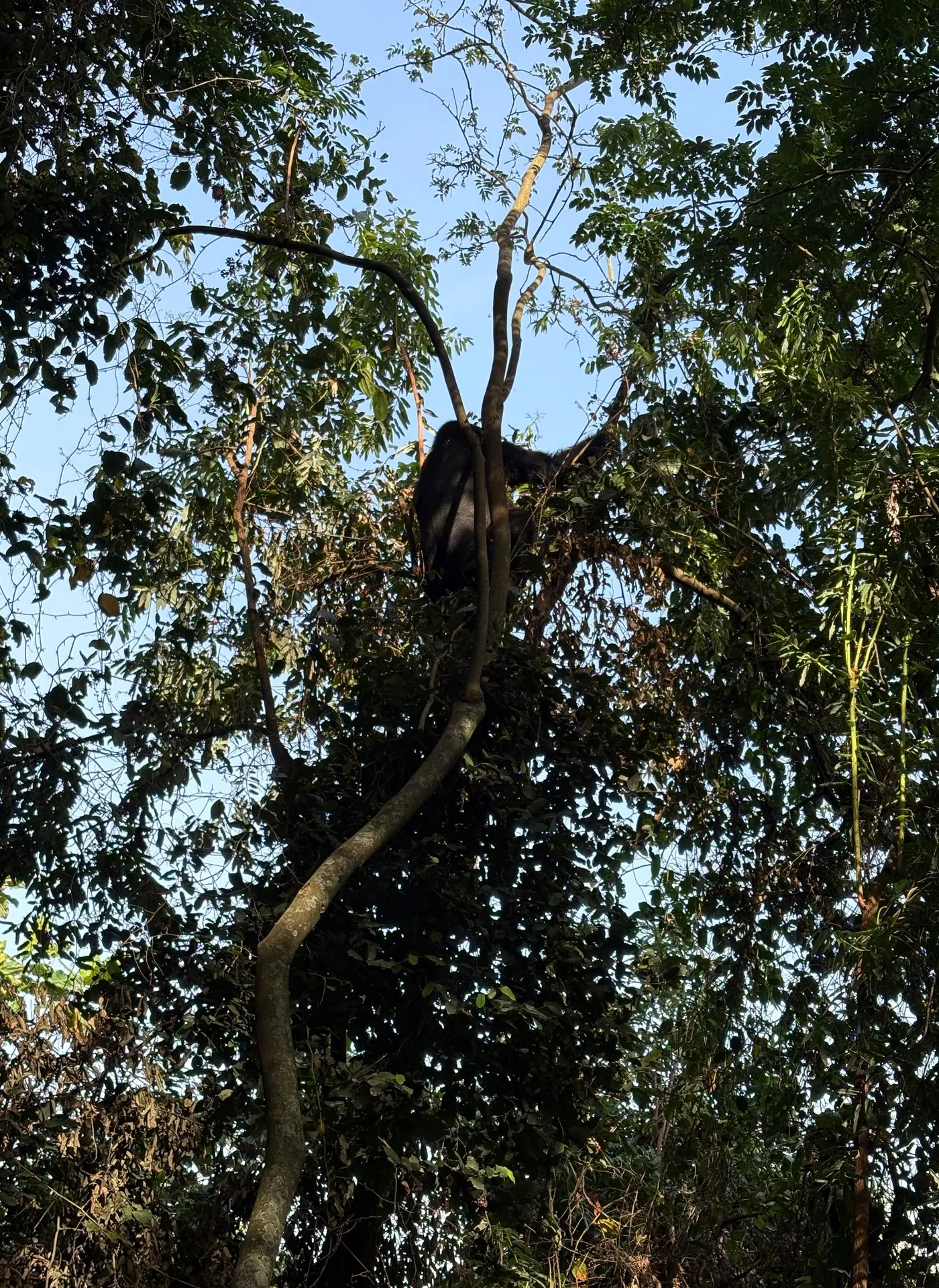
When I joined a gorilla trek in January 2026, our group reached the first gorilla family after roughly an hour of walking through dense montane forest. The silverback was in the canopy rather than on the ground, moving slowly through the upper branches and pulling leaves toward him with one hand while supporting himself with the other. That image — a 200-kilogram mountain gorilla feeding quietly fifteen metres above the forest floor — is what people travel from every continent to see. The fact that local guides know exactly how to locate these animals, read their movements, and keep groups at a safe distance represents genuine expertise built over years of working alongside UWA researchers. That knowledge is the foundation on which the entire tourism economy rests.
Community Perspectives: Tensions and Aspirations
Any destination guide that presents Buhoma as simply a happy story of conservation meeting community benefit is leaving out the harder conversations that residents themselves are having. Gorilla tourism brings money into the village, but it also brings pressure. Land around the park boundary has become more valuable, making it harder for young families to establish homesteads in areas they might have farmed a generation ago. The cost of locally purchased goods — food, construction materials, transport — has risen in line with the presence of high-spending visitors, a pattern familiar from tourism-heavy destinations worldwide.
Residents who work directly with tourists describe a set of expectations around hospitality, reliability, and performance that require a kind of constant professional readiness. A guide who has been working since 5 a.m. tracking a gorilla family and returns to the village in the afternoon is still expected to be available for a subsequent client query, answer a message from a tour operator, or assist with a logistical problem that has arisen at short notice. The informal working hours of community-based tourism are rarely counted in any economic analysis of the sector’s benefits.
There is also a generational dimension to the community conversation. Older residents remember Buhoma before the park was gazetted and before the permit system was introduced. They describe a landscape that was used for farming, hunting, and gathering — uses that are now restricted or prohibited. Their relationship with the park is marked by a historical loss that the current revenue-sharing arrangements do not fully address. Younger residents, by contrast, have grown up within the tourism economy. They have more formal education, more access to mobile communication, and higher aspirations for employment in lodge management, guiding, and hospitality.
What emerged from conversations during my stays — and from observing the rhythms of the village over multiple visits — is that Buhoma residents are not passive recipients of tourism’s effects. They are active agents in shaping how the industry develops here. Community meetings set priorities for the revenue share. Local leaders engage with UWA on ranger recruitment and community liaison. Entrepreneurs identify gaps in what visitors want and build small businesses to fill them. The story of Buhoma is not one of tourism happening to a community; it is one of a community working, imperfectly and pragmatically, to make tourism work for them.
Sustainability, Resilience, and the Long View
The question of whether gorilla tourism in Buhoma is sustainable in the full sense of that word — ecologically, economically, and socially — does not have a simple answer. Ecologically, the evidence from Bwindi is cautiously positive. Mountain gorilla numbers have increased over the past two decades, a result of conservation investment funded in large part by permit revenue. The population in Bwindi and the Virunga massif combined now exceeds one thousand individuals, making it one of the few great ape species with a growing rather than declining wild population.
Economically, the concentration of value in permits controlled by UWA and distributed to a limited number of internationally connected tour operators means that the local capture of tourism spending is lower than it could be. The shift toward community-operated accommodation, community guide enterprises, and locally sourced food supply chains is a structural response to this challenge. Progress is real but slow, and the gap between what a permit costs at international booking level and what a porter earns on a trek remains very large.
Socially, the sustainability question is perhaps the most complex. Tourism has brought material improvements to Buhoma that are genuinely valued by residents. It has also introduced dependencies, inequalities, and cultural pressures that require ongoing attention. The communities that navigate this most successfully tend to be those that maintain strong internal institutions — village councils, women’s groups, youth associations — capable of channelling tourism revenue toward shared priorities and mediating the conflicts that arise when land, money, and rapidly changing expectations collide in a small village.
Buhoma, as I observed it across visits in October 2024 and January 2026, is a village in the middle of this negotiation. The cement bags at the HopeKitchen construction site, the children in red school uniforms, the guides waiting at the park gate, the silverback in the canopy — all of these images belong to the same story. It is a story about what happens when some of the world’s rarest wildlife lives next to one of the world’s poorest communities, and about the extraordinary human effort required to make that situation work for both.