Photo: Mark Suer, January 2026 — GPS: -0.9735, 29.6281
Gorilla Trekking in Buhoma — A First-Hand Guide to Bwindi's Original Sector
What Happens on the Day of Your Trek
The morning of your gorilla trek begins at the Buhoma park headquarters, where your group meets for a briefing from a UWA ranger. You will be told which gorilla family you are visiting, what their territory looks like that day, and the rules that apply once you are with the animals: stay seven metres away at all times, keep voices low, do not eat in the gorillas' presence, and no flash photography. The briefing is short and practical. Groups depart at 8:30.
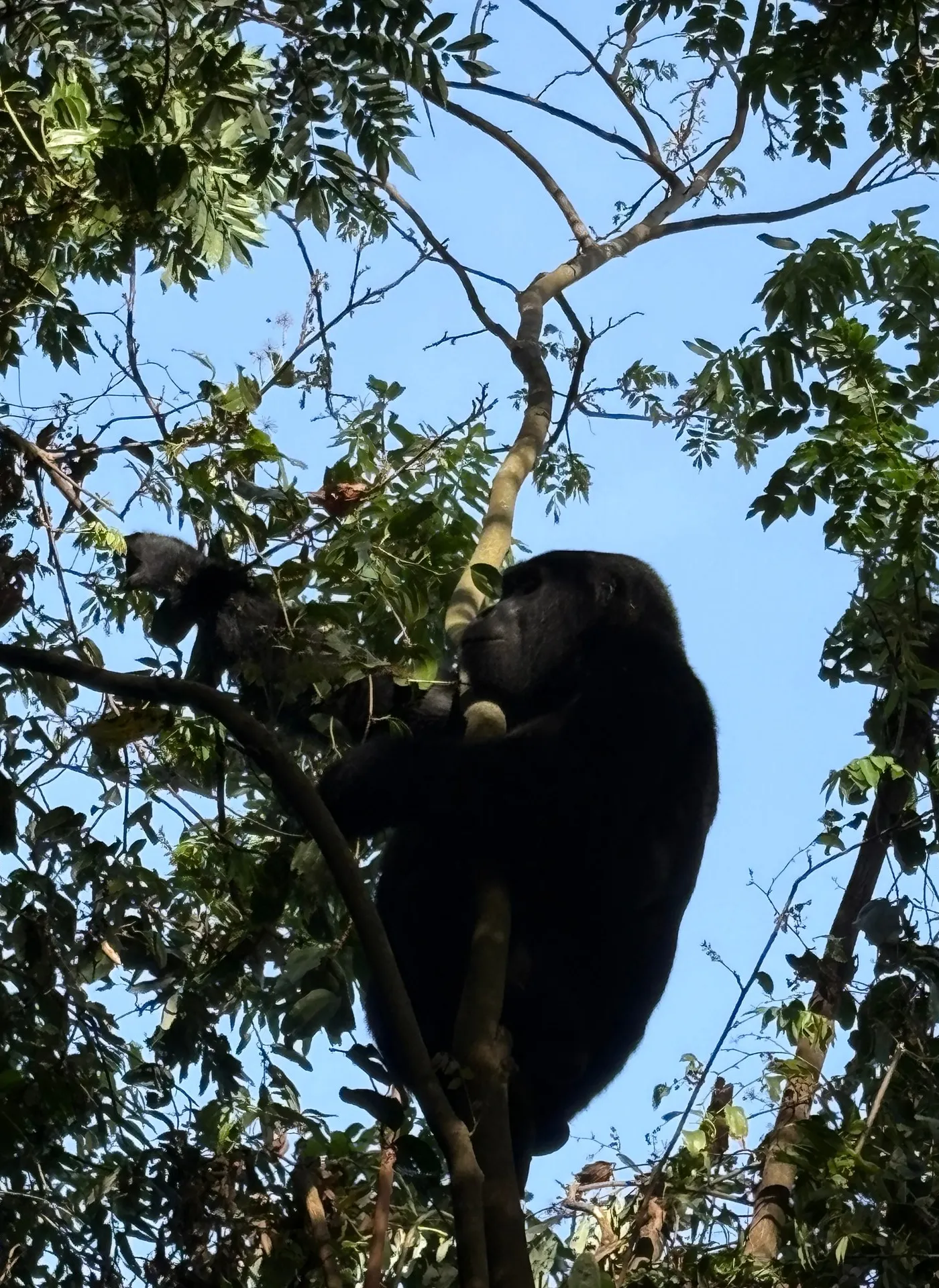
From that point, the trek itself is unpredictable in the best possible way. Trackers — UWA staff who locate the gorilla family from first light every morning — radio in the family's position, and your guide adjusts the route accordingly. Some days the walk is short. In January 2026, we reached the first gorilla family after just one hour of walking. Ahead of us, sitting in the lower branches of a tree at a height we could almost touch, was a large male pulling leaves from a branch with slow, deliberate concentration. The forest was completely quiet except for the sound of tearing foliage.
January 2026, Buhoma sector. This gorilla stayed in the tree for the full hour of our visit, eating steadily and entirely unbothered by our presence. Photo: Mark Suer, GPS confirmed: -0.9735, 29.6281.
On a separate visit, also from Buhoma, the same forest produced a completely different encounter. After three hours of walking through dense undergrowth on steeper ground, we found a gorilla family in a different part of their territory. One large individual was moving through the understorey close enough that we could see the texture of the fur, the patience in its eyes. Both encounters felt private — the kind of experience that is very difficult to describe accurately to someone who has not had it.
In June 2026, back in Buhoma sector again, a gorilla was feeding high in the canopy — moving through the upper branches of a tall tree with a lightness that seems improbable for an animal that weighs as much as a grown man. From the forest floor, looking up through gaps in the leaves, we watched it for the full hour before the tracking guide signalled the time was up and we walked back to the park gate.
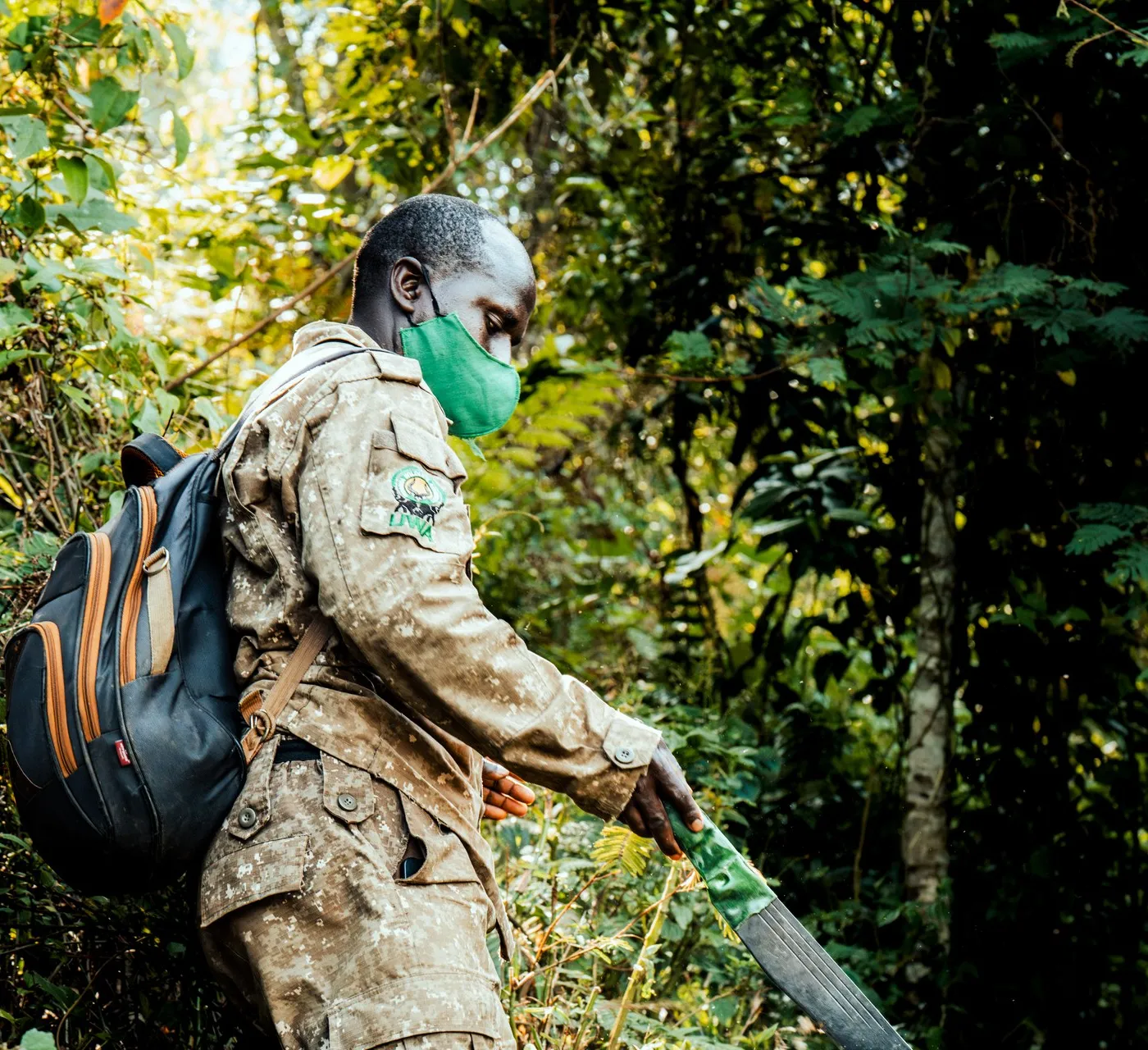
A UWA ranger leads the way through dense undergrowth in Buhoma sector, January 2026. Rangers are armed as a standard protocol — in practice they are experienced forest guides who know the terrain well and are quick to help on difficult sections. Photo: Mark Suer, GPS: -0.9762, 29.6282.
Each trek is accompanied by a tracking guide and two UWA rangers. The rangers are armed — which can feel surprising at first — but in practice they are relaxed and helpful company on the trail, pointing out plants and birds along the way and offering a steadying hand on the steeper, more slippery sections. Their presence is standard protocol, not an indicator of any threat. The terrain in Buhoma sector varies from moderate forest paths to steep, root-covered climbs through dense vegetation. Porters are available for hire at the park gate if you want support carrying your pack or a steadying hand on the difficult sections — a practical option worth considering if you are unsure about the terrain.
The Gorilla Families in Buhoma Sector
Buhoma sector has several habituated gorilla families — the exact number varies as habituation is an ongoing process, and family compositions change over time as young males leave to form new groups or join existing ones. The UWA assigns each visiting group of trekkers to a specific gorilla family on the day, based on fitness levels indicated during the briefing and the current location of each family.
The gorillas in Bwindi Impenetrable National Park are part of a population of approximately 400 mountain gorillas — genetically isolated from the Virunga gorillas further south. According to the Uganda National Status of the Environment Report 2024 (NSOER), Uganda holds around 53.9% of the world's remaining mountain gorilla population across Bwindi and Mgahinga. That figure makes Buhoma not just a tourism destination but a genuinely critical site for one of the rarest animals on earth.
Habituating gorillas to human presence — a years-long process of gradual, carefully managed exposure — is the foundation on which gorilla trekking rests. The work was pioneered in part by primatologist Dian Fossey in the Virunga mountains, and her legacy is maintained today by organisations such as the International Gorilla Conservation Programme, which works across Uganda, Rwanda and the DRC. In Bwindi, the UWA manages habituation directly.
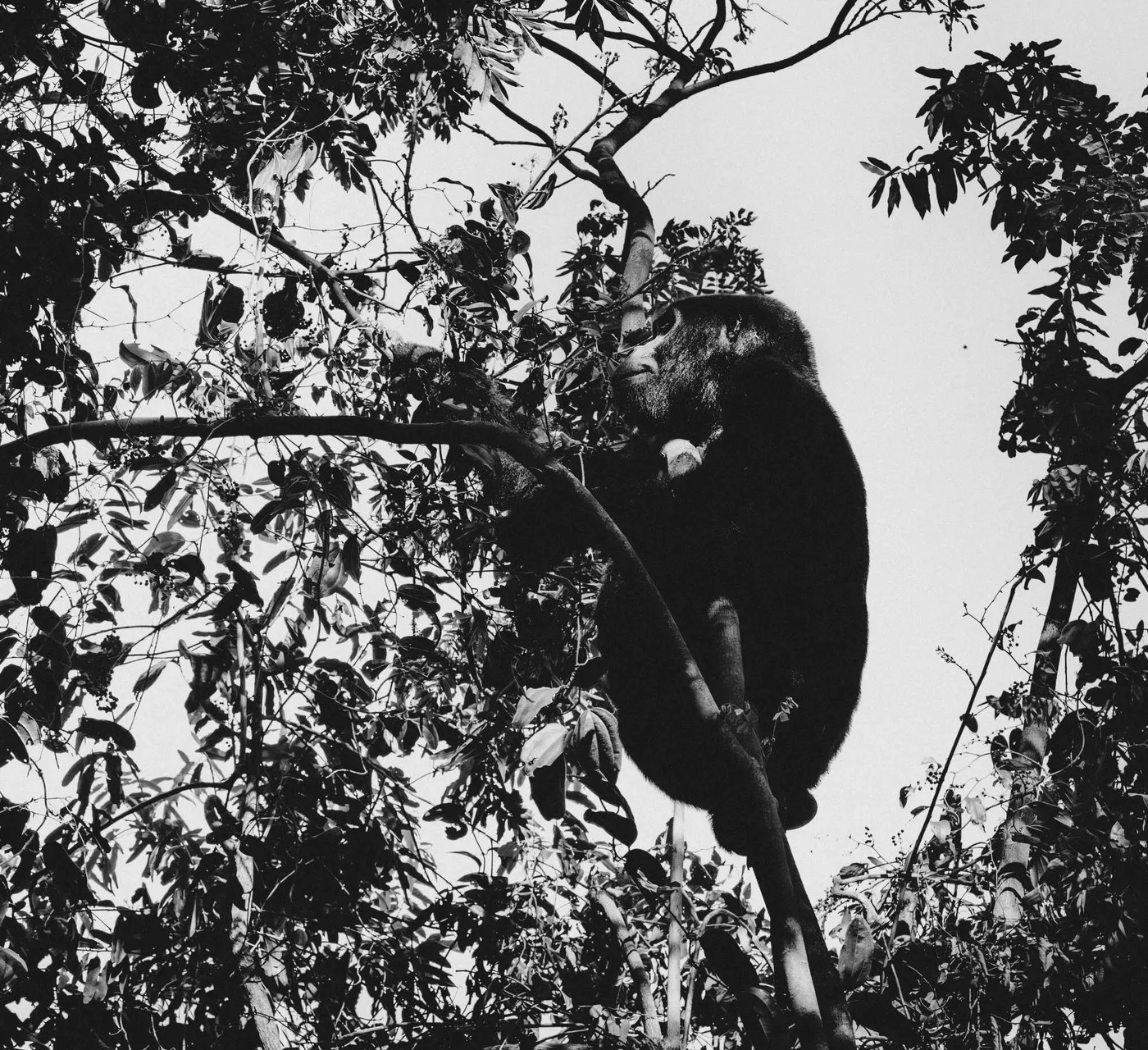
A gorilla in the forest canopy of Bwindi — a reminder that these encounters look completely different depending on where the family ranges that day. The same sector, a different part of the forest, different light, different behaviour. Photo: Mark Suer.
Your Permit — $800 USD in 2026
A gorilla trekking permit costs $800 USD per person for foreign non-residents in 2026. This is set by the Uganda Wildlife Authority and is the same price regardless of which Bwindi sector you choose. The permit covers:
- Park entry fee for Bwindi Impenetrable National Park
- An experienced UWA tracking guide assigned to your group
- A team of trackers who locate the gorilla family from early morning
- Trail cutters who clear the path ahead of you where needed
- Two armed UWA rangers accompanying the group throughout
- Exactly one hour in the presence of a habituated gorilla family
Permits are sold by the UWA in Kampala and must be booked in advance at ugandawildlife.org. You must present your booking confirmation at the park headquarters in Buhoma on the morning of your trek. Book as early as possible — peak season demand (June to September and December to February) consistently outstrips permit availability, and many slots are secured 12 to 24 months ahead. A small tip for the guide and ranger team at the end of the trek is expected and appreciated; the amount is at your discretion.
Rules in the Forest
- Maintain a minimum distance of 7 metres from the gorillas at all times
- Maximum 8 visitors per gorilla family per day
- Minimum age 15 years
- No flash photography
- Do not eat or drink in the gorillas' presence
- Do not point directly at the gorillas
- If a gorilla charges or bluffs, follow your guide's instructions — crouch, look down, remain still
- Visitors with colds, flu or other contagious illness will not be permitted to trek
The 7-metre rule and the one-hour limit exist to protect the gorillas from stress and disease transmission — mountain gorillas share around 98% of human DNA and are susceptible to human respiratory illnesses. These rules are enforced seriously by the UWA guides, and in practice they do not diminish the experience in the slightest. At 7 metres, a silverback is close enough to fill the frame of a standard camera lens.
Beyond the Trek — What Buhoma Offers
The gorilla trek usually ends by early afternoon, leaving the rest of the day free. Buhoma has more to offer than any other Bwindi sector in terms of activities outside the forest: community walks through the village, visits to local coffee projects, birding along the park boundary, and cultural experiences organised through community tourism operators at the park gate.
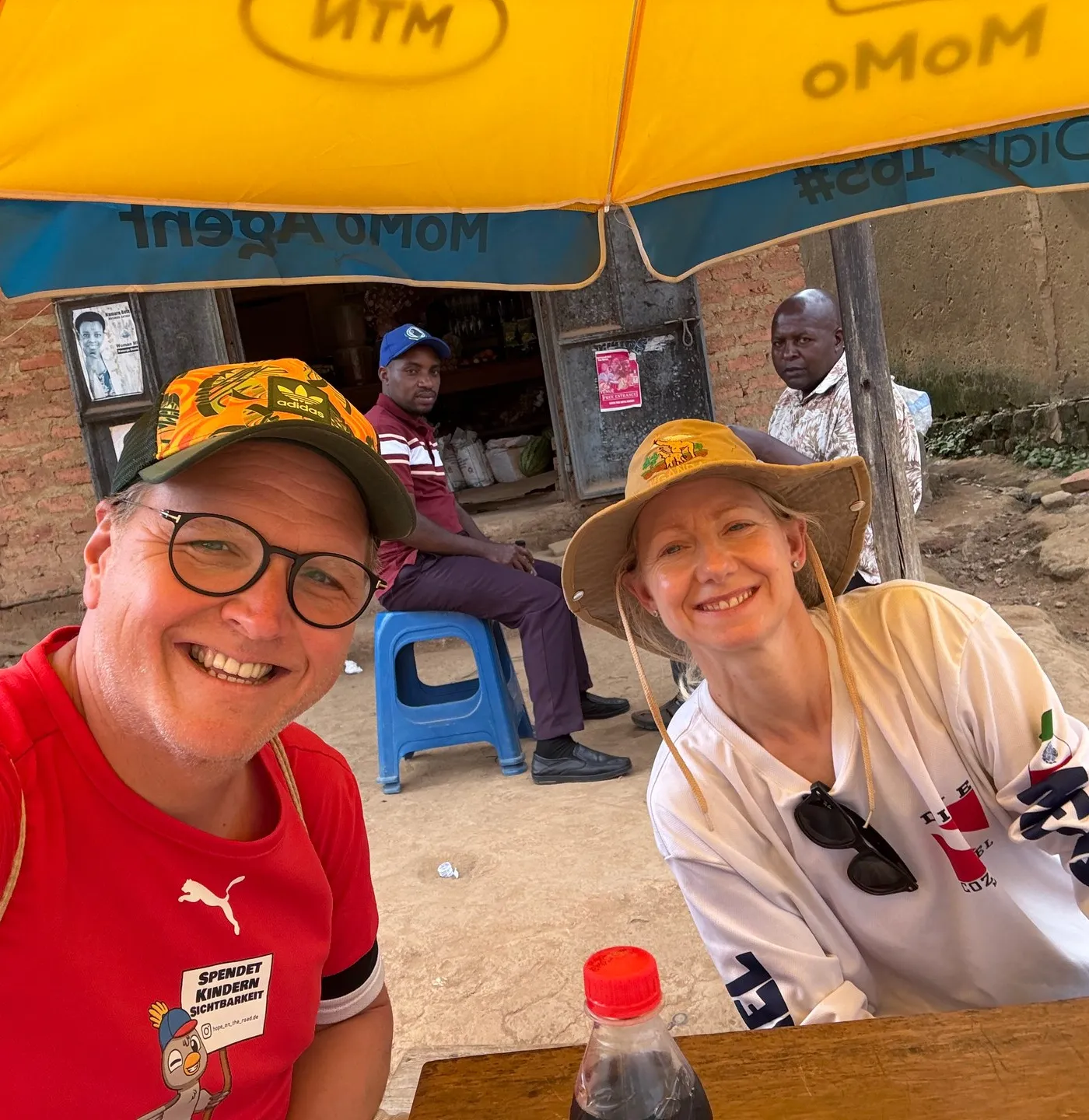
Buhoma's main road, June 2026. After a morning trek, the village has its own rhythm — small shops, BodaBoda drivers, children heading to school. Photo: Mark Suer, GPS: -0.9673, 29.6145.
On the road outside Gorilla Bluff Lodge, we met Clinton — a 17-year-old who paints and sells pictures from a small roadside display. He lost his father young and uses what he earns to support his mother, two brothers and a younger sister with a disability. His goal is to become a tour guide. He talked about it with the kind of calm certainty that is more convincing than enthusiasm. These are the encounters that make a few extra days in Buhoma worth planning for.
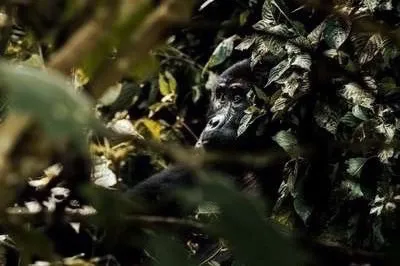
A mountain gorilla peers through the forest understorey during a trekking encounter in Bwindi. The 7-metre minimum distance means encounters feel close without placing the animals under stress.
When to Trek — Season and Conditions
Gorilla trekking in Buhoma runs every day of the year, and gorilla encounters are guaranteed regardless of season — the forest does not close, and the gorilla families are tracked daily. That said, conditions vary significantly. The dry seasons (June to September and December to February) offer firmer trails, less mud, and easier going on the steep sections. The wet seasons (March to May and October to November) can mean deep mud, wetter vegetation and longer treks as gorillas move more widely.
In January 2026 — the tail end of the short dry season — the trails were firm and the forest lit by clear morning light. In June 2026 — early in the long dry season — the forest was denser and lusher after the preceding rains, with the gorillas ranging higher and more actively. Both visits produced remarkable encounters. The season shapes the experience, but it does not determine whether you see gorillas.
Peak season is busiest for permits and lodges. If you are flexible on timing, the shoulder periods — late November or early March — can offer easier booking and a quieter village while still providing good trekking conditions.
Frequently Asked Questions
How much does gorilla trekking in Buhoma cost in 2026?
$800 USD per person for foreign non-residents. This is the Uganda Wildlife Authority permit price for 2026, covering park entry, guide, trackers, trail cutters, two rangers and one hour with a habituated gorilla family.
How long does the trek take?
The walk to the gorilla family can take one hour to most of the day — it depends on where the family is that morning. You then spend exactly one hour with the gorillas before returning. Treks depart at 8:30 from the Buhoma park headquarters.
Why choose Buhoma over other Bwindi sectors?
Buhoma has the park headquarters, multiple habituated gorilla families, the widest range of accommodation and the best community activities. It is the most accessible sector from Kampala and the most practical base for combining gorilla trekking with other activities.
How far in advance should I book a permit?
Book as early as possible — ideally 12 to 24 months ahead for peak season. Book through the Uganda Wildlife Authority at ugandawildlife.org and secure your lodge accommodation at the same time.
What is the best time of year for gorilla trekking in Buhoma?
The dry seasons (June to September and December to February) have the most comfortable trail conditions. Gorilla encounters happen year-round. We had successful encounters in both January and June 2026 — very different conditions, equally remarkable experiences.
Is gorilla trekking in Buhoma safe?
Yes. Every group is accompanied by a tracking guide and two armed UWA rangers throughout the trek. The gorillas are well habituated after years of careful conditioning and behave calmly around visitors. The 7-metre minimum distance rule is enforced by the guides and protects both gorillas and trekkers.
What should I bring for gorilla trekking in Buhoma?
Long trousers, a long-sleeved shirt, waterproof hiking boots, gardening gloves, a rain jacket, insect repellent and a small daypack with water and snacks for the walk. Neutral earth colours are recommended. Porters are available at the park gate if you prefer to travel light.
Gorilla Permit Guide
How to book, what to bring on the day, and what happens if you need to cancel.
Gorilla Families in Bwindi
The habituated gorilla families across all four sectors — names, sizes, territories.
What to Expect on Your Trek
A realistic account of a gorilla trekking day — briefing, forest, encounter and back.