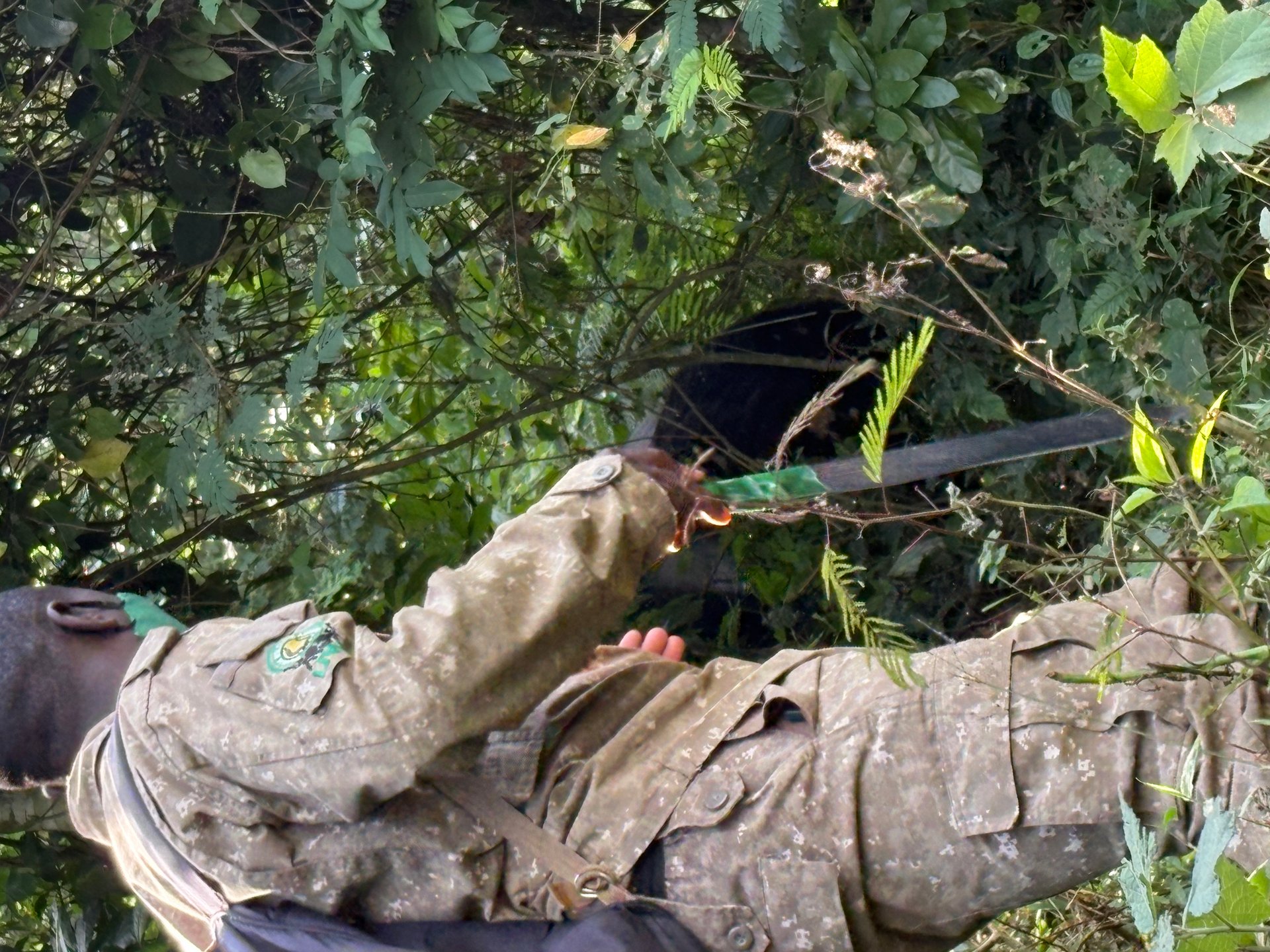
The dry seasons — June to September and late December to February — offer the most reliable trail conditions for gorilla trekking in Bwindi. The steep forest paths are firmer, rainfall is less frequent, and visibility in the canopy is generally better. The green (wet) seasons — mid-March to early June and October to December — bring more affordable accommodation, lower visitor numbers, a higher chance of securing a gorilla permit at shorter notice, and a forest in full canopy colour. Gorilla trekking is possible and worthwhile in every month of the year.
Quick Facts
- Main dry season:
- June–September
- Secondary dry season:
- Late December–February
- Long rains:
- Mid-March to June
- Short rains:
- October–December
- Peak booking months:
- July, August, Dec–Jan
- Quietest months:
- April, May, November
- Gorilla permit (2026 standard):
- USD 800
- Peak season booking lead time:
- 3–6 months ahead
- Mgahinga permit window:
- Max 2 weeks in advance
- Buhoma elevation:
- ~1,500 m
- Charter flights Entebbe–Kisoro:
- ~USD 200 return
- Kabale–Buhoma road 4WD needed:
- Strongly in wet season
Southwest Uganda's Rainfall Cycle — Two Wet Seasons, Not One
Uganda sits on the equator, which means it does not experience the single wet-dry cycle that defines seasonal planning in temperate countries. Instead, southwest Uganda receives rainfall in two distinct periods: the long rains run roughly from mid-March through to early June, with March, April and May typically recording the heaviest rainfall totals. The short rains arrive again in October and run through December, though with somewhat less intensity than the long rains.
The dry periods fall between these two wet seasons: June through September is the main dry season, when the forest is at its driest and the trails at their most stable. Late December through to February is the second dry window — shorter and somewhat less reliable, with January and February recorded as the hottest months of the year in the region. At the elevation of Buhoma (around 1,500 metres above sea level) and in the Bwindi forest (reaching above 2,600 metres), heat is relative — even in the driest months, mornings are cool and the forest itself maintains a persistent humidity that no calendar can fully eliminate.
Regional variation within southwest Uganda adds another layer to this picture. The Kigezi Highlands, which include Buhoma, the Virunga volcanoes around Kisoro, Lake Bunyonyi, and the country's far southwestern corner, sit at higher elevation than the rest of Uganda and receive more reliable rainfall than the national averages suggest. The forest itself generates its own microclimate — Bwindi draws moisture from the Congo Basin and maintains higher humidity than the surrounding hills even during dry periods.
Dry Season (June–September and December–February) — Why Most Visitors Choose It
The case for visiting during the dry season is straightforward and the trails make it obvious within the first fifteen minutes of walking. Bwindi's gorilla trekking routes are steep — genuinely steep, with sections that require both hands at times and long descents where the path narrows to a metre-wide cut through dense vegetation. In dry conditions, the red-clay soil that underlies most of the forest floor compacts into a firm, manageable surface. In wet conditions, the same soil becomes a slide.
The January 2026 visit — 11 days in Buhoma, beginning in the short dry season — provided the clearest illustration of what dry-season trekking looks like. After the morning briefing at the UWA gate, the trek to the first gorilla family took under an hour on trails that were entirely navigable in standard hiking boots. The forest floor was moist but not wet, the leaves underfoot were compressed rather than slippery, and the steepest descent on the return journey required nothing more than careful footing. The gorilla encounter — a family member sitting in a tree feeding on leaves, photographed by Mark Suer at GPS coordinates -0.9735°N, 29.6281°E — lasted the full allocated hour without any concern about deteriorating weather.
Dry season conditions also open up the non-gorilla activities that southwest Uganda offers. The Rwenzori Mountains — two to three hours north of Buhoma — are at their most accessible for summit expeditions in the dry season; the high ridges are frequently socked in cloud during the wet months and snow conditions on the upper peaks change unpredictably with sustained rainfall. The multi-day walks that connect Buhoma, Nkuringo, and Kisoro — roughly twenty kilometres of path through some of the most visually striking terrain in East Africa, with a canoe crossing of Lake Mutanda — are possible year-round but significantly more enjoyable when the trail is not running with water.
The trade-off for dry-season reliability is demand. Peak months — July and August in particular, and the Christmas-New Year window — are when international visitors concentrate. Gorilla trekking permits for peak dates can be fully allocated months in advance, and lodge accommodation across Bwindi's sectors fills up correspondingly. Peak-season visitors who have not booked permits three to six months ahead may find themselves without options.
January and February sit in the secondary dry window. These months are typically hot — the hottest of the year at lower elevations — but at Buhoma's altitude the heat is moderated and the evenings remain cool. December through February is popular with visitors from the northern hemisphere escaping winter, which pushes demand higher over the Christmas and New Year periods but tends to leave the first weeks of February relatively quiet.
The Green Season (March–June and October–December) — The Underrated Choice
The wet season in southwest Uganda has a consistently poor reputation that is not entirely deserved. Rain during the wet months usually falls in concentrated bursts — often in the afternoon — rather than as sustained all-day coverage. A typical wet-season day in Buhoma involves a clear or partly cloudy morning, increasingly dramatic cloud build-up through the middle of the day, a heavy downpour at some point between two and five o'clock, and then a clear or partly clear evening. The gorilla trekking briefing is at seven-thirty in the morning; most treks are completed by noon or early afternoon, before the rain arrives. In practice, many wet-season gorilla trekkers complete their trek without getting wet at all — or get caught in a brief shower on the return walk that adds atmosphere rather than misery.
What the wet season does genuinely change is the trail condition. The steep clay paths of Bwindi become slippery when wet, and the ranger and guide teams are accustomed to managing this — trekkers are issued rubber boots at some departure points, and the pace of wet-season treks is deliberately slower to allow careful footing. Nobody fell. The gorilla encounter itself was completely unaffected by the conditions.
The green season's genuine advantages deserve to be named clearly. First, visitor numbers are lower — sometimes significantly so. Lodges in Buhoma that operate at near-capacity in July will often have availability in April and November without advance notice. Staff have more time for each guest. The briefing groups are smaller. The forest is less trafficked. Second, accommodation prices in the green season are frequently lower, particularly for mid-range lodges and guesthouses. Third — and most practically significant for independent travellers — gorilla trekking permits are more available at shorter notice during the wet months. The standard booking lead time for permits in peak months is several months; in the quiet season, permits have been available within days or even the same week.
The landscape in the wet season is also genuinely beautiful in a way the dry season cannot match. The savannah at lower elevations turns a vivid green. Newborn animals appear in the national parks to the north. The Bwindi forest, already dense and dark, intensifies its colour under heavy rainfall. Waterfalls along the trekking routes that are barely a trickle in August run full and loud in April. For photographers, the soft diffuse light of overcast wet-season days often produces better results than the harsh contrasts of dry-season midday sun.
Gorilla Permits, Pricing, and When to Book — What Season Changes
Gorilla trekking permits for Bwindi are issued and managed by the Uganda Wildlife Authority. The standard price in 2026 is USD 800 per person for foreign non-residents — this applies year-round for most of the year. Historically, a discounted low-season permit rate has been available for the quietest months: April, May, and November. Verify current pricing and availability directly with UWA or your tour operator, as permit pricing has been revised at intervals and the low-season structure may change.
The permit covers the UWA briefing, ranger and guide services for the trek, and the one-hour encounter with the assigned gorilla family. It does not cover transport to the park, lodge accommodation, porter fees (optional but strongly recommended on steeper routes), or tips for guides and rangers.
Booking strategy depends heavily on travel dates. For July, August, December, and January — the peak period — booking three to six months ahead is realistic for securing permits; some dates fill earlier than that when group bookings land. For March, April, May, and November — the green-season low — permits are often available within days of the planned date. For the shoulder months (February, June, September, October), lead times vary: some weeks fill early, others remain available until close to the date.
The situation at Mgahinga Gorilla National Park, where the Nyakagezi family is the single habituated group, operates differently. Because the Nyakagezi family moves regularly between Uganda, Rwanda, and the Democratic Republic of Congo — sometimes spending months on the Rwandan or Congolese side of the border — Mgahinga permits can only be booked a maximum of two weeks in advance. This limitation makes Mgahinga impractical for visitors with fixed itineraries but popular with independent travellers who can adjust timing to match the gorillas' current position.
Getting to Buhoma — How the Journey Changes by Season
The road from Kabale to Buhoma — approximately 60 kilometres of largely unpaved track through the Kigezi hills — is the single practical variable in the Bwindi journey that changes most dramatically between seasons. In dry conditions, the road is passable in most vehicles with reasonable ground clearance, though a 4WD is always preferable for the final section above Butogota. In wet conditions, the same road can become difficult or impassable without a 4WD, and some sections become significantly muddy after heavy overnight rain.
For visitors travelling by public transport from Kampala, the main intercity bus to Kabale takes eight to nine hours. From Kabale to Kisoro, shared minibuses (matatus) cover the two-to-three-hour journey. For the final leg to Buhoma from Butogota, a special hire vehicle costs 55,000 to 75,000 UGX; a boda boda motorcycle for a single passenger runs around 15,000 UGX. Private vehicle hire from Kabale — a car with driver for the full Kabale-to-Buhoma transfer — costs around USD 100 for a same-day return journey. A 4WD costs proportionally more.
For travellers with less time or those prioritising comfort over cost, charter flights connect Entebbe with the small airstrip at Kisoro. Return charter flights from Entebbe run to approximately USD 200 per person with operators including AeroLink and Eagle Air. The flight time is around an hour and a half, compared to a full day by road from Kampala.
For visitors combining Buhoma with the broader southwest circuit, an alternative and genuinely memorable transfer route runs between Buhoma and Kisoro on foot. Specialist guiding companies offer two-day guided walks of approximately twenty kilometres, following paths through the hills between the two towns. The route includes a canoe crossing of Lake Mutanda in a traditional dugout — roughly two hours from one bank to the other — with a lodge on the lake shore for the overnight stop. This route is best attempted in dry-season conditions.
Month by Month — Practical Expectations for Each Period
January and February fall in the short dry season. Conditions are good for trekking, trails are firm, and the landscape is dry. These months are popular with European winter visitors, making Christmas-to-January the most competitive booking period after July-August. February quiets down after the initial holiday rush and can be a reasonable shoulder option.
March, April and May are the long rain months, with April and May recording the heaviest precipitation. Trail conditions become progressively more challenging from March onward, and the mud on steeper sections can require significant effort and appropriate footwear. Visitor numbers drop substantially, permits are available at shorter notice, and accommodation prices fall.
June is a transition month that typically becomes more favourable as it progresses. Early June still carries rain from the long wet season; by mid-June, conditions are usually improving toward the main dry season. The village was quiet relative to what July brings.
July and August are peak months. Trails are at their driest, skies are typically clear in the morning, and demand for permits and accommodation is at its highest. Families with school-age children, independent travellers on European summer leave, and organised tour groups all concentrate into these two months. Book permits and accommodation at least three to four months ahead for this period.
September remains dry but begins to see a slight increase in afternoon cloud. Visitor numbers moderate slightly from the July-August peak. This is often considered an underrated month — good trail conditions without the full-peak-season crowd pressure.
October and November mark the return of the short rains and the entry into the low season. Trails were manageable but wetter than January, afternoon rain was frequent but rarely all-day, and the forest was noticeably quieter. November is typically the wettest month of the short rainy season and historically the month with the most permit availability.
December transitions back toward the dry season but is complicated by the Christmas-New Year surge in demand. Mid-December through early January is the second peak booking period of the year. Conditions improve progressively through the month and the Christmas week itself often has good trekking weather.
What to Pack — How Season Changes the Essentials
The fundamental packing list for Bwindi gorilla trekking is largely consistent across seasons: sturdy hiking boots with ankle support and grip suited to wet clay, long trousers and long-sleeved shirts for forest protection, a lightweight waterproof layer, gardening or specialist trekking gloves for vegetation pushing, and a small day pack for the trek itself. Gaiters are recommended for wet-season visits to keep mud out of boot tops. Rubber boots are available at some trekking departure points but are not universally provided — checking with your lodge or operator in advance prevents disappointment.
Temperature variation between seasons at Buhoma is less dramatic than the rainfall variation. Mornings are cool year-round — particularly at the elevation of the forest — and a mid-layer or fleece is useful regardless of season for the early-morning drive or walk to the briefing point. In the wet season, the wind-chill from rain on ridge sections of the trail can feel cold quickly — a waterproof that packs small is essential, not optional.
Porters are available for hire at the Buhoma trekking departure point for all seasons. In wet-season conditions with muddy trails and slower progress, a porter to carry gear and provide steady support on difficult sections is more than a convenience — it can be the difference between an enjoyable trek and a stressful one. The fee goes directly to the porter and their family. Hiring one is recommended for any trekker who is not comfortable with sustained steep-terrain walking.