After the First Hour
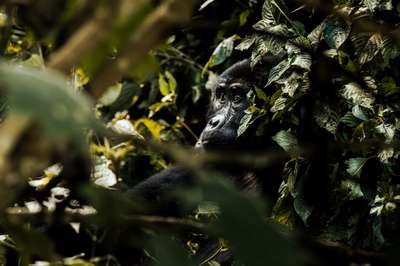
During our gorilla trek from Buhoma in January 2026, we were moving through the forest when one of the rangers paused and pointed upward — not at a gorilla, but at a bird calling from the canopy. He named it without hesitation and moved on. The encounter lasted perhaps three seconds, but it illustrated something that most visitors to Bwindi miss: the rangers and guides who work in this forest every day carry an encyclopaedic knowledge of its bird life that is rarely the primary focus of a gorilla trekking visit.
Bwindi birdwatching, in its dedicated form, is a separate activity from gorilla trekking — slower, quieter, calibrated to a different rhythm. The forest that gorilla trekkers move through as quickly as terrain allows is the same forest that birders stop in for twenty minutes to identify a single species by call. The pace changes everything about what you perceive.
GPS coordinates from photos taken during our January 2026 visit place us at -0.9764°N, 29.6224°E — forest edge habitat between the Buhoma village boundary and the park proper. This transition zone, where cultivated land meets native vegetation, is among the most productive areas for casual birdwatching: forest species venture out along the margin, edge specialists move through, and the open sight lines make visual identification easier than inside the dense interior.
Quick Facts
- Total species in Bwindi:
- 350+
- Albertine Rift endemics:
- 23
- Uganda national total:
- 1,070+ species (50% of Africa)
- Best birding time:
- Early morning, 06:00–09:00
- Best seasons:
- Dec–Feb and Jun–Aug
- Forest zones:
- Montane (>2,000m), submontane, edge
- Guide recommended:
- Yes — local monitoring guides preferred
The Forest in Vertical Layers
Bwindi's bird diversity is partly a function of its vertical structure. The forest rises from the village level at around 1,160 metres above sea level to montane zones above 2,300 metres, and each elevation band supports a different community of species. At the forest floor, dense undergrowth and root systems shelter ground-feeding species; the mid-storey hosts the broadbills and flycatchers; the high canopy, rarely visible from below, holds sunbirds and raptors.
The Albertine Rift endemics — the species that draw specialist birders from around the world — are distributed across these layers in ways that make finding them systematically challenging. Some, like the African Green Broadbill, require specific interior forest habitat at mid-altitude. Others, like the Blue-headed Sunbird, appear along the forest edge where flowering trees and shrubs concentrate. A knowledgeable guide who moves between elevation zones and knows the current fruiting and flowering conditions can make the difference between a list of ten endemics and two.
The forest's density — the characteristic that gives it the name "Impenetrable" — also affects birding strategy. Movement off the established paths is difficult and often counterproductive; the established trails are where the most species have been recorded over time, and guides familiar with them have already identified the productive perches and calling posts along each route. Staying on trail, moving slowly, and listening as much as looking is the most effective method.
Forest Specialists, Generalists, and Visitors
Uganda Wildlife Authority monitoring reports categorise birds into three functional groups relevant to birdwatching interpretation: forest specialists, forest generalists, and forest visitors. Forest specialists are species that depend entirely on intact forest interior — they are the most sensitive to habitat degradation and the most sought-after by serious birders. Forest generalists move between forest and modified land; they benefit from having some cover but can tolerate farmland and garden habitats. Forest visitors use forest opportunistically — roosting, feeding at edges, passing through — but are not dependent on it.
For a birdwatcher based in Buhoma, this taxonomy shapes the day's structure. The forest edge near the village is where generalists and visitors concentrate; early morning along this zone can produce 20 to 30 species before entering the park. Moving into the forest, the specialist species appear — rarer, requiring more patience, but the birds that define Bwindi as a destination. A guide who understands this distinction can plan a walk that moves through both zones systematically, maximising the species list without spending the whole morning in one habitat type.
When to Go: Seasons and Migrants
Bwindi sits close to the equator, so temperature variation across the year is modest compared to mid-latitude destinations. The dominant seasonal drivers are rainfall patterns: two wet seasons (March to May, September to November) and two drier periods (December to February, June to August). Bird activity is highest — and birding most productive — in the drier periods, when trails are passable, visibility through vegetation is clearer, and many species are in breeding condition or singing actively to establish territory.
Our January 2026 visits confirmed what the season guides predict: mornings were cool (sometimes cold at the forest edge before sunrise), bird calls began before the light came up, and activity was sustained through to mid-morning before the heat of the day quietened the forest. By 10:00, the productive birding window was closing; a guide who had started at 06:00 had already covered the most productive parts of the route.
The wet seasons bring their own advantages: Palearctic migrants arrive from Europe and northern Asia during the northern winter (roughly October to April), adding species to the list that are not present year-round. For a birder who has already seen the resident endemics, a wet-season visit specifically for migrants can be a complementary strategy rather than a compromise.
Birdwatching and Gorilla Trekking Together
Most visitors to Buhoma arrive with a gorilla permit as their primary purpose. Bwindi birdwatching fits naturally around this schedule. The gorilla briefing begins at 07:30, with trekking starting by 08:00. A birdwatching walk, by contrast, is most productive before 09:00 — meaning birding on non-trekking days should begin no later than 06:00. The two activities use different time windows and different parts of the forest, making a combined itinerary practical without significant scheduling conflicts.
A four-day stay in Buhoma — one day for gorilla trekking, one half-day for a community walk, and two mornings for dedicated birdwatching — allows a serious first encounter with both the gorilla and bird diversity of the forest. Visitors who stay longer, as we did during multiple visits between October 2024 and 2026, find that the bird list grows steadily with each morning and that specific target species that were missed on earlier days eventually appear.
The economic logic is also sound: birdwatching guides are hired locally and paid directly, without the Uganda Wildlife Authority permit costs that apply to gorilla trekking. A full morning with a skilled birdwatching guide costs a fraction of a gorilla permit and produces a genuinely different kind of experience — one that is quietly addictive to those who discover it.
54 Species at Buhoma
UWA 2019 monitoring data from sites in the wider Buhoma area — 54 species, 384 individuals.
White-headed Sawwing
Species profile for the most numerous bird in Buhoma area monitoring — 54 individuals recorded.
Bird Monitoring Training
How monitoring programmes build local guide expertise in the Bwindi region.
Gorilla Trekking from Buhoma
Permits (USD 800), trail conditions, and the morning routine at the park briefing point.