A standard gorilla trekking permit for Bwindi Impenetrable National Park costs USD 800 per person. Permits are issued by the Uganda Wildlife Authority and must be booked in advance. Buhoma is the most established sector of Bwindi, with three habituated gorilla families and the park's original trailhead — making it the most accessible starting point for first-time trekkers.
Quick Facts
- Standard permit price:
- USD 800 per person
- Gorilla Habituation Experience (GHE):
- USD 1,500 per person
- Time with gorillas:
- 1 hour maximum
- Group size:
- Up to 8 visitors per gorilla family
- Minimum age:
- 15 years
- Trek duration:
- 1 to 6+ hours depending on gorilla location
- Gorilla families in Buhoma:
- 3 (Mubare, Habinyanja, Rushegura)
- Season:
- Year-round; dry seasons are easier underfoot
- Booking:
- Uganda Wildlife Authority or licensed operator
What Buhoma Gorilla Trekking Actually Looks Like
After three hours of walking through dense, dripping forest in January 2026, the ranger ahead of us raised his hand and went still. Then we saw them — a gorilla family, settled and unhurried in a small clearing, completely at ease with our presence. One of the younger animals was perched high in a tree, methodically working through a spray of fresh leaves. The scene was so quiet that the only sounds were birdsong and the soft creak of branches. After the effort of the climb, the stillness felt almost surreal.
That encounter, GPS-documented at coordinates -0.9748°N, 29.6281°E, is a reasonable summary of what buhoma gorilla trekking delivers: a physical challenge followed by an hour in the presence of animals that show no fear and very little interest in the group of visitors standing respectfully at the prescribed distance. The gorillas go about their lives. You watch.
We had been out since first light. The Buhoma trailhead sits at roughly 1,600 metres, and the forest climbs steeply from there. In January — deep in one of Uganda's wetter seasons — the trails were soft underfoot and the canopy above was thick enough to keep most of the rain off. That same green weight of vegetation that makes the walking harder is also what makes the forest extraordinary. Bwindi is one of the oldest and most biodiverse tropical forests on the African continent, and the gorillas are only part of the story.
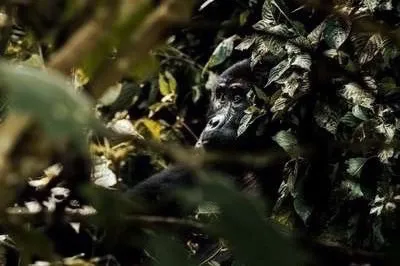
During our visit in June 2026, conditions on the upper slopes were drier and the visibility better — and it was in those dry-season conditions that we photographed a silverback feeding in the tree canopy at close range, sunlight filtering through the leaves around him. Both visits confirmed something the statistics cannot fully convey: the variability in trek duration is real, and it matters. The gorilla families move. Some days you find them within an hour of the trailhead; other days you are still climbing three hours later.
Gorilla Permits: Costs, Booking, and the Rules That Protect the Animals
A standard gorilla trekking permit for Bwindi Impenetrable National Park costs USD 800 per person. That fee is set by the Uganda Wildlife Authority and applies regardless of which sector you trek in — Buhoma, Nkuringo, Ruhija, or Rushaga. The permit covers one trek to one gorilla family, the mandatory hour in the presence of the animals, and the services of an assigned ranger guide throughout the day.
For those who want a deeper experience, the Uganda Wildlife Authority also offers the Gorilla Habituation Experience, abbreviated GHE. This permit costs USD 1,500 per person and grants up to four hours with a gorilla family that is still in the process of being habituated to human presence — a fundamentally different encounter that requires more patience and physical stamina, but which offers a level of access unavailable through the standard trek. GHE treks depart from the Rushaga sector, not Buhoma, so this option requires separate planning.
Permits should be booked well in advance. Demand for Buhoma permits is consistently high because it is the most accessible sector and has the longest-established tourism infrastructure. Peak months — particularly December, January, July, and August — sell out weeks or months ahead. Booking through the Uganda Wildlife Authority directly is possible, but most visitors use a licensed Ugandan tour operator, which simplifies the logistics of combining the permit with accommodation, transport, and the porters who are strongly recommended for the trekking itself.
The rules surrounding the trek are straightforward but strictly enforced. Visitors must be at least 15 years old. Anyone showing symptoms of a respiratory illness — a cold, influenza, or any infection that could be transmitted to the gorillas — is turned away at the briefing. Mountain gorillas share a significant percentage of human DNA and are acutely vulnerable to human disease; this restriction is non-negotiable. Once with the gorillas, groups must maintain a minimum distance of seven metres and keep voices low. Flash photography is not permitted. The maximum time allowed in the gorilla family's presence is one hour, a limit designed to minimise disruption to their natural behaviour patterns.
Each gorilla family in Bwindi can only receive one group per day, limited to eight visitors. This ceiling on visitor numbers is not simply a conservation measure — it is also what makes the experience feel genuinely intimate rather than performative. Eight people and a handful of rangers, standing quietly in the forest with animals that weigh several hundred kilograms and could easily disappear into the undergrowth but choose not to.
The Three Gorilla Families of Buhoma Sector
Bwindi is divided into four visitor sectors — Buhoma, Nkuringo, Ruhija, and Rushaga — and each sector contains one or more habituated gorilla families. Buhoma is home to three: Mubare, Habinyanja, and Rushegura.
The Mubare group holds a particular place in Bwindi's history. It was the first gorilla family in the entire park to be habituated for tourism, a process that began in the 1990s and took several years to complete. Habituation involves repeated, patient contact with a wild gorilla group over an extended period, gradually building a tolerance to human presence until the animals can be visited without being disturbed. Mubare has been welcoming trekking groups longer than any other family in the park, and numbers around 11 members. Its territory tends to be relatively close to the Buhoma trailhead, which makes it a common assignment for visitors who are less confident about long climbs.
The Habinyanja group, with approximately 15 members, and the Rushegura group, also around 15 members, have both been part of the Buhoma tourism circuit for many years. Their territories overlap in parts and shift seasonally with food availability. Depending on where the trackers locate each family on any given morning — Uganda Wildlife Authority employs experienced trackers who head out before dawn each day to find the gorillas before the visitors arrive — the trek to reach them can vary enormously in duration and difficulty.
Uganda's mountain gorilla population, once considered critically endangered, has shown a steady recovery. Surveys conducted between 2018 and 2020 documented 459 individuals across Uganda's section of their range — a population figure that reflects decades of conservation work combining tourism revenue, community engagement, and active protection of the forest. Bwindi's gorilla families are a direct product of that sustained effort.
Which gorilla family you are assigned to is determined by the Uganda Wildlife Authority at the morning briefing. Visitors cannot choose their family, though licensed tour operators with established relationships sometimes have more flexibility. The assignment is made based on the number of permits sold for each group that day and the advice of the tracking team.
On the Trail: Terrain, Rangers, and What the Hour With the Gorillas Feels Like
Every buhoma gorilla trekking experience begins with a briefing at the park headquarters, typically at seven or eight in the morning. The ranger guides explain the rules, remind visitors of the health restrictions, and describe the general conditions for the day. Groups are assembled, porters assigned, and then the walk begins.
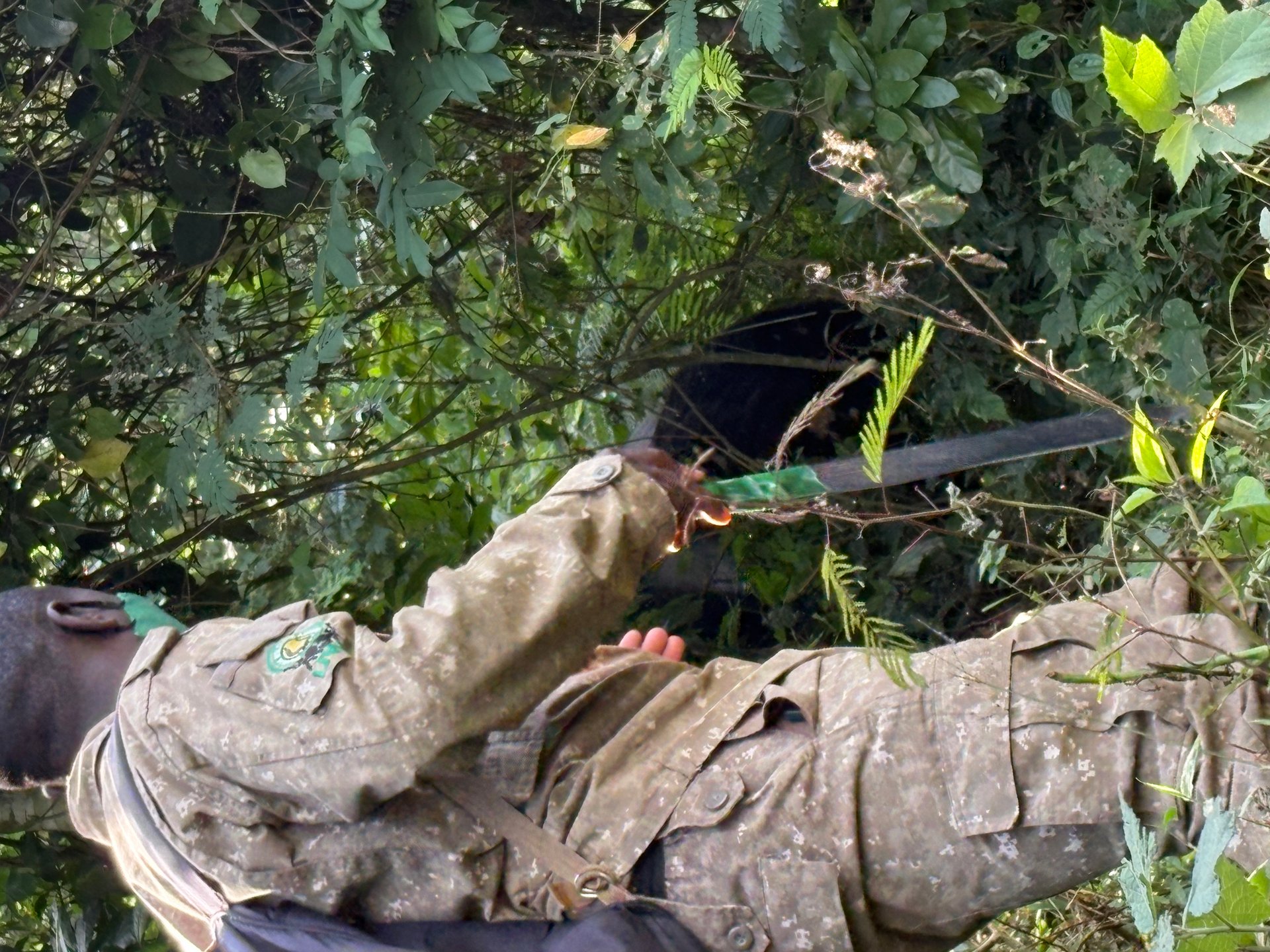
On our January 2026 trek, we were accompanied by a guide and two armed rangers. The firearms looked out of place against the forest backdrop, and the sight of them takes a moment to process — but the rangers explained that the weapons are a precaution for emergency situations, not a feature of normal operations. The rangers were relaxed, quick to help on the steeper sections, and clearly at home in the forest in a way that the visitors are not. Their knowledge of the terrain made the entire experience safer and more comfortable than it would have been without them. On difficult descents and across slippery root systems, their assistance was practical rather than ceremonial.
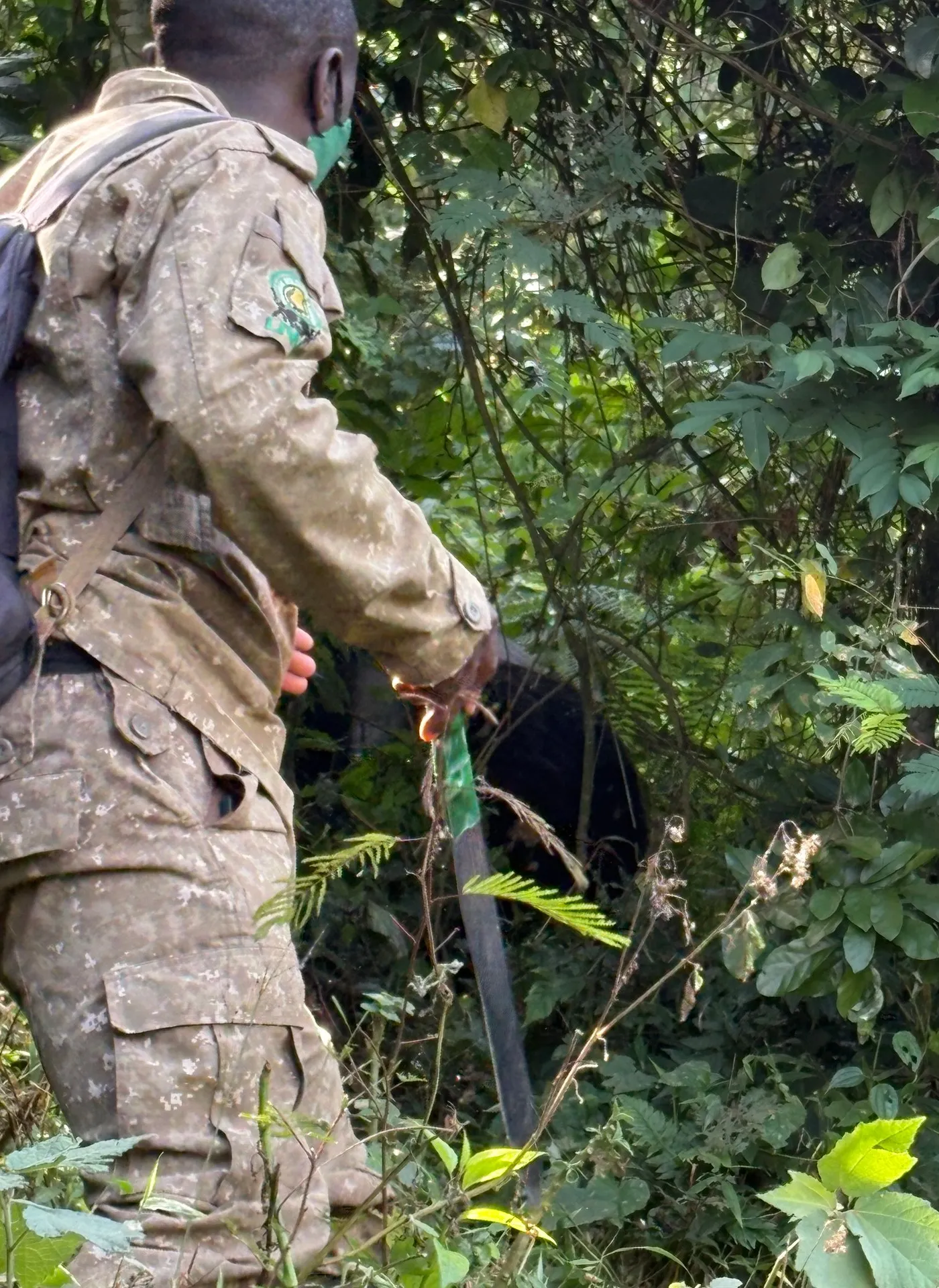
The terrain in Buhoma sector is serious. The forest floor slopes steeply from the trailhead, and the trails — where trails exist — pass through dense undergrowth, across root networks, and occasionally through streams. After rain, the earth is soft and the exposed roots slick. Long trousers are essential, partly for warmth at altitude and partly to keep insects out. Trekking poles and gaiters are not strictly required but are genuinely useful. Porters, available to hire at the trailhead, carry bags and offer a steadying hand; many experienced trekkers consider them indispensable rather than optional.
The hour with the gorillas, when it arrives, has a quality that is difficult to describe to someone who has not experienced it. The animals are large — adult silverbacks weigh over 200 kilograms — and yet they move through the vegetation with an ease that makes them seem perfectly scaled to their environment. The family we encountered in January had settled into a dense section of undergrowth, and the younger animals were active and curious. On our June visit, the silverback we photographed at canopy level was entirely absorbed in feeding and showed no interest in the group below. Both encounters lasted the full hour, and both ended with the trackers signalling that the time was up — not because the gorillas had moved away, but because the rule exists to protect them.
The hike back to the trailhead feels different from the hike in. The urgency of the climb is gone. People talk more. The forest, which on the way up felt like an obstacle, seems on the way back like something worth paying attention to in its own right — the moss-covered trees, the sound of water, the occasional glimpse of a bird that no one can identify.
Planning Your Buhoma Trek: Season, Equipment, and Practical Logistics
Gorilla trekking in Bwindi is possible throughout the year. The park has no true closed season, and the gorillas can be visited on public holidays and during school vacation periods as well as standard travel dates. That said, conditions on the ground vary significantly between Uganda's dry and wet seasons, and that variation matters if you have flexibility in your travel dates.
Uganda's primary dry seasons run from June to September and from December to February. During these periods the forest trails are firmer, the uphill climbs less exhausting, and the descent less treacherous. When we trekked in January 2026, the trails were damp from recent rain but manageable. The June 2026 visit found them in better condition — the drier months bring a different quality of light into the forest as well, which improves photography. The wet seasons — March to May and October to November — make the slopes muddier and the trek more demanding, but also intensify the green of the vegetation and reduce visitor numbers, which some trekkers prefer.
Accommodation in Buhoma ranges from simple community-run guesthouses and campsites near the park entrance to mid-range lodges and a handful of higher-end properties set on the ridges above the village with views across the forest. The Buhoma Community Rest Camp, operated by the local community, sits directly at the park entrance and offers camping at modest nightly rates as well as basic cottages and a restaurant. It is one of the few places in Bwindi where the revenue from visitor stays flows directly and transparently into the surrounding community.
Equipment for the trek does not need to be specialist-grade, but it should be practical. Ankle-supporting footwear is essential — trail runners or lightweight hiking boots both work, provided they have adequate grip. Waterproof layers for both your body and your camera equipment are worth carrying regardless of the forecast; the weather in Bwindi can change quickly at altitude. A daypack with water, snacks, and a small first-aid kit is standard. Gloves are useful in the early morning, particularly in the dry-season months when temperatures before sunrise can drop sharply.
Getting to Buhoma from Kampala typically involves either a long overland drive — roughly eight to ten hours depending on road conditions and the route taken — or a charter flight to Kihihi airstrip, which cuts the journey to under two hours in the air followed by a short drive. Most visitors who combine gorilla trekking with other parts of Uganda travel overland through Queen Elizabeth National Park or via Kabale.
A final practical note: the permit is the single largest cost of the trek at USD 800 per person, but it is not the only one. Porter fees, ranger tips, transport to and from Buhoma, and accommodation all add to the overall budget. Visitors who treat the permit price as the total cost of the experience typically arrive underprepared. Factor in the full logistics, and the gorilla trek becomes genuinely manageable — and, by most accounts, worth every part of the investment.