Short answer: Bwindi Impenetrable National Park in Uganda is the world's most important mountain gorilla habitat, home to roughly half of all remaining individuals. For first-time trekkers seeking dense jungle atmosphere, a wide choice of habituated groups, and strong community tourism infrastructure, Bwindi — and Buhoma in particular — remains the leading destination. Rwanda's Volcanoes National Park offers easier terrain and shorter distances but higher permit costs at USD 1,500 per person versus USD 800 in Uganda. The DRC parks carry additional travel risks. For most visitors, Bwindi is the clear starting point.
Quick Facts
- Mountain gorillas in Uganda (2018–2020 census):
- ~459
- Standard gorilla permit, Bwindi:
- USD 800 per person
- Gorilla Habituation Experience (GHE) permit:
- USD 1,500 per person
- Time allowed with gorillas per permit:
- 1 hour (GHE: up to 4 hours)
- Minimum age for gorilla trekking:
- 15 years
- Habituated gorilla groups in Bwindi:
- 20+
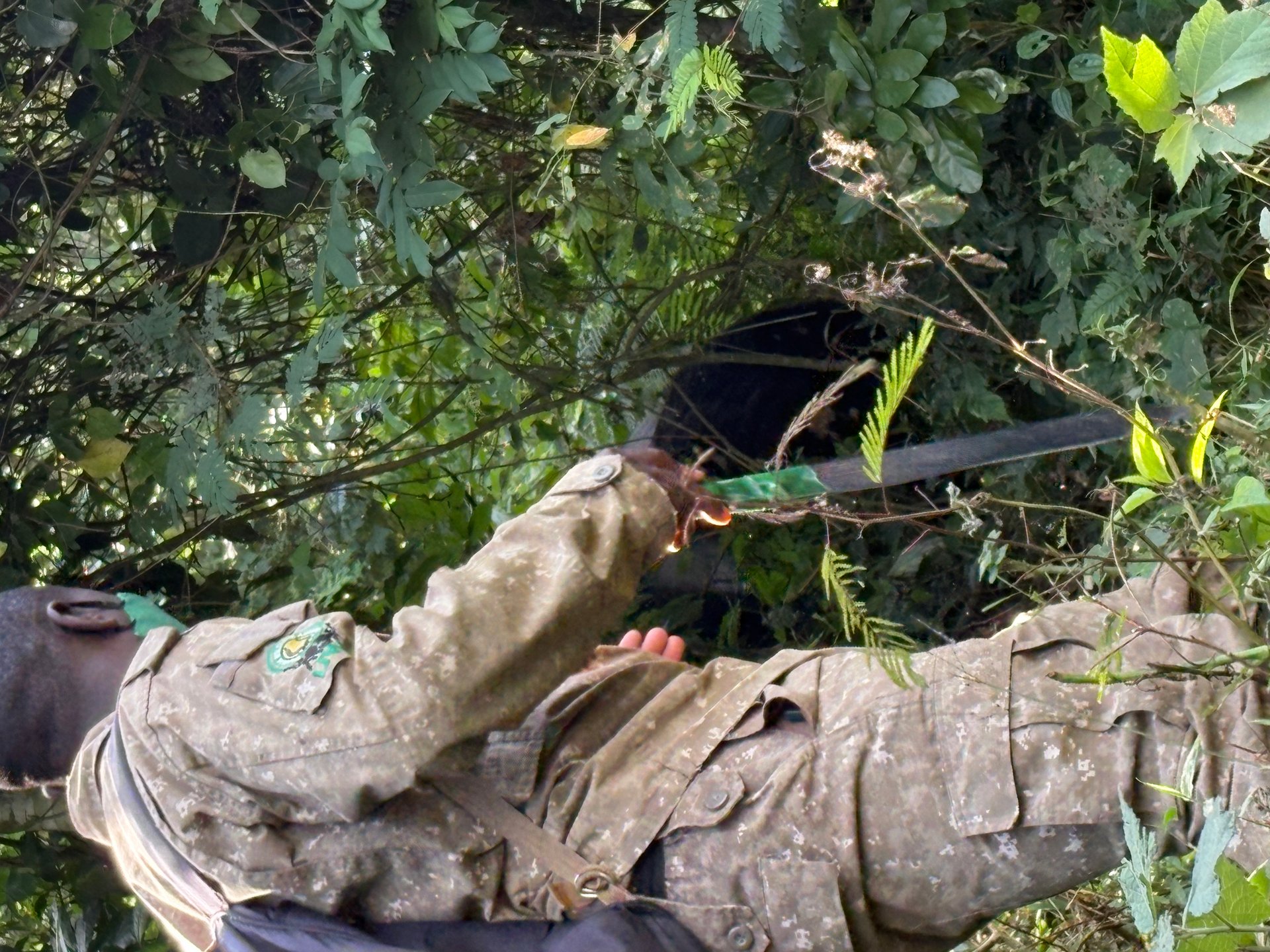
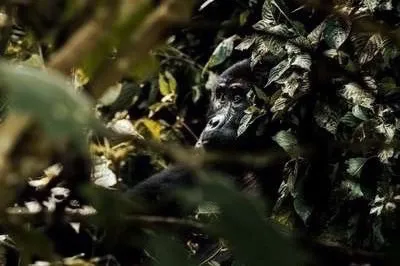
After three hours of pushing through vegetation that seems designed to push back, the forest opens into something quiet. In June 2026, on a trail above Buhoma at coordinates -0.9665°N, 29.6126°E, we came upon a gorilla family that had no interest in our arrival. They moved at their own pace, tore leaves with casual authority, and occasionally looked our way with the expression of beings who had decided, long ago, that curiosity was more useful than alarm. We were close enough to hear them breathe. It is not an experience that scales easily into language, but it is the reason Bwindi has a waiting list.
That encounter, and the multiple visits our team made to Buhoma between January and June 2026, form the foundation of what follows. This is not a desk comparison of brochures. It is a working guide to the parks where mountain gorillas actually live — what distinguishes each one, where the trade-offs fall, and why the choice of destination matters more than most travel articles suggest.
The Mountain Gorilla's World: Two Ecosystems, Multiple Borders
Mountain gorillas exist in two geographically separate populations. The larger inhabits the Bwindi Impenetrable Forest in southwestern Uganda — a 331-square-kilometre tract of Afromontane rainforest that has been continuously forested since the last glacial period. The smaller population occupies the Virunga Massif, a chain of dormant and active volcanoes spanning the border zones of Uganda, Rwanda, and the Democratic Republic of Congo.
These two populations are genetically distinct and do not interbreed. Together, they account for the entire world population of mountain gorillas — a species that cannot survive in captivity and is found nowhere else on Earth. A census conducted between 2018 and 2020 counted approximately 459 individuals in Uganda alone, part of a global total that has recovered from critical lows thanks to sustained conservation work, strict park management, and revenue from regulated tourism.
Understanding this geography matters before booking any permit. The parks that offer gorilla trekking are Bwindi in Uganda, Mgahinga Gorilla National Park in Uganda (Virunga sector), Volcanoes National Park in Rwanda, and three parks in the DRC: Virunga National Park, Kahuzi-Biéga National Park managed by ICCN (Institut Congolais pour la Conservation de la Nature), and Sarambwe Reserve. Each operates under different government structures, permit systems, and practical conditions for visitors.
Bwindi Impenetrable National Park: Uganda's Gorilla Heartland
Bwindi is the largest single habitat for mountain gorillas in the world and one of the most biodiverse forests in East Africa. It holds more than 200 tree species, over 120 mammal species, and upwards of 350 bird species — numbers that reflect a forest ecosystem with genuine depth rather than one maintained primarily for tourism. The park is a UNESCO World Heritage Site and forms part of a larger conservation landscape that includes Sarambwe Reserve across the Congolese border.
Gorilla trekking in Bwindi operates from four sectors: Buhoma in the north, Ruhija in the east, and Rushaga and Nkuringo in the south. Each sector habituates and manages its own set of gorilla groups. Buhoma is the oldest trekking area, established in the early 1990s, and retains the most developed tourism infrastructure — lodges at multiple price points, a ranger station with decades of institutional knowledge, and proximity to the main road connecting to Kampala via Queen Elizabeth National Park.
The standard permit for Bwindi costs USD 800 per person and covers one hour of time with the gorilla family. The permit names a specific group — visitors must choose which family they wish to track at the time of booking, and lodges near a particular group's territory can significantly reduce the morning drive time before the trek begins. A Gorilla Habituation Experience (GHE) permit, available for select groups still in the habituation process, costs USD 1,500 and allows up to four hours of observation.
The terrain at Bwindi is genuinely demanding. The forest is dense, the trails are steep, and the altitude ranges from roughly 1,160 to 2,607 metres above sea level. Trek durations vary from under an hour to a full day depending on where the gorillas have moved overnight. This unpredictability is part of what makes Bwindi trekking feel authentic — you are entering a living forest, not a managed viewing corridor. When we visited in January 2026, one group required less than ninety minutes to reach; another trek in the same sector that day lasted more than five hours.
Habituated groups in Bwindi number more than twenty, spread across the four sectors. This scale gives the park meaningful carrying capacity — far more visitors can be accommodated per day than at Rwanda's Volcanoes National Park — without individual groups being over-exposed. Children under fifteen are not permitted to participate in gorilla trekking at any Uganda Wildlife Authority park.
The Virunga Massif: Rwanda and the Democratic Republic of Congo
Rwanda's Volcanoes National Park covers the Rwandan portion of the Virunga chain and has become the best-known alternative to Bwindi, largely because of its logistical ease. The park lies roughly two hours from Kigali, Rwanda's capital, which has direct international connections and a compact, easily navigated airport. Trekking distances tend to be shorter than Bwindi because the gorilla groups in the Virunga sector move across more open volcanic slopes with less undergrowth.
The reduced vegetation density — a consequence of altitude and volcanic soil rather than management — has a visible effect on encounters. Gorilla families on the Virunga slopes are often easier to observe and photograph than those deep in Bwindi's canopy, and some of the Rwandan groups are notably large. For wildlife photographers working with fixed focal lengths, the open terrain can make a meaningful difference.
Rwanda's permit price is set at USD 1,500 per person. The Rwanda Development Board controls permit numbers tightly, with the result that scarcity drives both exclusivity and cost. For visitors who want a brief, high-end gorilla experience with minimal physical challenge, Rwanda is a logical choice. For those seeking depth — longer time in a more complex forest ecosystem, the option to choose from a wider range of groups and sectors, and a lower total trip cost — Bwindi holds the advantage.
The DRC's parks — Virunga National Park and Kahuzi-Biéga, managed by the ICCN — present a different set of considerations. Both hold gorilla populations and, in theory, offer permits. In practice, the security situation in eastern DRC varies significantly by zone and season. Visitors interested in the DRC should consult current travel advisories and work only with operators who have established, trusted ranger contacts. The potential reward is a wilder, less crowded experience — but the due diligence required is substantially higher than for Uganda or Rwanda.
Uganda's Mgahinga Gorilla National Park sits in the Ugandan section of the Virunga Massif. It has historically hosted one habituated gorilla family — the Nyakagezi group — that occasionally crosses into Rwanda and the DRC. Mgahinga permits are priced at the same USD 800 rate as Bwindi but availability is limited. The park is better suited as an add-on to a Bwindi itinerary than as a primary destination.
Bwindi vs. Virunga: A Direct Comparison
Setting the parks alongside one another in plain terms: Bwindi offers more habituated groups, a lower permit price, a denser and more physically immersive forest, stronger community tourism infrastructure, and a longer institutional history of gorilla trekking management. Rwanda's Volcanoes National Park offers shorter travel distances from an international hub, more open terrain, and an established luxury lodge market that caters to visitors who want to combine gorilla trekking with high-end accommodation without logistical complexity.
The numbers are straightforward. Uganda: USD 800 per person for one hour, twenty-plus habituated groups, four trekking sectors, eight to nine hours from Entebbe by road. Rwanda: USD 1,500 per person for one hour, approximately twelve habituated groups, one trekking zone, two hours from Kigali. DRC: lower permit fees when available, but security and access must be assessed for each visit period.
What the numbers do not capture is the quality of immersion. Bwindi's forest is not a backdrop for gorilla encounters — it is an ecosystem with its own logic, its own sounds, and its own demands. Arriving in that environment after a genuine physical effort — the steep trails, the altitude, the weight of anticipation — produces a different quality of attention than stepping out of a vehicle near the forest edge after a two-hour drive from a capital city. Both experiences are legitimate. They are not the same.
The community dimension matters too. Buhoma's model of tourism — in which revenue from permits, lodges, and community fees flows back to the villages adjacent to the park — has been refined over more than three decades. Local entrepreneurs, craft markets, and community walks reflect the degree to which gorilla conservation and local livelihoods have been genuinely bound together rather than operating in parallel.
Why Buhoma Remains the First Choice for Most Trekkers
Buhoma is where gorilla trekking in Uganda began. The sector opened to visitors in 1993, making it the oldest trekking area in Bwindi and the template against which all subsequent operations were modelled. It sits at the northern edge of the park, accessed via a paved road from Kabale or via the scenic route through Queen Elizabeth National Park, and it holds several habituated gorilla families including some of the most frequently visited groups in the country.
The village itself — a strip of lodges, small guesthouses, and community facilities along the forest boundary — has grown in proportion to gorilla tourism without losing the texture of a working community. During visits in January and June 2026, we found infrastructure that functioned reliably: rangers who briefed groups at six in the morning and returned them by early afternoon, a community walk and craft market operating on schedule, and lodges across the price spectrum that made Buhoma accessible to budget travellers and those seeking higher-end accommodation alike.
The booking process deserves attention. Gorilla permits for Bwindi are issued by the Uganda Wildlife Authority and sell out well in advance, particularly during the dry seasons of June through August and December through February. The name of the gorilla group is recorded on each permit, so accommodation choice should follow the group assignment rather than the reverse. Buhoma's groups are among the most consistently available — the sector's long history of habituation means trackers know the terrain and the animals' patterns intimately, reducing the risk of an unusually long or unsuccessful trek.
For visitors combining gorilla trekking with broader Uganda travel, Buhoma's position at the park's northern edge offers the most logical circuit: Entebbe arrival, Queen Elizabeth National Park for savannah wildlife, Bwindi Buhoma sector for gorillas, then either return north or continue south toward Lake Bunyonyi and on toward Rwanda. The gorilla portion anchors an itinerary that covers Uganda's main wildlife experiences without requiring back-tracking.
The gorillas themselves, when you finally reach them, make every comparison feel secondary. After three hours on a trail in June 2026, moving through forest that closed behind us with each step, we stood within metres of a family that paid us approximately as much attention as they would a passing bird. One silverback moved to within arm's reach of our group before returning to a stand of vegetation. The GPS log from that morning reads -0.9665°N, 29.6126°E. The forest smelled of wet earth and something older. No comparative table fully represents what it felt like to be inside it.