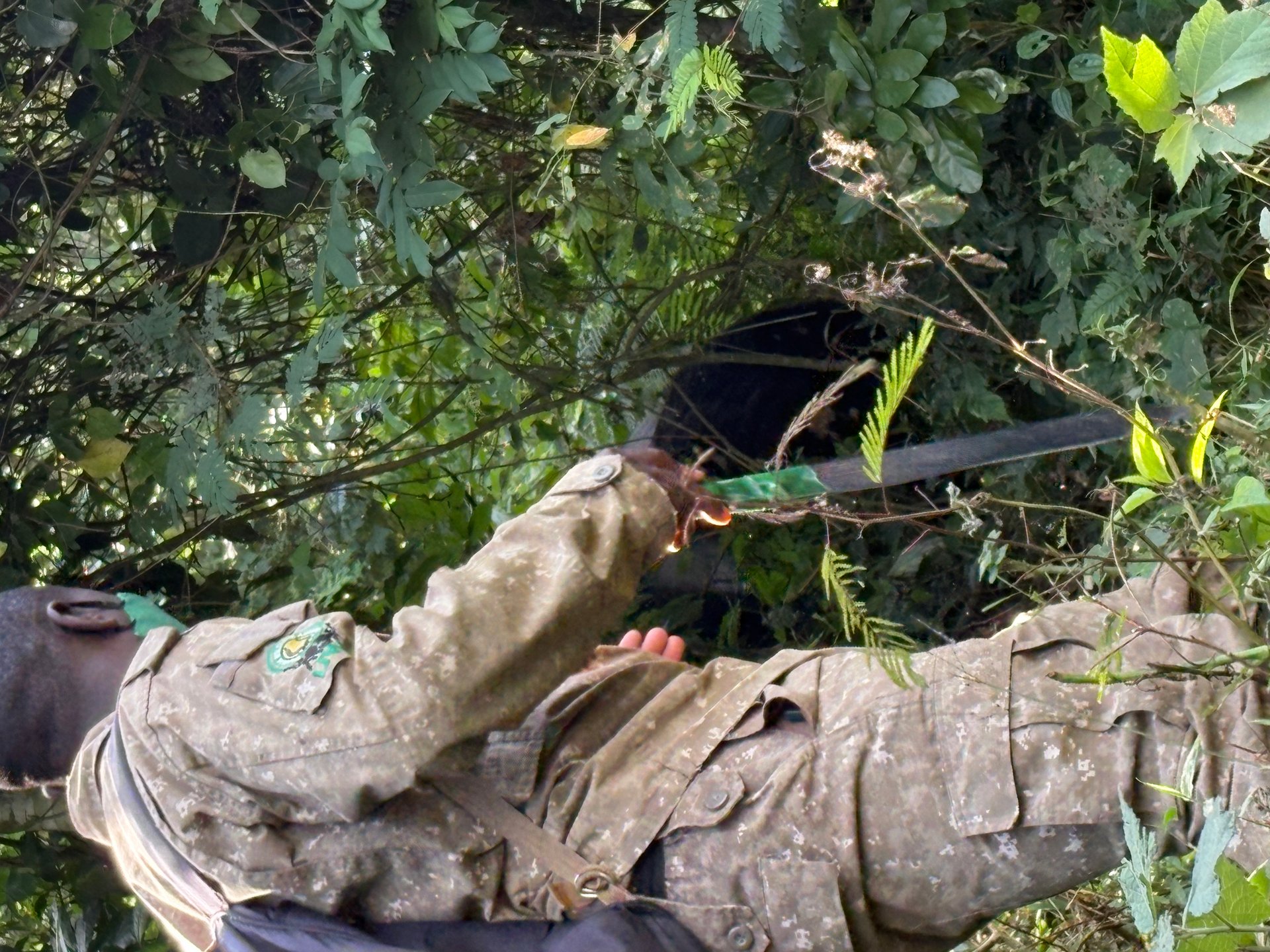
For most travelers, Uganda is the better choice: the permit costs $800 vs $1,500 in Rwanda, Bwindi has more habituated gorilla families, and the forest experience is wilder and more immersive. Rwanda wins on infrastructure, shorter drives from Kigali, and combining with a city trip. A couple saves over $1,600 by choosing Uganda.
Quick Facts
- Uganda Permit:
- $800 USD (Bwindi)
- Rwanda Permit:
- $1,500 USD (Volcanoes)
- Savings per Couple:
- $1,600 USD by choosing Uganda
- Habituated Families (Bwindi):
- 19+ families across 4 sectors
- Habituated Families (Volcanoes):
- ~12 families
- Drive from Kigali to Volcanoes:
- ~2.5 hours
- Drive from Kampala to Buhoma:
- 8–9 hours
- Forest Character:
- Bwindi wilder; Volcanoes more open
1. The Permit Price Gap — and Why It Matters
The most important number in any Uganda vs Rwanda comparison is the permit price. Uganda charges $800 USD per person for a foreign non-resident gorilla trekking permit. Rwanda charges $1,500 USD. That is an $800 difference per person, or $1,600 for a couple — before you have paid for a single night of accommodation or a single meal.
Rwanda set its price deliberately high as part of a strategy to attract high-spending travelers, limit visitor numbers, and position the country as a premium destination. The strategy has worked commercially. Rwanda's gorilla trekking sector draws a wealthy clientele and generates significant revenue per visitor. But it also prices out a large segment of travelers who would find the $800 Uganda permit entirely accessible.
For the $800 difference, you are not getting a different gorilla encounter. Both countries offer one hour with a habituated mountain gorilla family, guided by rangers, in protected national park forest. The encounter itself is functionally identical. The difference is in terrain, access logistics, lodge options, and the broader travel experience around the hour you spend with the gorillas.
2. The Gorilla Experience Compared
Bwindi Impenetrable Forest is exactly what its name suggests. The forest is dense, steep, and genuinely challenging in places. Gorilla families move through thick vegetation, crossing ridges and descending into valleys. Some treks take 30 minutes; others take five hours or more. You will push through undergrowth, grip roots to climb muddy slopes, and sometimes observe gorillas at a few meters distance in conditions where photography is technically difficult but emotionally overwhelming.
Volcanoes National Park in Rwanda offers a different character. The terrain is steep — you are on the slopes of active volcanoes — but the vegetation is generally less dense than Bwindi. Sightlines are often wider, and gorilla families can sometimes be observed in more open settings. This can make for cleaner photography and a slightly less physically demanding experience on average, though difficult treks are still common.
Bwindi has 19 or more habituated gorilla families spread across four sectors: Buhoma, Ruhija, Rushaga, and Nkuringo. This means Uganda issues more permits per day in total and offers more scheduling flexibility. Volcanoes has approximately 12 habituated families. Both parks limit groups to a maximum of eight trekkers per gorilla family per day, so the encounter remains intimate regardless of which country you choose.
Bwindi also offers the gorilla habituation experience at Rushaga sector — a four-hour visit with a semi-habituated group available to just four people per day. This has no equivalent in Rwanda and represents one of the most immersive primate encounters available anywhere in the world, albeit at $1,500 per person.
3. Practical Access: Flights, Roads, and Transfer Times
Rwanda's biggest practical advantage is Kigali International Airport and the short drive to Volcanoes National Park. Most international flights land in Kigali, and the transfer to the park takes approximately 2.5 hours on good tarmac roads. You can arrive in Kigali in the afternoon and be at your lodge near the park that evening. This makes Rwanda viable for travelers with limited time or those who struggle with long overland journeys.
Uganda's gateway is Entebbe International Airport near Kampala. The road journey from Entebbe or Kampala to Buhoma takes 8 to 9 hours. The route passes through Kampala traffic, then winds through Uganda's southwestern highlands — beautiful country, but the drive is long and tiring. The roads are paved for most of the journey, with some rougher sections near Buhoma.
For travelers who want to reduce the Uganda drive time, charter flights operate from Entebbe to Kihihi Airstrip (approximately one hour), followed by a 1.5-hour drive to Buhoma. This is significantly more expensive than the road transfer but cuts total travel time to under three hours. The flight experience over the Rift Valley and Bwindi is spectacular in its own right.
Direct flights to Entebbe are available from many European and Middle Eastern hubs. Some travelers also fly into Kigali and cross overland into Uganda, which is particularly practical for combined itineraries.
4. Lodge Quality and Range
Both Uganda and Rwanda have exceptional luxury lodges near their gorilla parks. Rwanda has invested heavily in ultra-premium properties: One&Only Gorilla's Nest, Singita Kwitonda Lodge, Bisate Lodge, and Sabyinyo Silverback Lodge are among the finest safari properties in Africa, with nightly rates that frequently exceed $1,000–$1,500 per person. The standard of service, architecture, and cuisine at these properties is outstanding.
Bwindi's luxury tier is equally impressive. Sanctuary Gorilla Forest Camp, Bwindi Lodge, and Clouds Mountain Gorilla Lodge offer world-class accommodation with forest settings that feel more remote and immersive than most Rwanda equivalents. Rates are typically lower than their Rwanda counterparts for comparable quality.
Where Uganda decisively wins is in the mid-range and budget categories. Buhoma has several solid mid-range lodges at $100–$250 per night, and community-run guesthouses from $25–$60 per night. Rwanda near Volcanoes has very limited budget or mid-range options. Travelers who do not want to spend $500+ per night have far more choices in Uganda.
For budget-conscious travelers, the accommodation cost difference between the two countries, combined with the permit saving, can amount to $2,000 or more per person for a three-night trip.
5. Combining Both Countries
Trekking gorillas in both Uganda and Rwanda on a single itinerary is one of the great East Africa wildlife experiences. The two parks are geographically close — the border is roughly four to five hours by road from Buhoma to Volcanoes — and the contrast between the two forests makes a back-to-back comparison deeply rewarding.
The standard combined itinerary runs as follows. Fly into Kigali and spend a night or two in the city or at a lodge near Volcanoes. Trek Volcanoes on Day 3. On Day 4, drive south to the Cyanika-Bunagana border crossing and continue to Buhoma. Trek Bwindi on Day 5. Spend a night in Buhoma and then begin the return journey to Entebbe, either overland or by charter flight, for an international departure.
The border crossing is straightforward for most tourists. You will need a Uganda visa (available on arrival or as an e-visa) and either a multiple-entry Rwanda visa or separate visas for each country. East African Tourist Visa holders can move between Kenya, Uganda, and Rwanda on a single visa.
Budget for both permits — $800 (Uganda) + $1,500 (Rwanda) = $2,200 per person in permits alone. This itinerary is not budget travel, but for serious wildlife travelers it represents outstanding value relative to what you experience.
Comparison Table: Uganda vs Rwanda
| Category | Uganda (Bwindi) | Rwanda (Volcanoes) |
|---|---|---|
| Permit Cost | $800 USD | $1,500 USD |
| Gorilla Families | 19+ across 4 sectors | ~12 habituated families |
| Forest Terrain | Dense, steep, immersive | Steep, more open sightlines |
| Trek Difficulty | Moderate to strenuous | Moderate to strenuous |
| Access from Europe | Fly to Entebbe; 8–9h drive or 1h charter | Fly to Kigali; 2.5h drive |
| Budget Lodges | Good range from $25/night | Very limited options |
| Luxury Lodges | Excellent; slightly lower rates | World-class; highest rates in Africa |
| Best For | Value, wild forest feel, longer itineraries | Short trips, luxury, Kigali combination |
6. Which Should You Choose?
The honest answer depends on three factors: your budget, your available time, and what you want the trip to feel like.
Choose Uganda if: you are budget-conscious and want to minimize permit costs; you want to spend multiple nights in the gorilla forest and explore the area; you want a wilder, more physically demanding forest experience; you are already planning a longer Uganda itinerary including wildlife or culture; or you want the flexibility to stay in mid-range or budget accommodation without sacrificing the quality of the gorilla encounter itself.
Choose Rwanda if: you have 4–5 days total and cannot afford the long overland transfer from Kampala to Buhoma; you are combining with a city stay in Kigali; you want the most polished and logistically seamless possible experience; budget is not a constraint and you want to stay in one of Rwanda's exceptional ultra-luxury lodges; or you are flying into East Africa specifically for gorilla trekking and want to minimize transit time.
For the majority of travelers — particularly those who have allocated two weeks or more to East Africa and are not on an unlimited budget — Uganda is the stronger choice. The permit saving is real, the forest is extraordinary, and Buhoma is one of the most compelling destinations in the region in its own right, independent of the gorillas.
Related Guides
Permit Guide
How to book your Uganda gorilla permit
Cost Breakdown
Full budget breakdown for Buhoma
Choose Your Sector
Which Bwindi sector is right for you