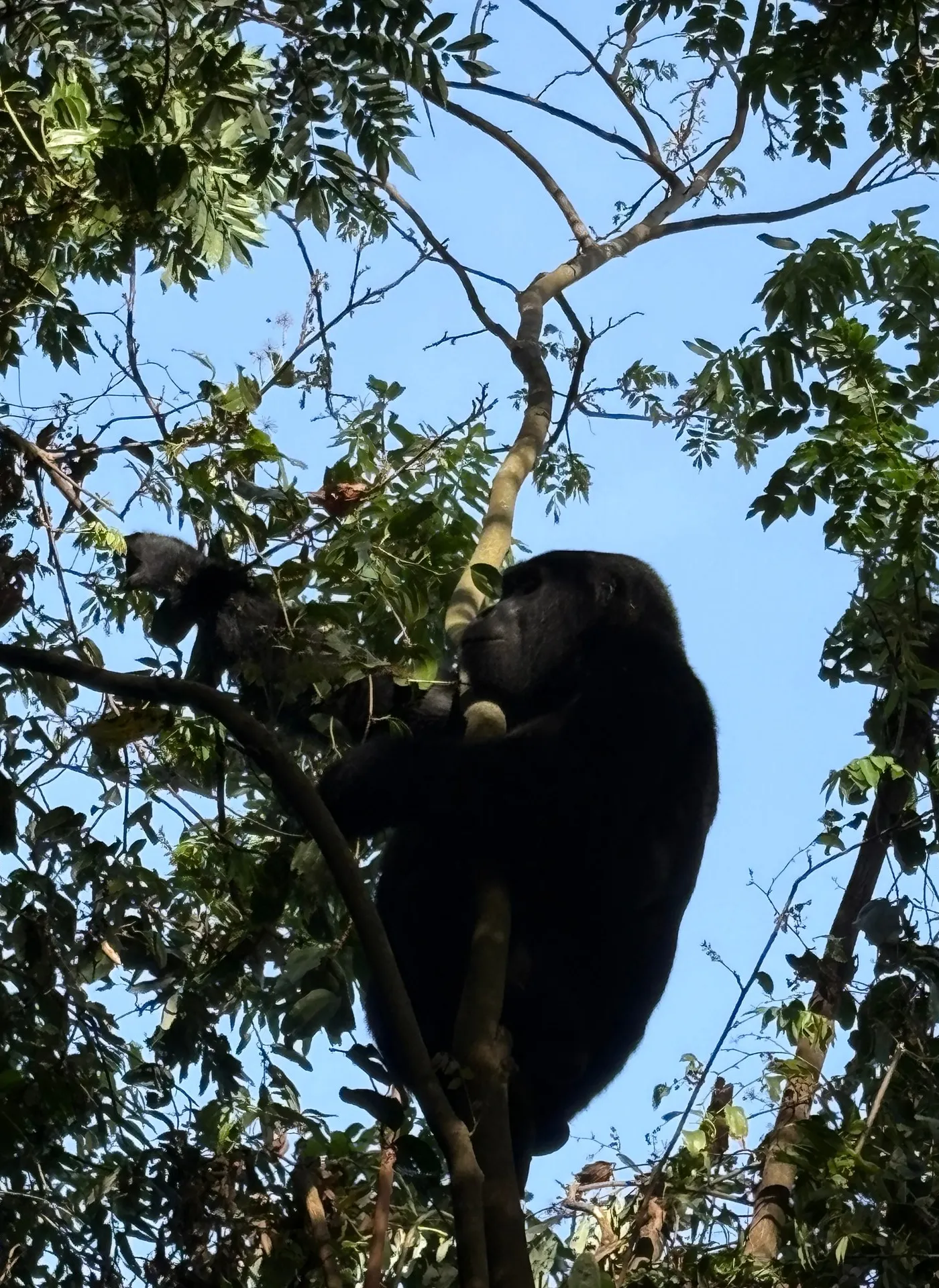
Photo: Mark Suer, June 2026 — GPS confirmed, Bwindi
Where to See Mountain Gorillas in Uganda
Two Parks, Five Trekking Points
Uganda shares the world's remaining mountain gorilla population with Rwanda and the Democratic Republic of Congo. Of the approximately 1,000 mountain gorillas alive today, around 400 live in Bwindi Impenetrable National Park — an isolated population completely separate from the Virunga gorillas further south. The rest live in the Virunga Conservation Area, a 434-square-kilometre ecosystem spanning Uganda's Mgahinga Gorilla National Park, Rwanda's Volcanoes National Park and the DRC's Parc National des Virunga.
For gorilla trekking in Uganda, you have five realistic starting points: the four sectors of Bwindi (Buhoma, Nkuringo, Rushaga and Ruhija) and the single track offered by Mgahinga. Your choice of sector shapes the whole trip — the terrain, the lodges, the drive time and the gorilla families you might encounter are all different.
Bwindi Impenetrable National Park — Four Sectors
Bwindi is the larger and more visited of Uganda's two gorilla parks. Its name — Impenetrable — gives an accurate impression: dense, ancient rainforest covering steep hills across multiple vegetation zones, from valley floor to 2,607 metres at the summit of Rwamunyonyi. The park protects around 400 mountain gorillas across multiple habituated families, each assigned to one of four sectors. Each sector has its own ranger post, which is where trekking groups assemble at 8:30 every morning.
Buhoma — The Original Gateway
Buhoma is where gorilla trekking in Uganda began. The first group of visitors set out from here in 1993, and the park headquarters has been here ever since. That history means Buhoma has the best-developed infrastructure of any sector — a wider range of lodges at different price points, the park office where you confirm your permit, and a well-established community around tourism.
In January 2026, we followed a tracking guide and two rangers from the Buhoma ranger post into the forest at 8:30 in the morning. After just one hour of walking, the trackers — who had been monitoring the family since dawn — led us quietly to a clearing. There, sitting calmly in the lower branches of a tree, was a large silverback, tearing leaves from a branch with steady, unhurried concentration. It was the kind of encounter that makes you forget everything else.
On a second visit in June 2026, the same forest produced a very different scene: a gorilla high up in the canopy, moving through the treetops with a ease that seems impossible for an animal of that size. Both encounters were in Buhoma sector — and both took place within seven metres of the animals, the minimum distance that UWA rules require.
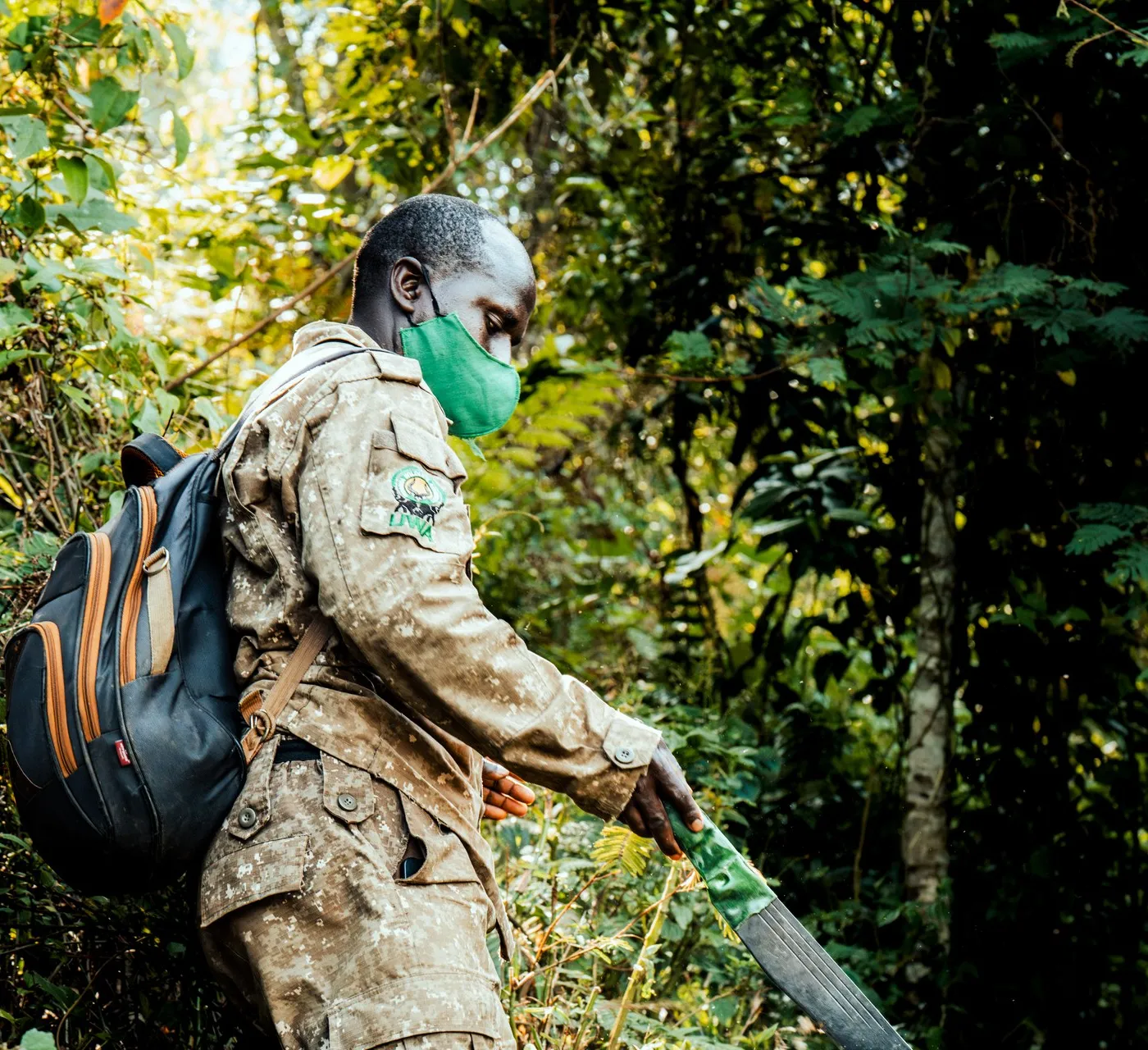
A UWA ranger leads the way through dense undergrowth in Buhoma sector. Rangers are not just security — they are experienced forest guides who keep the group safe and on track. Photo: Mark Suer, January 2026.
The rangers accompanying us were armed — a detail that felt unusual at first, but in practice was entirely unobtrusive. They were relaxed and cheerful, pointing out plants and birds along the way, and on the steeper sections they were quick to offer a hand when the ground was slippery. Their presence is standard procedure, not an indicator of any threat.
For most first-time visitors, Buhoma is the right choice. It remains the most frequently visited sector — partly for its permit availability, partly for the range of activities beyond gorilla trekking, and partly because the access road from Kampala via Kabale and Butogota is well established, even if the final stretch is unpaved.
Nkuringo — Steep Terrain, Dramatic Views
Nkuringo sector lies roughly 15 kilometres south of Buhoma by road — a figure that understates how different the two feel. The Nkuringo ranger post sits at the southwestern edge of Bwindi, and the terrain here is notoriously steep. Reaching it from Kabale takes about three to four hours via Kisoro; the piste from the main road adds another 20 or so kilometres of winding track. From Buhoma, a direct footpath through the forest exists for those who want it — a guided route that turns the journey itself into an adventure.
The gorilla family associated with Nkuringo ranges across a large, hilly territory, which means treks here tend to be more demanding. If you are comfortable with long walks on uneven ground and want a quieter, more remote experience, Nkuringo delivers. Lodge options are more limited than in Buhoma, but some of the most celebrated properties in Bwindi are located here.
Rushaga — Multiple Families, Growing Capacity
Rushaga, in the southern part of Bwindi, has expanded its capacity in recent years and now has several habituated gorilla families available for trekking. This makes it one of the better options if you are planning in the shorter term — more families means more permits available per day. The landscape here shifts towards a drier, more open forest in places, and the sector has developed a solid range of mid-range and budget accommodation.
Ruhija — High Altitude, Birding and Forest Walks
Ruhija occupies the northeastern edge of Bwindi at an altitude of around 2,340 metres — the highest of the four sectors and noticeably cooler, particularly in the evening. It sits roughly 36 kilometres from Kabale by road. The Oruzogo gorilla family, associated with Ruhija, had 17 members as of the most recent count in the 2020 guide; current group composition should be confirmed with UWA at the time of booking.
Ruhija is also known for birding — the altitude and forest type attract species that do not appear lower down — and for the Muzabajiro Loop, a three-hour walking trail that offers open views across the forest, the Rift Valley and, on clear days, the Virunga volcanoes. The Mubwindi Swamp Trail, a four-hour walk from Ruhija to a highland marsh, is one of the best birding routes in Uganda. If your trip combines gorilla trekking with serious birdwatching, Ruhija is worth considering.
A mountain gorilla peers through the forest canopy during a gorilla trekking encounter in Bwindi. The 7-metre minimum distance is enforced strictly — and yet the intimacy of these moments is remarkable.
Mgahinga Gorilla National Park — One Family, One Chance
Mgahinga Gorilla National Park sits in Uganda's far southwest, at the base of the Virunga volcanoes, roughly 50 kilometres south of Bwindi. It is a smaller park and offers a fundamentally different experience. The forest here is less dense than Bwindi — visibility to the gorillas tends to be better — and the backdrop of three volcanic peaks gives the landscape a dramatic quality you will not find further north.
There is one habituated gorilla family in Mgahinga: the Nyakagezi family. As of 2019, the group had around 11 members including two silverbacks — verify current group size with UWA before booking, as family composition changes over time. Nyakagezi is a cross-border family: their territory spans Uganda, Rwanda and the DRC, and there is a small possibility that the gorillas will be across the border on the day of your visit. This is uncommon but not unheard of.
Permit booking timelines at Mgahinga work differently from Bwindi. Because the family's location cannot be guaranteed far in advance, booking windows have historically been shorter — check the current UWA policy when you plan, as this may have changed since the last published guidance. The permit price is the same: $800 USD per person in 2026.
Mgahinga is the right park if you want to combine gorilla trekking with a volcano hike — Muhavura, Sabinyo and Gahinga can all be climbed from Kisoro — or with golden monkey tracking, which is also available here. The town of Kisoro, 12 kilometres from the park gate, serves as the practical base.
What Your $800 Permit Covers
The gorilla trekking permit in Uganda covers park entry, a tracking guide, trail cutters, a tracker team that locates the gorillas from first light, and an armed ranger for the duration of the trek. Once you find the gorilla family, you have exactly one hour with them. The rules exist to protect the gorillas: maintain a minimum distance of seven metres at all times, keep your voice low, do not eat or drink in front of the animals, and do not use flash photography.
- Maximum eight visitors per gorilla family per day
- Minimum age 15 years
- Groups depart the ranger post at 8:30 each morning
- Seven-metre minimum distance enforced at all times
- One hour with the gorilla family, regardless of walk length
- Porters available for hire at most ranger posts — a practical option on steep terrain
A small tip for the guide and ranger team at the end of the trek is expected and appreciated. The exact amount is at your discretion.
How and When to Book
Permits are sold by the Uganda Wildlife Authority (UWA) and must be booked and paid in advance through their Kampala office or online at ugandawildlife.org. You need to present your booking confirmation and receipt at the park headquarters on the day of your trek.
For Bwindi, book as early as possible — demand in peak months (June to September and December to February) outstrips supply, and many permits are secured 12 to 24 months ahead by tour operators. If you are travelling independently, check the UWA website regularly for cancellations. Choose your sector before booking: the permit is issued for a specific sector and family, and transfers are not straightforward. Book your accommodation in the same sector at the same time.
Frequently Asked Questions
Where in Uganda can you see mountain gorillas?
In two national parks: Bwindi Impenetrable National Park, which has four trekking sectors (Buhoma, Nkuringo, Rushaga and Ruhija), and Mgahinga Gorilla National Park in the southwest, which has one habituated gorilla family.
How much does a gorilla trekking permit cost in Uganda in 2026?
$800 USD per person, set by the Uganda Wildlife Authority. The price is the same in both Bwindi and Mgahinga and covers a one-hour visit with a habituated gorilla family, including park entry, guide, trackers and armed ranger.
Which sector of Bwindi should I choose for gorilla trekking?
Buhoma is the most accessible and best-equipped sector, and a sound choice for first-time visitors. Nkuringo offers more challenging terrain and a wilder feel. Rushaga has several families and good permit availability. Ruhija suits birders and those who want a high-altitude forest experience.
How long does gorilla trekking take?
The walk to find the gorillas can take one to eight hours depending on where the family has moved overnight. All groups start at 8:30 in the morning. You then spend exactly one hour with the gorillas before returning to the ranger post.
What is the minimum age for gorilla trekking in Uganda?
15 years. A maximum of eight visitors may visit any single gorilla family on any given day.
Do gorilla trekking permits sell out?
Yes, especially in peak season. Most permits for the high season (June–September and December–February) are booked many months in advance by tour operators. Book directly with UWA as early as possible. Check the UWA website regularly for last-minute cancellations if you are travelling on shorter notice.
Is Mgahinga Gorilla National Park worth visiting for gorilla trekking?
Yes, if you want to combine gorilla trekking with volcano hiking or golden monkey tracking. There is only one habituated gorilla family (Nyakagezi), and there is a small chance the family will be across the border in Rwanda or the DRC on your visit day. Bwindi offers more certainty and more permit options.