Norman is a motorcycle guide and local entrepreneur in Buhoma village. He has spent years converting his knowledge of the landscape, communities, and tourism dynamics around Bwindi Impenetrable National Park into a livelihood — surviving two major economic crises and building a reputation that draws visitors seeking an authentic, locally grounded experience beyond the gorilla trek itself.
Quick Facts
- Location:
- Buhoma village, Bwindi Impenetrable National Park, southwestern Uganda
- GPS (on-site photos):
- -0.9617, 29.6109 (village); -0.9735, 29.6281 (forest)
- Author visits:
- October 2024, January 2026, June 2026
- Gorilla permit (standard):
- USD 800 per person
- Gorilla Habituation Experience:
- USD 1,500 per person
- Best travel season:
- June–August (dry); December–February (dry)
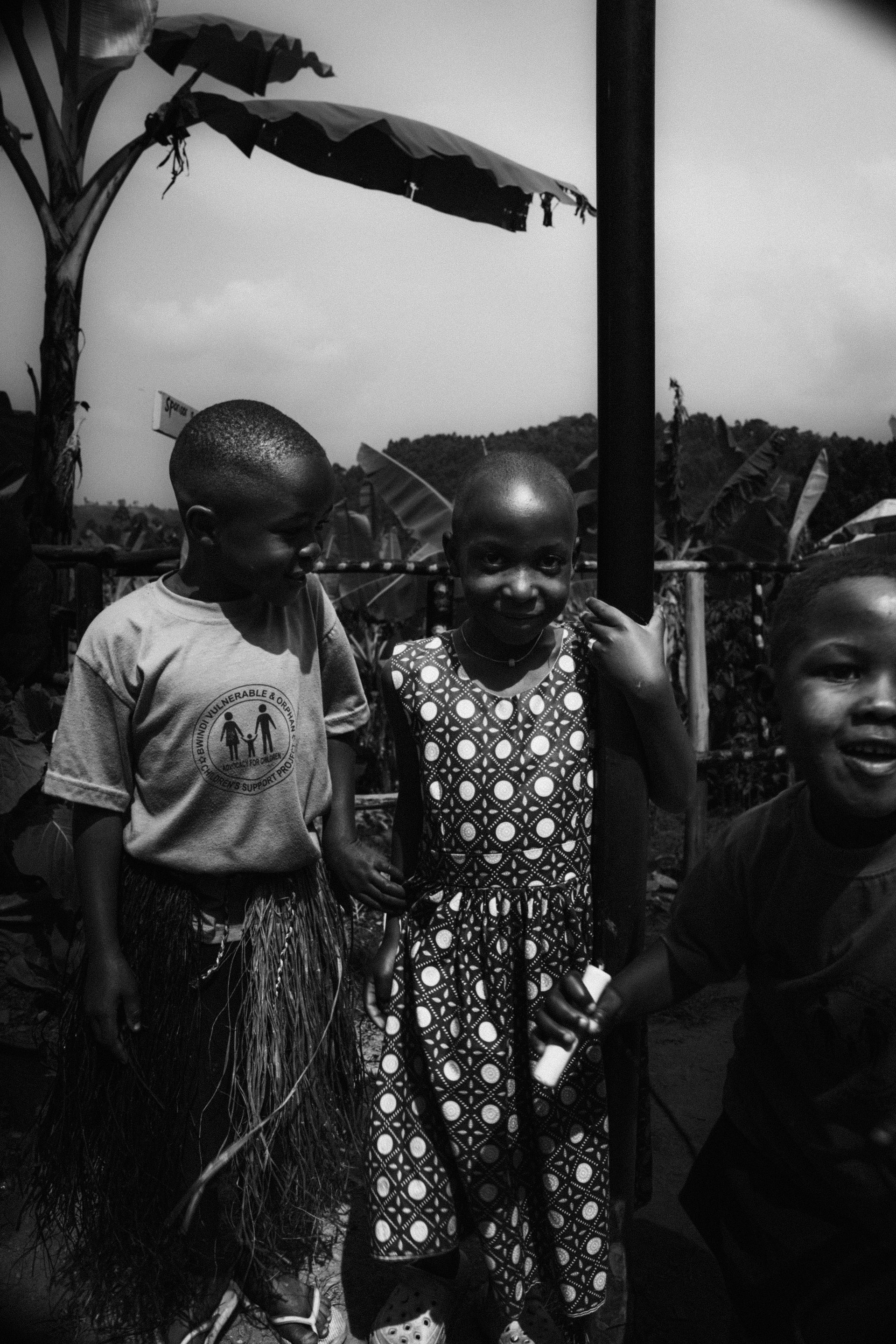
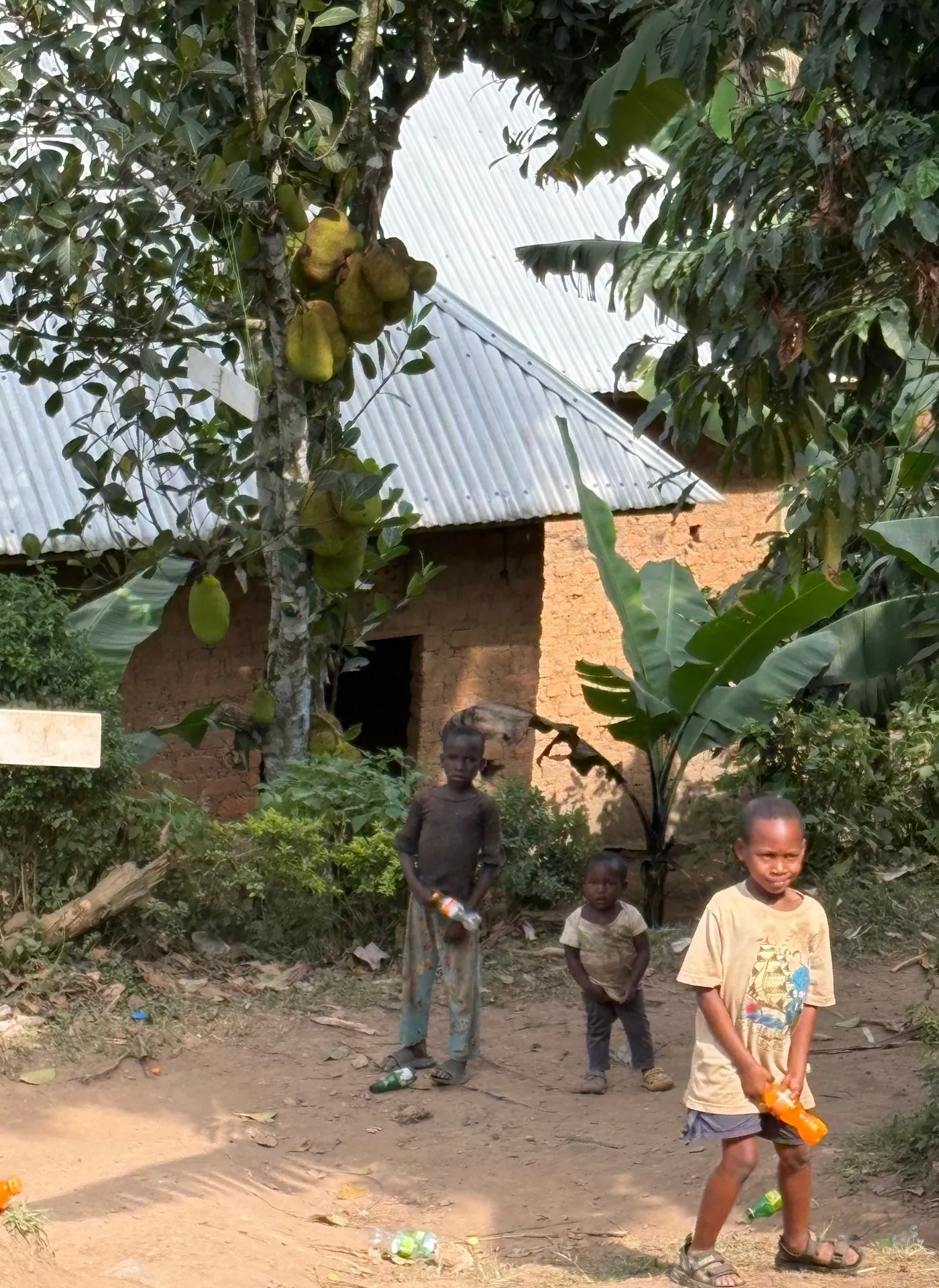
Three children stood at the edge of the compound, uncertain whether to step closer. They were from the neighbourhood near the orphanage — visibly shy, their clothes worn and their expressions guarded in the way that only prolonged hardship produces. It was early morning in Buhoma on 21 June 2026, the kind of cool highland hour when the forest edge blurs into mist and the day feels both fragile and full of possibility. We had been setting up breakfast when we noticed them watching from a distance. Without hesitation, we called them over and invited them to eat with us. That quiet gesture — an invitation to a shared meal — felt, in that moment, like the most natural thing in the world.
It is a scene that repeats itself in different forms across Buhoma: small acts of inclusion that travel itineraries do not mention but that define the texture of a place. I had first visited in October 2024 and returned in January 2026, each time finding that the village had shifted in subtle but meaningful ways. By my third visit, in June 2026 — GPS coordinates -0.9617, 29.6109 fixed to these moments in the metadata of every photograph I took — I understood that what makes Buhoma compelling is not only the mountain gorillas a short hike away in the forest. It is the people who have built lives and small businesses around the extraordinary magnet of wildlife tourism.
Norman is one of those people. A motorcycle guide and local entrepreneur, he has spent years figuring out how to turn the flow of international visitors into a livelihood — not by waiting for someone else to build an infrastructure, but by creating one himself, one ride at a time.
Tourism as Economic Engine at the Forest Edge
Bwindi Impenetrable National Park draws visitors from across the world with a single, irreplaceable attraction: the mountain gorilla. Uganda hosts roughly half of the world's surviving mountain gorilla population, and the Buhoma sector — the oldest and most established trekking starting point in the park — has been at the centre of that draw since gorilla trekking was formalised for international visitors in the early 1990s. The economic logic is straightforward: a standard gorilla trekking permit costs USD 800 per person, while the premium Gorilla Habituation Experience permit runs USD 1,500. With permits sold through Uganda Wildlife Authority and demand frequently outpacing supply in peak months, a significant volume of money enters the region before visitors have bought a single meal or hired a local guide.
That headline figure does not automatically translate into distributed local prosperity. Tourism revenue flows along the paths of established infrastructure: international booking platforms, large lodge groups, UWA's own revenue system. For the village of Buhoma itself — a cluster of homes, guesthouses, small shops, and community projects pressed close to the park boundary — the question has always been how residents convert proximity to this wildlife asset into reliable income.
The answer, over three decades, has been incremental and often improvised. Small lodges appeared along the ridge above the park gate. Community walk trails were designated and staffed. Craft sellers set up near the trailhead. And gradually, a cohort of guides and local fixers emerged — people with local knowledge deep enough to be genuinely useful to visitors arriving with limited time and high expectations. Norman belongs to this cohort.
Norman's Story: Building a Business on Two Wheels
Norman grew up in the Buhoma area and came of age during the period when international tourism to Bwindi was still finding its footing. He watched the first lodges open, saw early backpackers arrive on rough roads before the tarmac reached this corner of southwestern Uganda, and observed how certain people — those willing to be present, reliable, and genuinely knowledgeable — managed to carve out a stable niche in the tourism economy.
He chose the motorcycle. In the terrain around Buhoma, this is not a trivial choice. The roads connecting the village to the wider district — running through Kihihi, Kanungu, and eventually down to Kabale — are steep, narrow, and in places deeply rutted after rain. A boda-boda that a traveller hires to reach a viewpoint, a community beyond the tarmac, or the trailhead for a forest walk is not simply convenient; it is often the only practical option. Norman understood this early and positioned himself accordingly.
What distinguishes him from a straightforward motorcycle taxi operator is the layer of local knowledge he brings to each journey. Norman knows which community projects are genuinely worth visiting and which are primarily visitor-facing performances. He knows the secondary trails through the buffer zone that offer wildlife encounters without requiring a formal UWA permit. He knows which families produce the best local crafts, which guesthouse kitchens use fresh ingredients from village gardens, and — critically — how to read weather and road conditions in a landscape where both change rapidly.
Over time, this knowledge accumulated into something more valuable than any individual transaction: a reputation. Repeat visitors recommended Norman in online forums and to friends planning similar trips. Lodge managers began referring guests to him when they wanted something beyond the standard programme. His operation remained small — this is not a fleet business or a formally registered tour company — but it became reliable enough that he could count on a certain volume of work through the main tourist seasons.
Resilience: Navigating Crisis in a Tourism-Dependent Economy
The story of entrepreneurship in Buhoma cannot be told without acknowledging the crises that have repeatedly interrupted the village's economic momentum. The Ebola outbreak of 2018 — which struck the Democratic Republic of Congo, whose border lies less than a day's travel from Buhoma — sent an immediate shock through the local tourism economy. International travel advisories were updated, bookings cancelled, and the flow of visitors that Norman and others depended on slowed dramatically. The outbreak did not reach Buhoma, but the fear it generated was real and the economic damage was significant.
For someone whose income is tied directly to visitor numbers, there is no buffer account large enough to absorb months of near-zero revenue. Norman, like many in Buhoma, found ways to diversify during the low season: transporting local goods, serving community members who needed rides to the district health centre or to Kihihi market, doing maintenance work on the motorcycle himself rather than paying a mechanic. These were not glamorous strategies, but they were effective — survival through diversification rather than a pivot to an entirely different livelihood.
The COVID-19 pandemic brought another prolonged halt. Uganda's borders closed to tourists entirely for extended periods, and recovery was slower in remote areas like Buhoma than in Kampala or at more accessible parks. When visitors eventually returned, the market was restructured. Some of the smaller guesthouses that had operated on thin margins did not reopen. Expectations had shifted; prices had risen.
His response was characteristic: he invested in existing strengths rather than trying to scale rapidly. He deepened his relationships with the lodges and guesthouses that had survived, making himself useful to their guest experience programmes. He refined the routes he offered, cutting those that no longer justified the effort and developing new itineraries that responded to what post-pandemic visitors were actually asking for — shorter, more intimate experiences with clear community benefit components.
What Visitors Encounter — and How to Engage Meaningfully
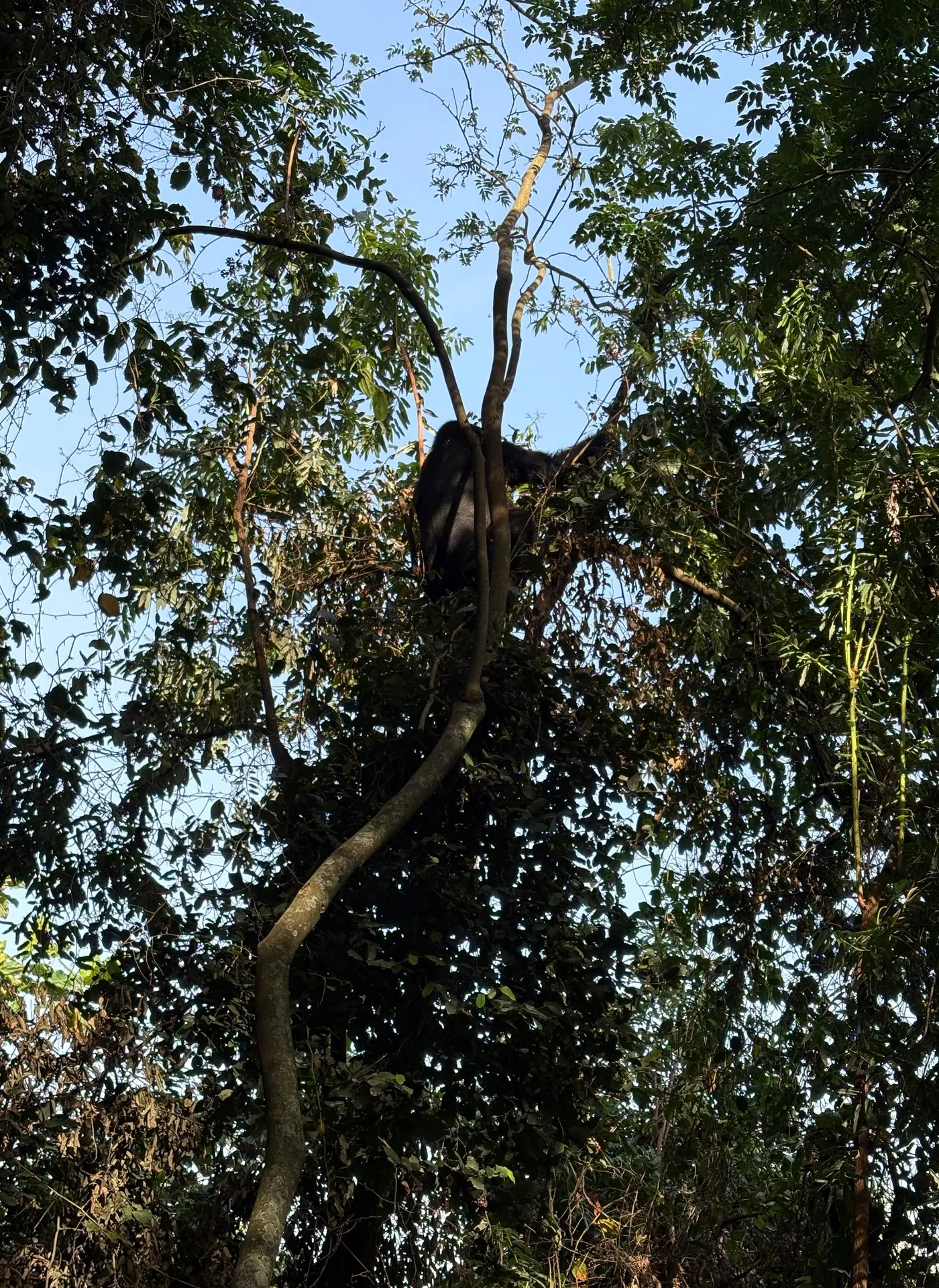
During gorilla trekking from the Buhoma trailhead in January 2026, our group followed a ranger-guide through dense montane forest for the first hour — bamboo zones giving way to ancient trees, the trail narrowing and steepening — before picking up fresh signs of movement. When we found the gorilla family, the first individual we spotted was high in the canopy, pulling branches toward itself and eating the leaves with deliberate calm. It is a moment that restructures your sense of scale: these are very large animals moving through treetops with a matter-of-fact ease that suggests the canopy is simply their furniture.
The permit system, the UWA rangers, the habituated family groups — these are the formal apparatus of gorilla trekking. But much of what makes a visit to Buhoma genuinely memorable happens in the informal spaces: the conversation with a guesthouse cook who explains which local plant is used in traditional medicine, the motorcycle ride to a hilltop viewpoint that no tour brochure mentions, the spontaneous shared meal with children from the neighbourhood who appeared at the edge of the compound on a June morning.
Norman occupies that informal space professionally. Hiring him for a half-day or full-day motorcycle tour is not a packaged experience in the conventional sense. It is closer to hiring a locally rooted guide who happens to use a motorcycle as his primary tool. The routes he covers typically include viewpoints over the Bwindi forest, visits to communities involved in conservation-adjacent livelihoods, and passages through the village landscape that are not accessible by car.
For visitors with two or three days in Buhoma — roughly the minimum to do the gorilla trek and explore beyond it — adding time with Norman provides the kind of contextual grounding that transforms gorilla trekking from a wildlife tick-box into an understanding of a place. The gorillas live in the forest. The forest sits within a landscape shaped by a dense, predominantly agricultural human population. Norman is part of that population, and his livelihood is the clearest possible illustration of the links between conservation, tourism, and community welfare.
Entrepreneurship as a Conservation Argument
Norman's story is particular to him — to his history, his skills, his specific corner of Buhoma — but it reflects a pattern that repeats across successful wildlife tourism destinations. Where tourism revenue genuinely reaches local entrepreneurs, the economic incentive to protect the wildlife asset is distributed rather than concentrated. A protected area that generates income only for central government and large lodge corporations creates a binary: conservation inside, poverty outside. A park surrounded by people who earn real livelihoods from the visitors it attracts creates a different dynamic. The forest becomes an asset the community has a stake in protecting.
Uganda Wildlife Authority's revenue-sharing programme redirects a portion of park entry fees to communities surrounding protected areas — an important structural mechanism. But formal revenue-sharing has its own bottlenecks: committee processes, disbursement timelines, questions about who benefits and how. What Norman represents is complementary to that system: individual economic agency, built on personal reputation and practical skill, that converts visitor presence directly into local income without an intermediary.
The children who appeared at the edge of the compound on that June morning were not beneficiaries of a tourism programme. They were simply neighbours, drawn by proximity. But the guesthouse that had invited us to cook there, the network of local contacts that made our visit possible, the ease with which we moved through Buhoma without feeling like spectators — all of that was the downstream effect of a tourism economy that, in Buhoma, has over thirty years gradually embedded itself in the texture of daily life.
Norman is one thread in that texture. Not a hero, not a cautionary tale — just a person who identified an opportunity in an unusual place, built a skill set around it, survived two major crises, and continued. That is what entrepreneurship in a rural tourism destination actually looks like. Unglamorous, iterative, and necessary. For visitors, the choices about where to eat, who to hire for local tours, and how to distribute discretionary spending have a direct and traceable effect on people like him. The gorilla permit fee is fixed. Everything else is a decision.