How Does Everyday Infrastructure Work in Rural Uganda?
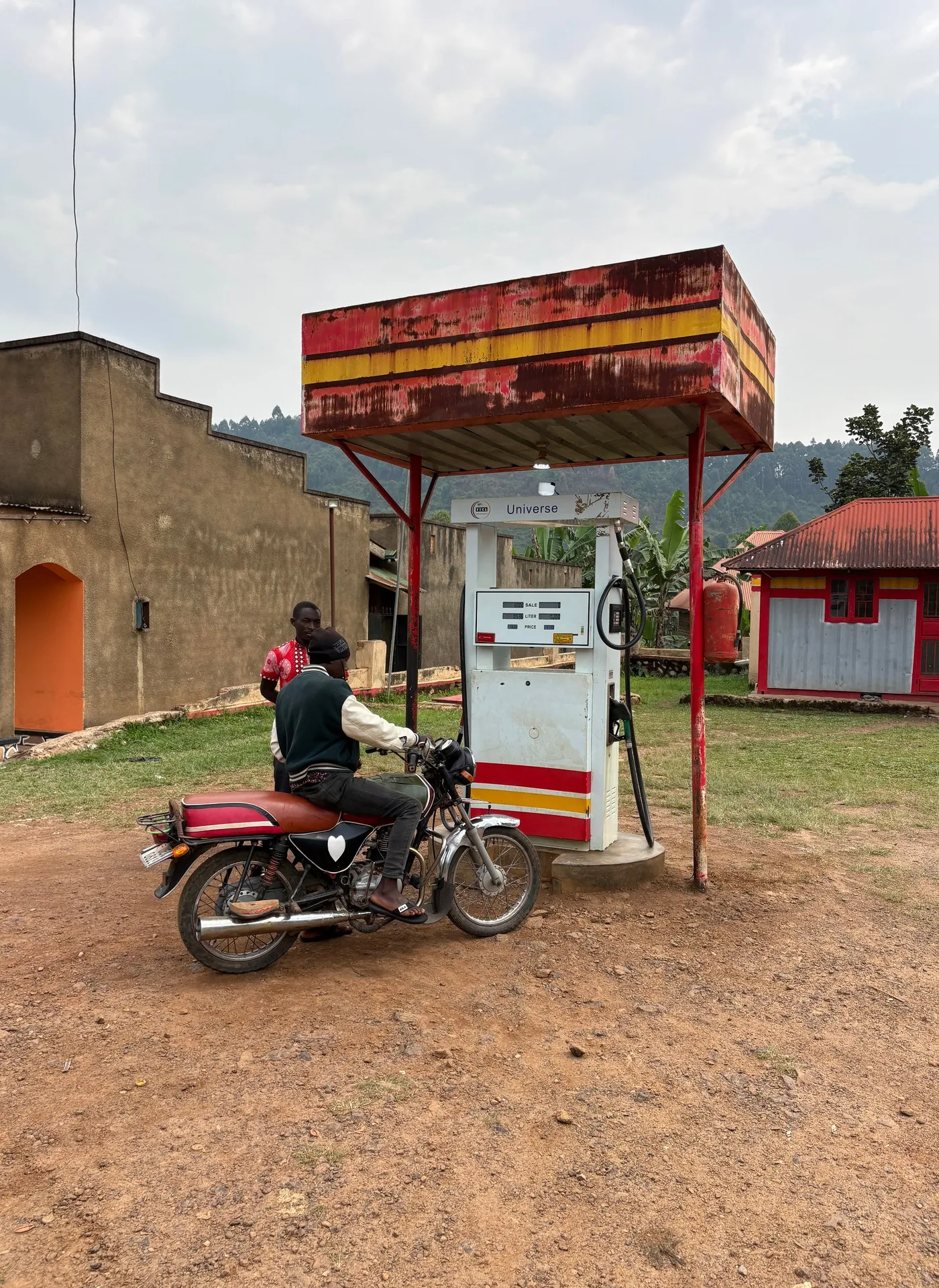
A white-and-red fuel pump stands at the side of the road in Buhoma. The paint is chipped. The metal roof above it — red and yellow, Uganda's national colors — has weathered years of equatorial sun and rain. There is no digital display, no card reader, no convenience store attached. Just a pump, a road, and the people who depend on both.
A BodaBoda rider pulls up. No words needed — the transaction is familiar, practiced, routine. He fills his tank for about 5,000 to 6,000 Ugandan shillings. A little more than one euro. One US dollar and thirty cents. Not much by Western standards. But in a place where many families earn less than $2 a day, it is not a small amount.
What Does Fuel Cost in Buhoma Compared to Average Income?
To understand Buhoma, you have to understand scale. A liter of fuel here costs roughly what a primary school student's lunch fee is for a week. A full BodaBoda tank — maybe 5 liters — represents a meaningful portion of a rider's daily earnings. The rider is not filling up for a weekend trip. He is filling up to work: to carry passengers to the market in Butogota, to deliver goods from the trading center, to reach the health clinic when someone is sick.
The fuel station is not a business in the way we might picture it. It is a node in a network of survival. Fuel comes in by truck — when the roads are passable, when supply reaches this far into southwestern Uganda. Sometimes it runs short. When it does, the village feels it immediately.
The BodaBoda Economy
In Buhoma, the BodaBoda is everything. It is the taxi, the delivery service, the ambulance, and the school bus. On any given day, you will see riders navigating the red-dirt roads with passengers gripping the seat behind them, sacks of charcoal strapped to the back, or crates of soft drinks balanced impossibly on the handlebars.
A short ride from Buhoma village to a nearby trading center costs 2,000-5,000 shillings. For many residents, it is the only way to reach a market, a clinic, or a school. The riders themselves are entrepreneurs in the most literal sense — their motorcycle is their livelihood, and every liter of fuel is an investment in tomorrow's income.
What This Scene Tells You About Buhoma
We stood and watched for a few minutes. The rider filled up, paid, and rode off. A young man nearby watched the whole thing without expression. The pump attendant waited for the next customer. Nothing dramatic happened.
And that is exactly the point.
Buhoma works. Not with the efficiency of a Swiss city or the abundance of a Western suburb. It works the way a hand-built engine works — with effort, with improvisation, with parts that were never designed to fit together but somehow do. A single fuel pump keeps motorcycles running. Those motorcycles keep people connected. That connection keeps the community alive.
Most visitors to Buhoma are here for gorilla trekking. They drive in from Kampala or fly to the nearby airstrip, ride to their lodge, trek into the forest the next morning, and leave the day after. The fuel station is something they pass without noticing.
But if you stop, if you look, if you take one moment to see the village as it actually is — not as a backdrop to the gorillas but as a place where people live, work, struggle, and endure — you start to understand something important about Buhoma. It is simple. And it works.
Getting Around Buhoma
- --Walking is the best way to explore the village itself (most places are within 15-30 minutes on foot)
- --BodaBoda for short distances to nearby trading centers (2,000-5,000 UGX)
- --Private car for the drive to/from Butogota (17 km) and beyond
- --Fill your vehicle's tank in Butogota or Kihihi before reaching Buhoma
More Stories from Buhoma
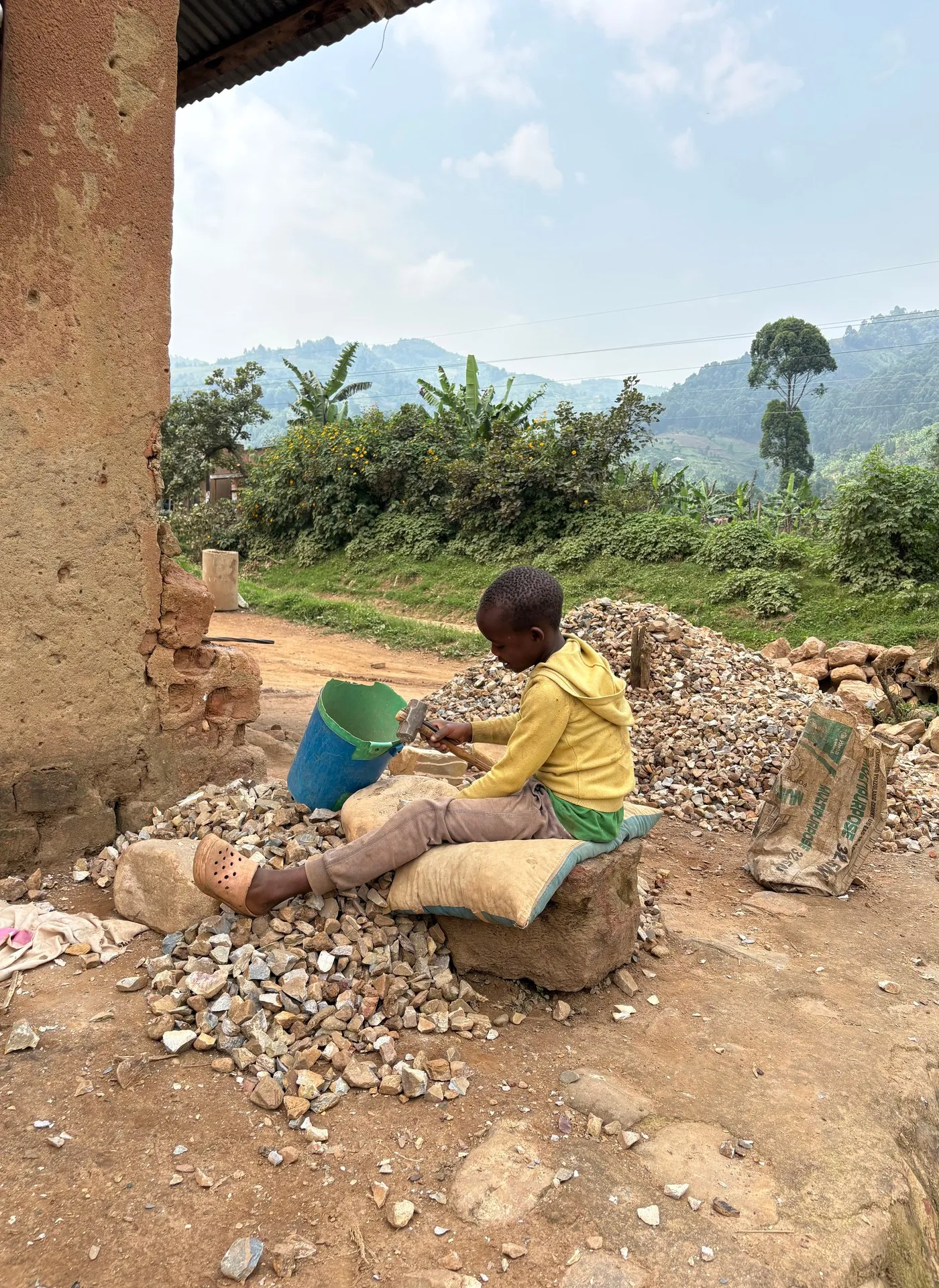
Roger the Stone Breaker
A 10-year-old boy who breaks stones instead of going to school.
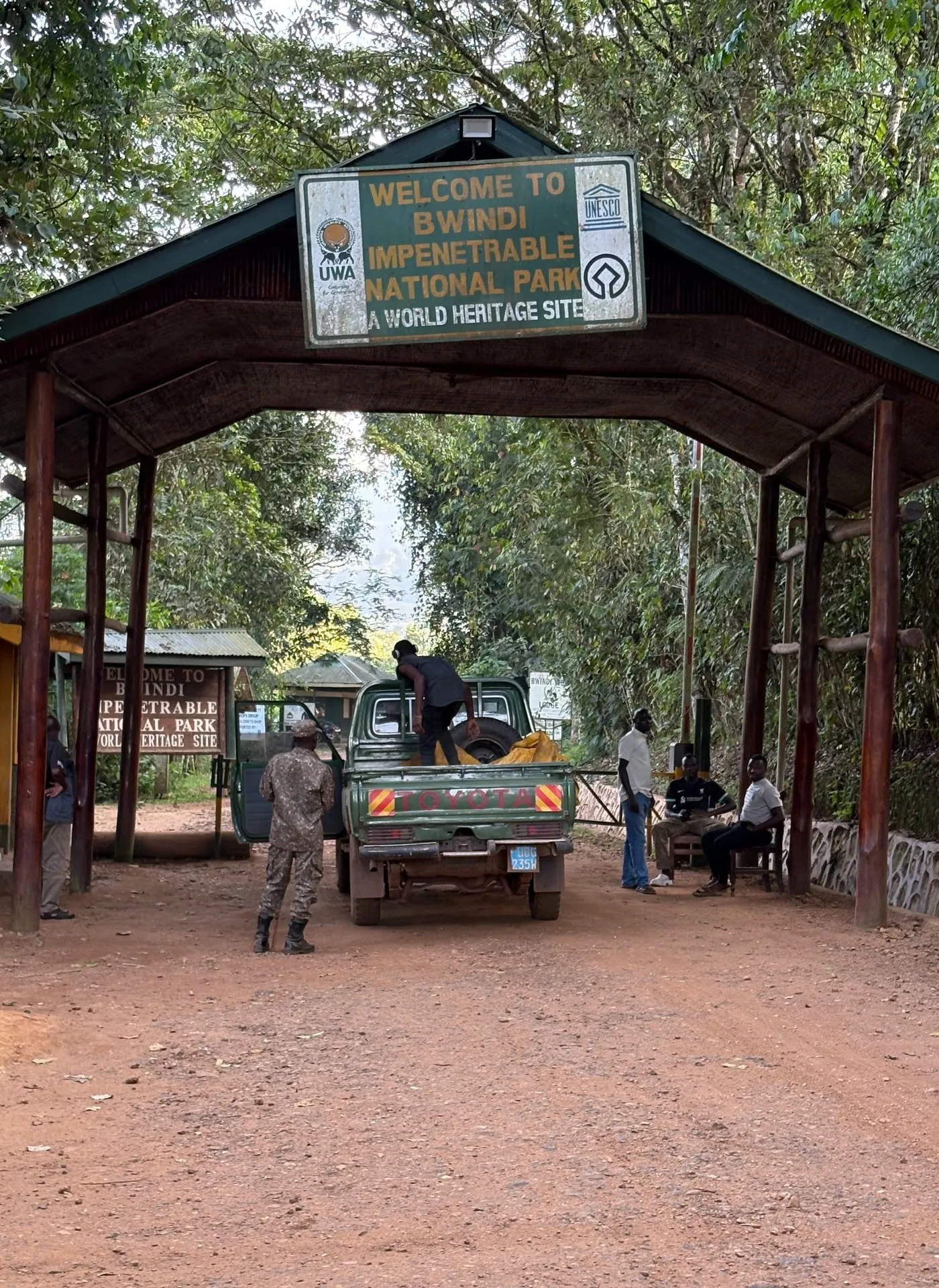
The Gate to Bwindi
A quiet morning at the entrance to one of Africa's most famous national parks.
Transport & Daily Life in Buhoma FAQ
Last updated: September 2026