What Does a Typical Day Look Like for Children in Buhoma Village?
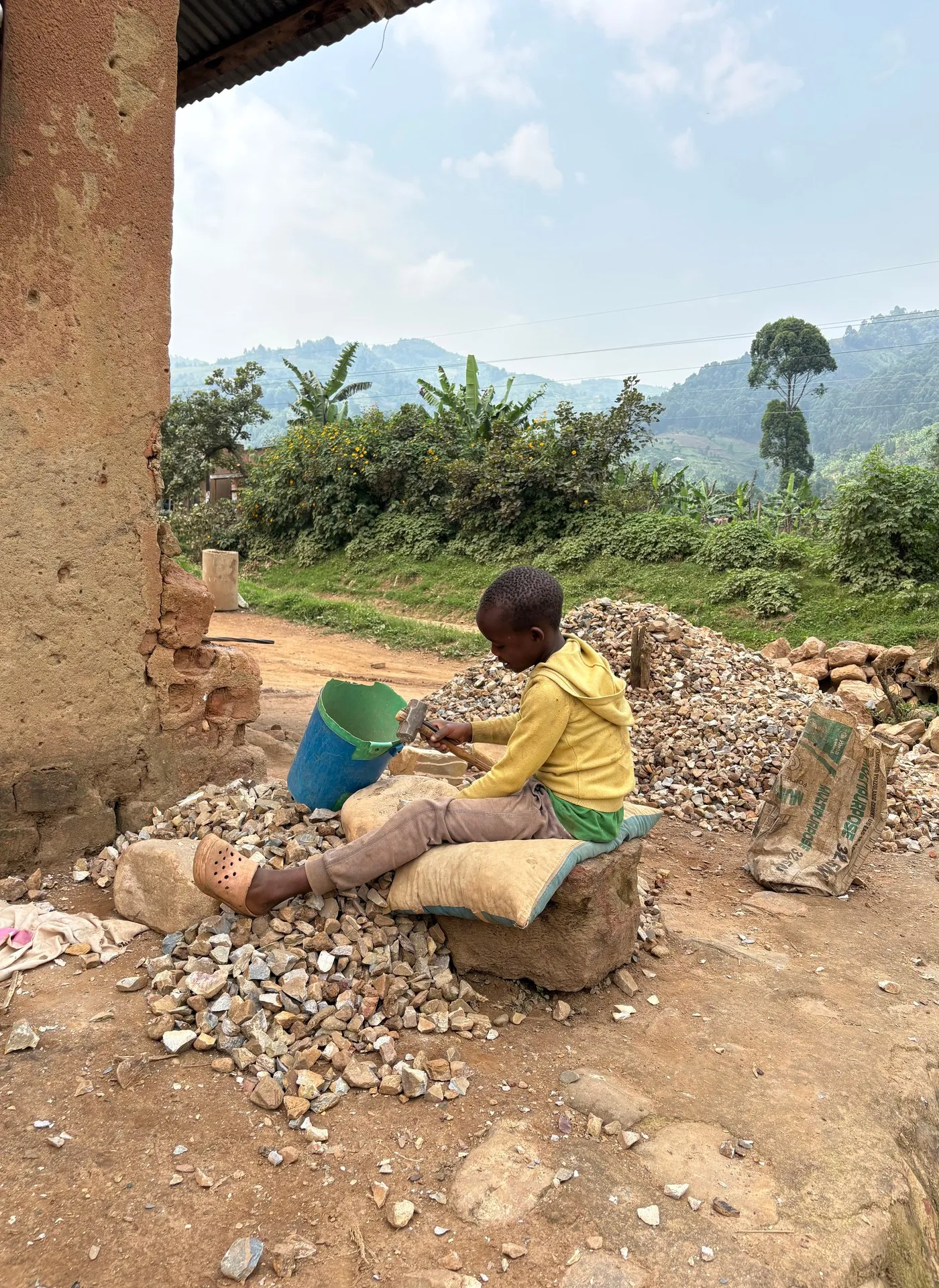
We found him on the side of a dirt road during a village walk through Buhoma. A boy, maybe ten years old, sitting on top of a pile of rocks. In his hand, a hammer. At his feet, a blue bucket slowly filling with crushed stone.
His name is Roger.
Roger was breaking stones. Not playing. Not pretending. Working — with the steady, practiced rhythm of someone who has done this hundreds of times before. Each strike precise. Each piece of gravel destined for a house foundation somewhere in the village.
Why Do Children Work Instead of Attending School Near Bwindi?
Roger does not go to school. Not because he does not want to, but because his family cannot afford it. In Uganda, primary education is officially free, but the reality is different. Uniforms, exercise books, pencils, exam fees, lunch contributions — they add up quickly. For a family living on less than two dollars a day, it is an impossible equation.
So Roger breaks stones. A full bucket earns a few thousand Ugandan shillings — barely enough for a meal, but something. Every chip of rock is a contribution to a family holding on at the edges.
A Boy Full of Life
What struck us most was the contradiction. Roger, the worker, was also Roger, the kid. Every time we passed through the village, he came running. Smiling, waving, curious about these strangers walking through his world. He wanted to know where we were from. He wanted to show us things. He had that spark — that unstoppable energy that children have when the world still feels like an adventure.
He did not seem bothered by the work. And somehow, that made it harder to witness. Because a child who has normalized labor is a child whose childhood was never given a chance to begin.
The Buhoma Visitors Never See
Most visitors come to Buhoma for gorilla trekking. They arrive, they trek into the forest, they meet a gorilla family, and they leave transformed. It is a profound experience — one of the greatest wildlife encounters on Earth.
But the village around the forest has its own stories. Stories that do not make it into travel brochures. Stories of families who live next to a UNESCO World Heritage Site but cannot send their children to school. Stories of ten-year-olds who break stones while tourists walk past on their way to see silverbacks.
Roger is not a symbol. He is a real boy with a real name and a real life. But his story represents something larger: the gap between what visitors experience in Bwindi and what the community around it lives every day.
What Visitors Can Do
We do not tell this story to create guilt. Gorilla trekking brings real economic benefits to Buhoma — lodge jobs, guide employment, craft sales, and a portion of every $800 permit fee going directly to community development. Tourism matters here. It matters enormously.
But if Roger's story stirs something in you, there are ways to go deeper. Take a community walk and see village life firsthand. Support local social projects that fund education and community development. Ask your lodge how they support local families. Stay an extra night and spend money in the village economy.
The gorillas are why people come to Buhoma. The people are the reason to stay longer.
How to Take a Community Walk in Buhoma
- 1.Ask at your lodge reception for a local community guide
- 2.Walks typically last 2-4 hours and cost $10-20 per person
- 3.You will visit banana plantations, local schools, and family homes
- 4.Wear comfortable walking shoes — paths can be muddy
- 5.The guide fee goes directly to the guide and their family
More Stories from Buhoma
The Fuel Station
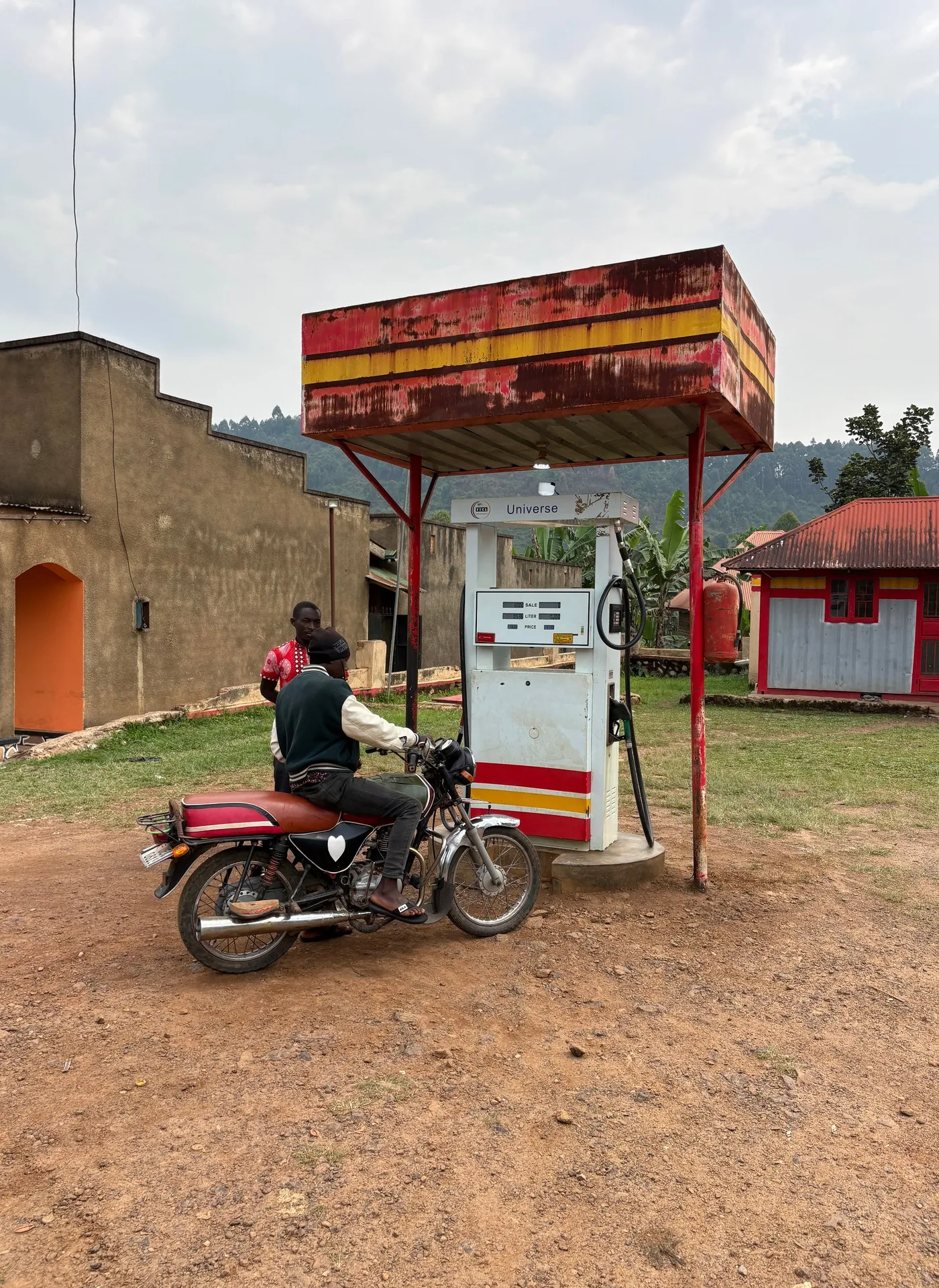
A roadside fuel station tells the story of everyday life and quiet infrastructure in Buhoma.
The Gate to Bwindi
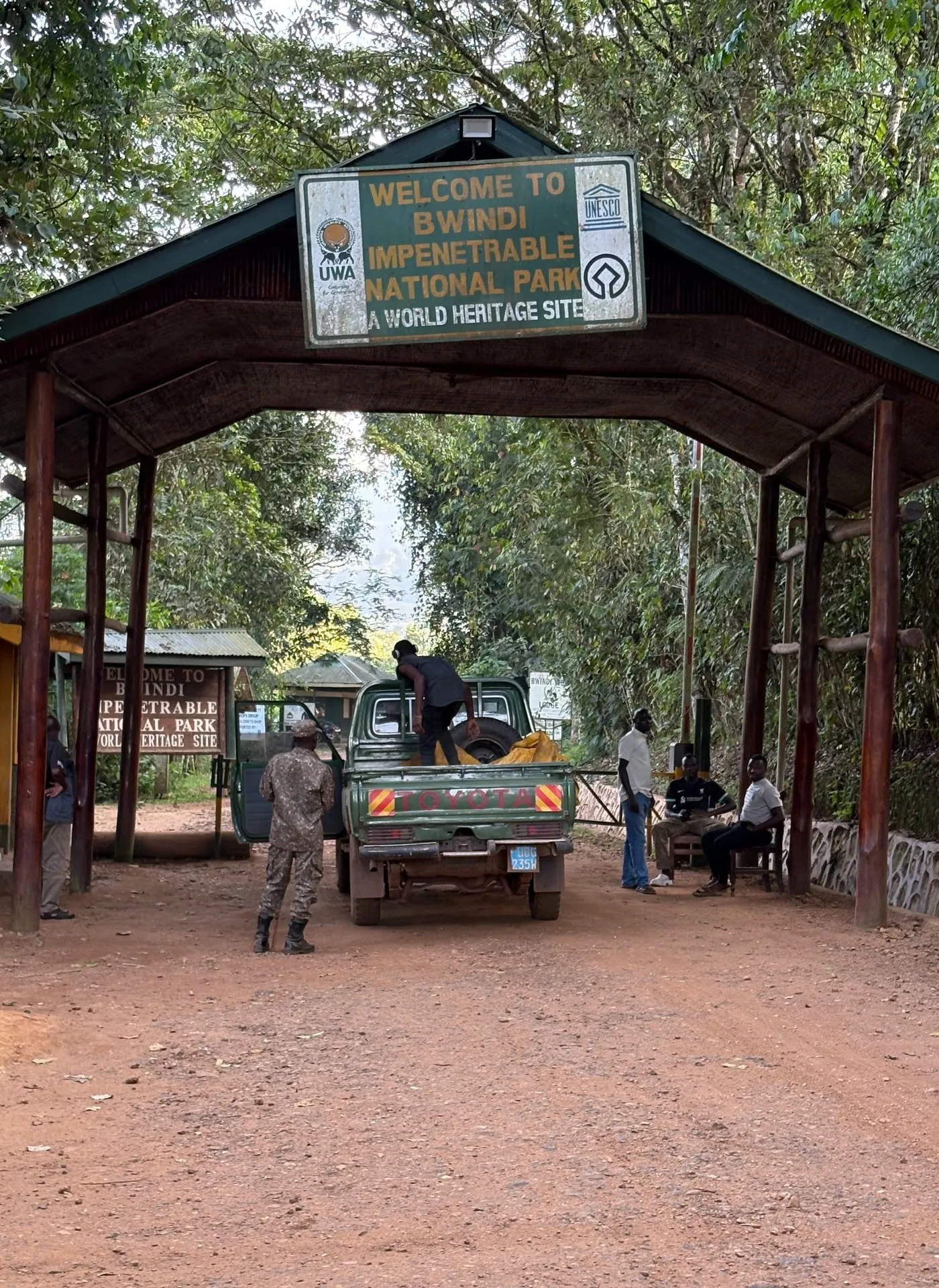
A quiet morning at the entrance to one of Africa's most famous national parks.
Community Walks & Village Life FAQ
Last updated: September 2026