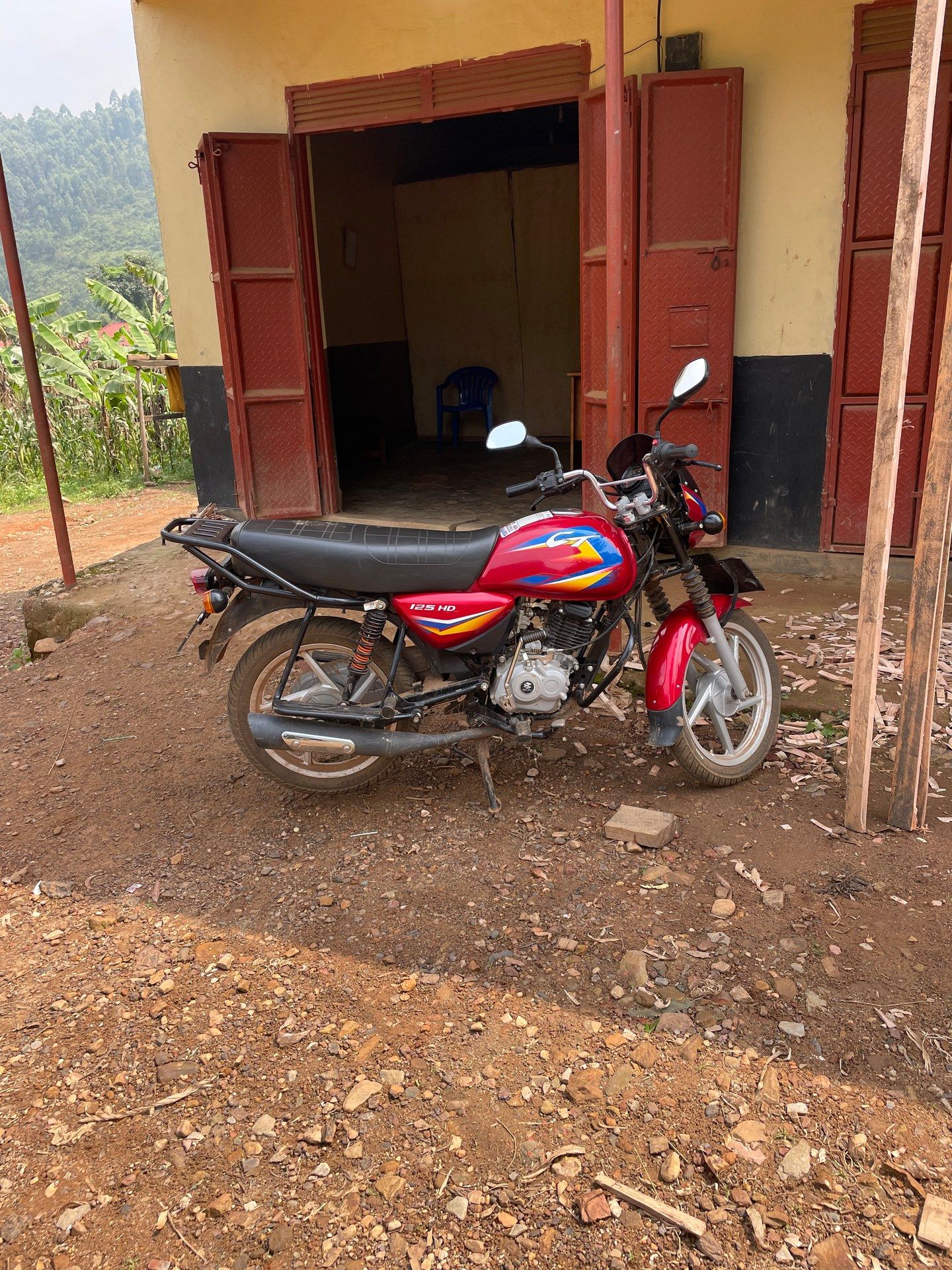
Norman Noel parks his motorcycle at the edge of the road in Buhoma and waits. He has been waiting most of the week. No tourists, no rides, no income. A border case has been discovered nearby, and Buhoma — the village that lives and breathes by the gorilla permit — has gone quiet.
We met Norman during our stay in Buhoma in January 2026, one of several visits that have taken us to this corner of Uganda — 11 days that time, long enough to see both the rush of tourist season and the stillness when it ends. Norman is a BodaBoda driver, one of dozens who work the road between Buhoma village and the Bwindi Impenetrable National Park gate. His motorcycle is his livelihood, his business, and — for now — his ceiling.
“If I can get a chance of getting a driving licence, I will have to expand my business of driving. At least I advance from a motorcycle to a car. I meet my friends from USA, UK, Germany, everywhere. I start exploring Uganda as my dream for exploring.”
Norman Noel — BodaBoda Driver, Buhoma
The ambition in that sentence is worth sitting with. Norman is not describing a job application. He is describing a ladder — motorcycle to car, driver to guide, rider to someone who leads. He has watched the tourism industry long enough to understand its shape. He knows that every tourist who comes to Buhoma needs transport from the airstrip or the road junction. He knows that every guide who earns consistently has repeat clients from abroad. He knows the steps. What he does not have is the capital to climb them.
What a Week Without Tourists Looks Like
Buhoma's economy is not diversified. It runs on gorilla trekking permits ($800 USD per person, issued by the Uganda Wildlife Authority), and the spending that surrounds them: lodge beds, meals, guiding fees, crafts, and transport. When permits are sold, money circulates. When tourists stop coming — because of an Ebola alert, a border closure, a travel advisory — the circulation stops almost immediately.
For a BodaBoda driver, the arithmetic is direct. Each ride earns a few thousand Ugandan shillings. No rides means no income. Fixed costs (petrol, maintenance, occasional repair) do not pause. Norman described this himself:
“I have spent a week riding, but no customers at all, because now we have got a problem. Uganda discovered a border case, and we as people here in Buhoma, we survive on tourism, and we have got a problem here. Tourists are few because of the Ebola, and as me, Norman — the reason why I joined BodaBoda, I am hustling to get a good drive. If I get money, I advance. I get from BodaBoda, I join tourism, I also become like a tour guide. And I lack enough capital to start with, because I have no support at all.”
Norman Noel — recorded in Buhoma
“We survive on tourism.” That sentence, said plainly without drama, is the clearest summary of Buhoma's economic reality. There is no other industry at this scale, no agricultural export that brings in comparable money, no manufacturing base. The mountain gorillas draw the visitors. The visitors spend the money. The money sustains the village. When that chain breaks, the effect is felt within days.
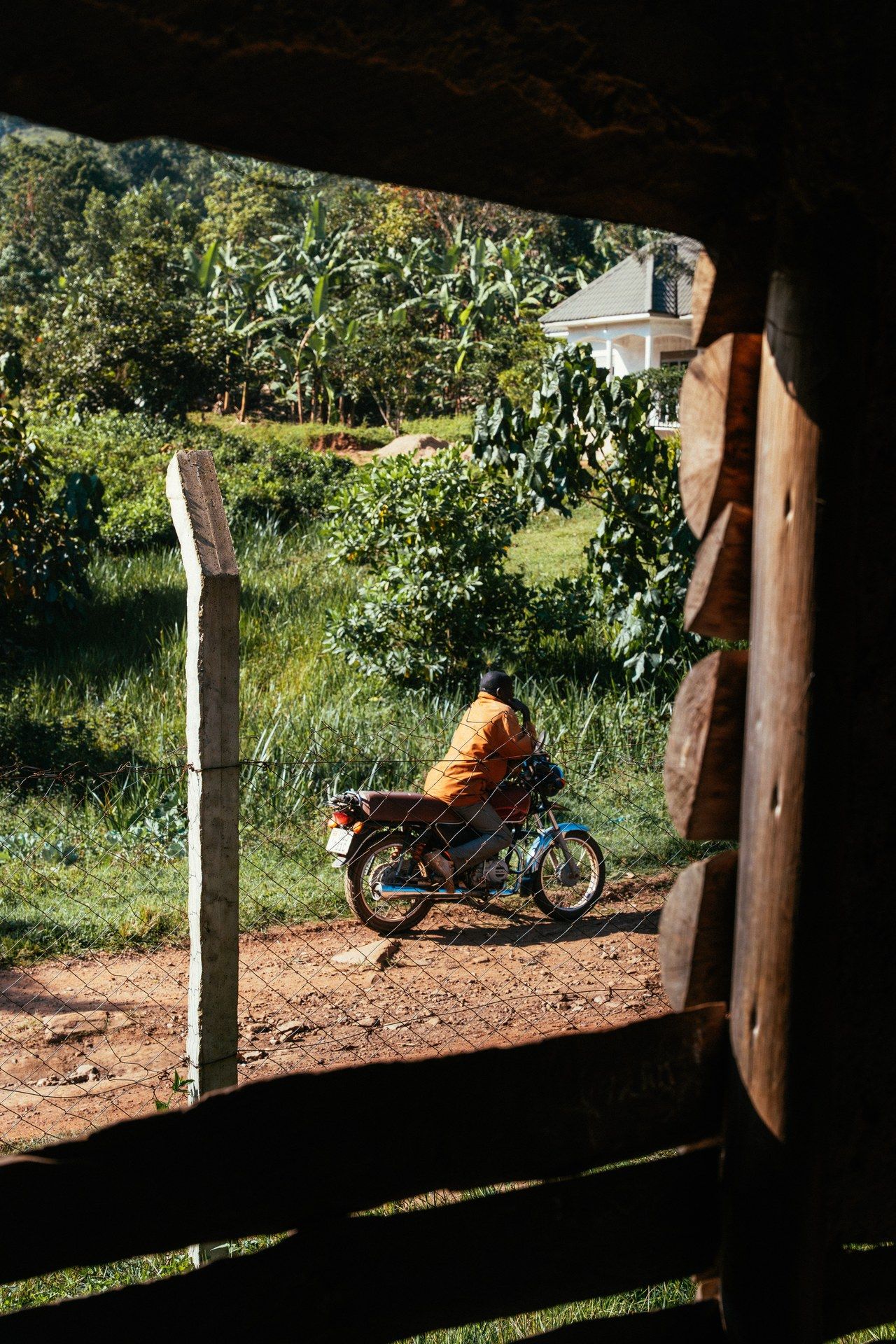
Buhoma's BodaBoda drivers connect the village to the national park gate — the most direct link between tourism income and local livelihoods
The Path Norman Can See — and the Gap In Between
What makes Norman's story distinctive is not that he is struggling — many people in Buhoma are — but that he has a specific, articulated plan. He knows what he wants to do and roughly in what order. The problem is the entry cost to each step.
A driving licence costs money. A car costs significantly more. Training as a certified tourism guide requires fees and time away from earning. Banks in rural Uganda rarely lend to informal sector workers without collateral. The result is that talented, motivated people like Norman are trapped not by ambition but by capital.
The path is visible. The gap between steps is real.
During our January 2026 visit, we walked through Buhoma's local market — a lively spread of clothing, household goods, and produce laid out on tarpaulins. Stalls selling beans, maize flour, and palm oil do steady business because these are staples that people need regardless of the tourist season. But the BodaBoda drivers parked at the market edge were waiting for tourists who weren't coming. The market absorbs local purchasing power. The transport economy runs entirely on visitor flows.
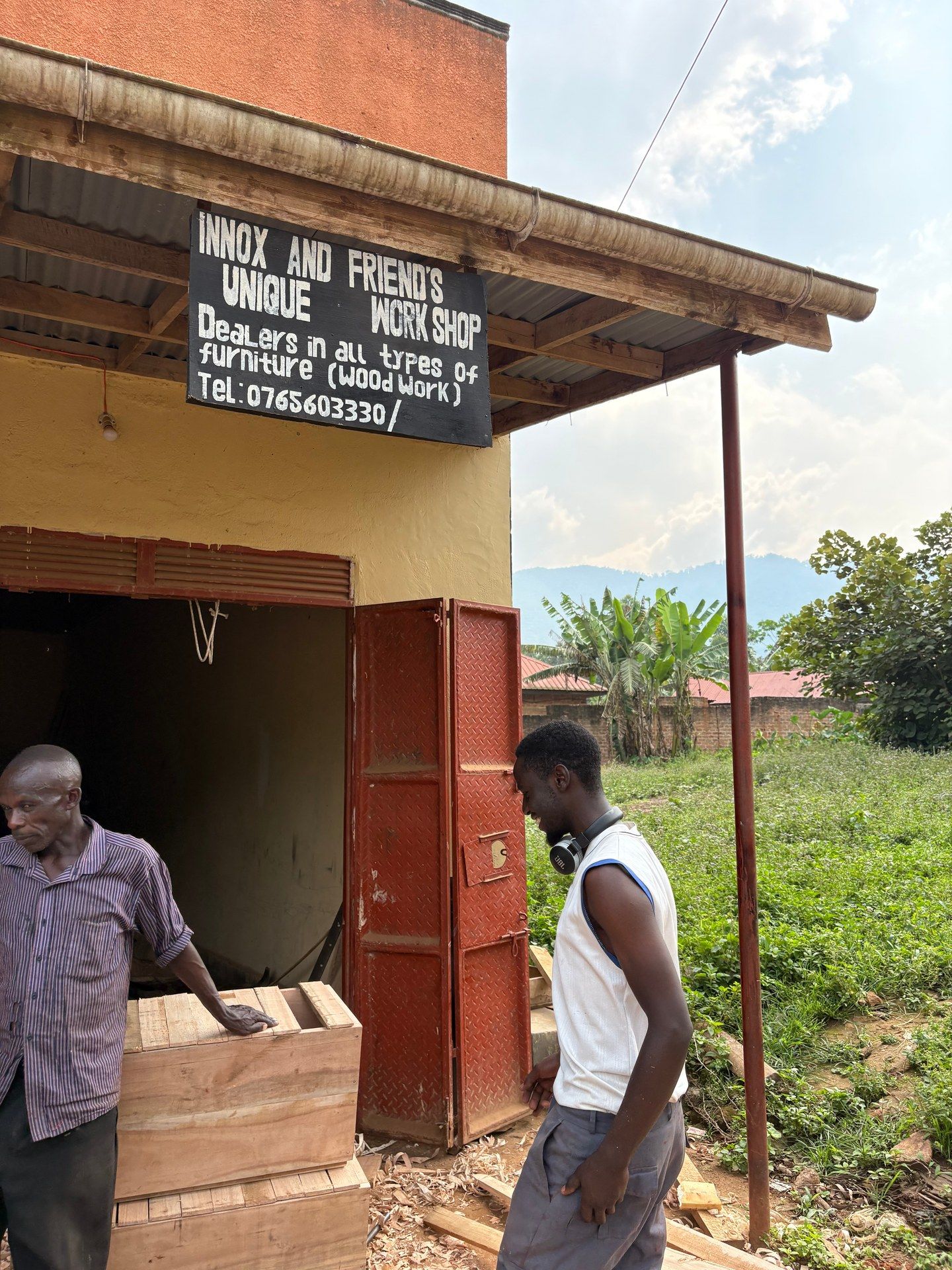
Local workshops like this one in Buhoma show what entrepreneurship looks like when capital is available — the BodaBoda economy is waiting for the same opportunity
Some entrepreneurs in Buhoma have managed the transition. The carpenters at the Innox and Friend's Unique Workshop, a few minutes from the park gate, have built a small business from local timber and hand tools. The men we met there in January 2026 were relaxed and busy, turning wood into furniture for the lodges and community. Their capital requirement was modest: tools, timber, a workshop space. The BodaBoda to guide transition requires more: a licence, insurance, certification, and a client network that takes years to build.
A Village Built on One Industry
The fragility Norman describes is structural. Buhoma sits at the northern entrance to Bwindi Impenetrable National Park, in the Kanungu district of south-west Uganda. Its economy was reshaped by gorilla tourism from the early 1990s onwards, when habituation programmes made it possible to bring paying visitors into contact with mountain gorilla families. Before that, Buhoma was an agricultural village like any other.
The transformation brought prosperity — lodges, employment, new roads, secondary school enrolment. It also created dependency. When the Ebola outbreak was confirmed in the DRC in 2018 and border cases were identified, the Ugandan government and international tour operators responded with caution. Visitor numbers fell sharply. Norman's rides evaporated. The lodges ran at low occupancy. The market traders who sold to lodge kitchens and tourist operators saw their orders slow.
This is the dual reality of tourism-dependent communities: remarkable uplift when visitors come, acute vulnerability when they don't. The solution — economic diversification, improved access to finance, skills training — is easier to describe than to implement in a remote village eight to ten hours from Kampala.
The Dream Doesn't Stop
Norman's plan — motorcycle, driving licence, car, tour guide — is a rational, realistic response to the economy he lives inside. He is not waiting for charity. He is trying to build equity, step by step, out of what he earns from each ride.
“I meet my friends from USA, UK, Germany, everywhere,” he says. This is what tourism brings that a local market never can: contact with the world, with people who have resources and networks, with the possibility that one connection becomes an opportunity. Norman is not just driving tourists from the airstrip to their lodge. He is building towards something.
When you ride a BodaBoda in Buhoma, you are almost certainly riding with someone who has a plan beyond the next fare. The village is full of them. What they need — a driving licence, a small loan, a first client — is rarely as far from reach as it seems, and never as close as it should be.
More from Buhoma
Norman — A Week Without Tourists
How the Ebola scare of 2018 emptied Buhoma and what Norman did to survive it.
BodaBoda in Buhoma
Everything you need to know about using motorcycle taxis to get around Buhoma.
How Tourism Helps Buhoma
The economic chain that runs from a gorilla permit to a dozen local livelihoods.