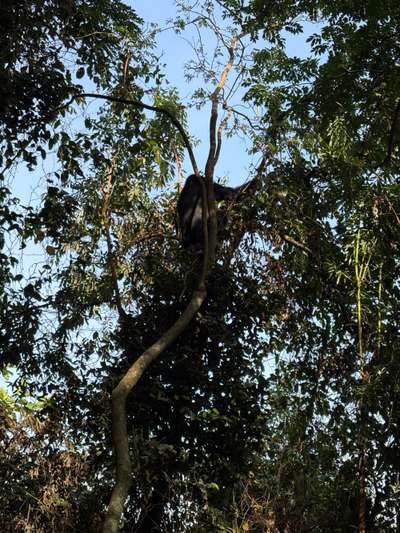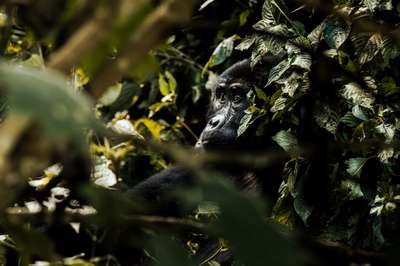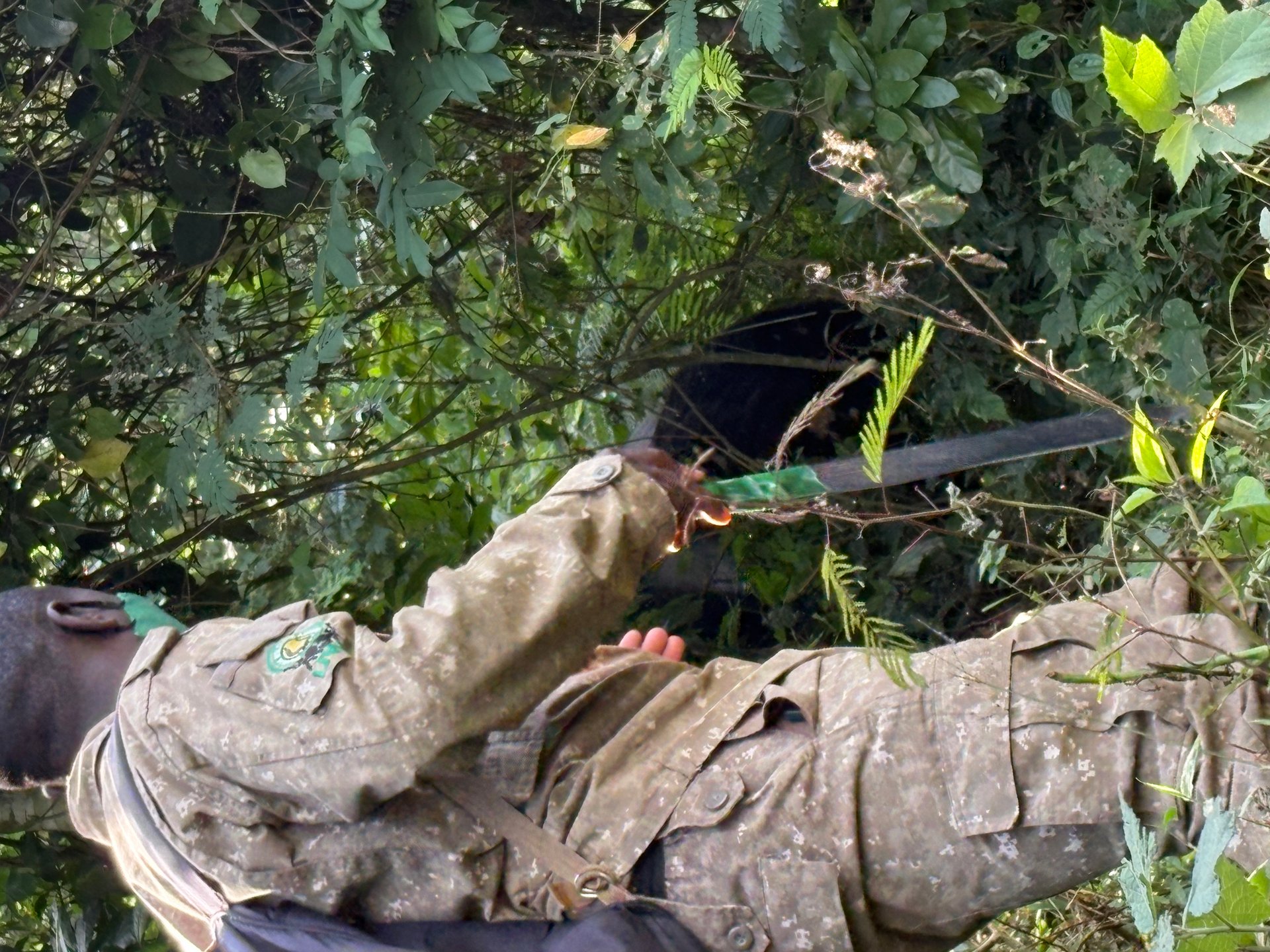
Nature walks from Buhoma are guided hikes through Bwindi Impenetrable Forest led by UWA ranger guides. Trails range from 1.5 to 7+ hours and include the popular Waterfall Trail, Munyaga River Trail, and the Buhoma-Nkuringo traverse. Walks cost $30-50 per person plus a $40 park entry fee and offer encounters with primates, birds, butterflies, medicinal plants, and ancient rainforest ecosystems.
Quick Facts
- Trail Options:
- 4+ trails from Buhoma
- Duration:
- 1.5-7+ hours depending on trail
- Cost:
- $30-50 + $40 park entry fee
- Guide Required:
- Yes, UWA ranger guide
- Difficulty:
- Moderate (steep, muddy trails)
- Wildlife:
- 120 mammal species, 350+ birds
- Best Time:
- Morning, year-round
- Minimum Age:
- None, but 10+ recommended
Walking Through an Ancient Forest
Bwindi Impenetrable National Park is one of the most biologically rich areas on Earth. This 331-square-kilometer expanse of montane rainforest has survived since the Pleistocene, making it one of Africa's oldest forests. It persisted through ice ages that destroyed most other tropical forests on the continent, becoming a refuge for species that evolved here and exist nowhere else.
The result is staggering biodiversity: over 1,000 flowering plant species, 120 mammal species, 350 bird species, 202 butterfly species, and 163 tree species. Walking through Bwindi feels like entering another world. The canopy closes overhead, light filters green through layers of leaves, lianas hang from ancient trees, epiphytic ferns and orchids cling to every branch, and the air is thick with the calls of insects, frogs, and birds.
Nature walks from Buhoma are the most accessible way to experience this forest without a gorilla trekking permit. They are also an excellent complement to a gorilla trek, allowing you to appreciate the ecosystem as a whole rather than focusing solely on one species.
Trail Options from Buhoma
Waterfall Trail
3 hours round trip | Moderate | Best for: first-time visitors
The most popular nature walk from Buhoma. The trail descends into the forest along a well-defined path to a waterfall on the Munyaga River. Along the way, your ranger guide points out medicinal plants used by traditional healers, explains the complex forest layers from undergrowth to emergent canopy, and identifies bird calls. Primate sightings are common, particularly L'Hoest's monkeys and red-tailed monkeys. The waterfall itself is a peaceful spot surrounded by ferns and moss-covered rocks.
Munyaga River Trail
2-3 hours | Easy to moderate | Best for: birders, photography
This trail follows the Munyaga River through the forest, offering a gentler route with excellent birdwatching opportunities. The riverine habitat supports species not found in the forest interior, and the open areas along the stream provide better light for photography. Butterflies are particularly abundant near the water, especially in the morning sun. The trail is less steep than the Waterfall Trail and suitable for a wider range of fitness levels.
Buhoma-Nkuringo Trail
5-7 hours one way | Challenging | Best for: serious hikers, biodiversity
A full-day traverse through the heart of Bwindi from Buhoma in the north to Nkuringo in the south. This demanding trail climbs through multiple altitude zones, passing from lowland to montane forest. The species diversity along this route is exceptional, and the sense of wilderness is profound. Transport can be arranged at the Nkuringo end so you do not need to return the same way. Recommended for fit hikers with a full day available.
Short Forest Loop
1.5-2 hours | Easy | Best for: limited time, families
A shorter loop near the Buhoma park entrance that gives a taste of the forest without a long commitment. Good for visitors with limited time or those who want a gentle introduction to the rainforest environment. Your guide covers the basics of forest ecology and points out key plant species and any wildlife encountered.
What Your Guide Will Show You
UWA ranger guides are trained naturalists who bring the forest to life. Without a guide, Bwindi can feel overwhelming: dense, dark, and seemingly impenetrable. With a guide, every few meters reveals something new.
- Medicinal plants: Traditional healers use forest plants for treating everything from malaria to snakebites. Your guide identifies plants like Prunus africana (used in prostate treatments worldwide) and others used locally.
- Tree identification: From giant mahoganies draped in moss to strangler figs that grow around and eventually consume their hosts, the tree diversity is remarkable. Bwindi has 163 tree species.
- Primate encounters: Bwindi is home to 10 primate species. On nature walks, you commonly see L'Hoest's monkeys, red-tailed monkeys, and black-and-white colobus. Chimpanzees are present but elusive.
- Insect world: From column-marching army ants to iridescent butterflies (over 200 species) to bizarre stick insects, the invertebrate life is endlessly fascinating.
- Forest ecology: How nutrients cycle in tropical rainforest, why Bwindi survived the ice ages, how the forest creates its own rainfall, and the interconnected web of species that maintains the ecosystem.