Buhoma has two food worlds running in parallel: lodge restaurants that serve reliable meals for trekkers, and a network of local market stalls, roadside vendors, and small shops that serve the village itself. Both are worth experiencing. Eating at least one meal a day from local vendors puts money directly into individual households — a form of community tourism that costs you almost nothing extra.
Food in Buhoma reflects its geography: a highland village at over 1,300 metres in the south-west of Uganda, where matooke (steamed green bananas), beans, sweet potato, cassava, and posho (maize porridge) are the daily staples. The land is fertile and productive. What you eat here will not look like a restaurant meal in Kampala — and that is the point.
During multiple visits to Buhoma — including a 9-day stay in January 2026 — we moved between both worlds: lodge breakfasts before gorilla treks and market stalls in the afternoon. Both are part of understanding Buhoma as a place rather than just a gateway.
Buhoma's Local Market — The Village Economy on Display
The local market in Buhoma is small by Ugandan standards — a spread of tarpaulins and wooden stalls along and near the main road — but it is the economic heartbeat of the village beyond the tourist sector. Clothing, second-hand shoes, household goods, and basic produce are sold by vendors who have often come in from surrounding hillside communities.
On a visit in January 2026, we found the market active and varied: bundles of dried beans, maize flour, cooking oil in repurposed containers, and stacks of everyday clothing laid out on waterproof sheeting. The atmosphere was relaxed and purposeful — people buying what they needed for the week, not performing a market for tourists. That ordinariness is what makes it worth visiting.
Produce from the market eventually reaches the lodges — Buhoma's cook staff buy beans, greens, and eggs here for lodge kitchens. Spending at the market therefore supports the same supply chain, just at an earlier point.

A typical small shop in Buhoma — stocked with everything a family needs, run almost always by a woman, and open every day
Small Shops Along the Main Road
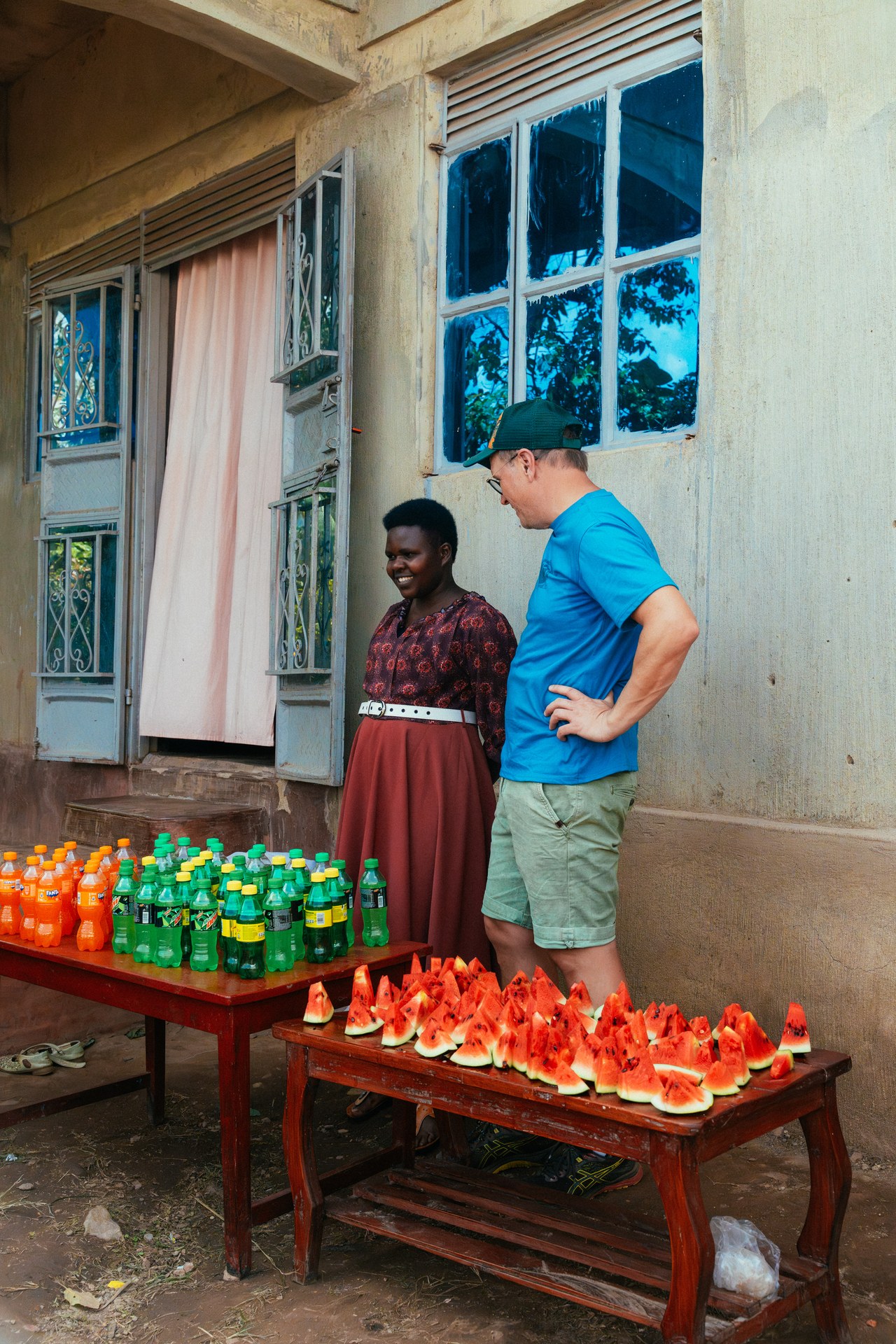
Scattered along Buhoma's main road are small shops of roughly 20 square metres — a metal mesh front as security, shelves stocked with bottled water, soft drinks, biscuits, tinned goods, soap, and phone credit. Most are run by women who own and manage their own businesses, often with their children nearby.
We stopped at one of these shops in January 2026 and bought water for ourselves and sweets for children we had met outside. It was a brief exchange — a few thousand shillings — but the shop owner knew exactly what everything cost, counted change precisely, and had customers before and after us. These are functioning small businesses, not charity cases. Buying something here is a transaction, not a donation.
Bottled water (500ml) costs approximately 1,000–1,500 UGX from roadside shops. Always carry enough water for any walk you plan — the shops thin out quickly once you move away from the main road.
Rolex — Uganda's Essential Street Food
If you eat one thing from a street vendor in Buhoma, make it a rolex. The name is a contraction of “rolled eggs” — a fresh chapati (unleavened flatbread) cooked on a griddle, then wrapped around a fried egg beaten with tomato, onion, and cabbage. It is prepared in front of you, costs 1,000–2,000 UGX, and takes about three minutes from order to hand.
Rolex vendors in Buhoma are most active in the early morning, before the gorilla trekking groups depart, and again in the late afternoon. A rolex eaten while sitting on a wooden bench beside the road, watching the village go about its business, is among the more honest travel experiences Uganda offers.
Upgrades are available — add avocado, extra egg, or sausage — at a corresponding price increase. The base version is fine. It is filling enough to sustain a morning trek.
What You Will Eat in Buhoma — The Staples
Matooke
Steamed green bananas — Uganda's national dish. Plantains are peeled, wrapped in banana leaves, and slow-cooked until soft. The result is starchy, mild, and enormously satisfying. Matooke is served at virtually every meal in the village and at most lodge restaurants. It pairs with beans, groundnut sauce, or meat stew.
Katogo
A breakfast stew of matooke, cassava, or sweet potato cooked with beans, offal, or groundnut sauce. Hearty and hot, it is what most people in Buhoma eat first thing in the morning. Found at local restaurants and market stalls from around 07:00. If you are trekking early, katogo the night before is also common.
Posho & Beans
Posho is thick maize porridge — the equivalent of polenta or ugali in other East African cuisines. Served with beans (often kidney beans in a tomato-onion sauce), it is the most affordable and widely available meal in Buhoma. A plate at a local restaurant costs approximately 2,000–3,000 UGX — less than one US dollar.
Fresh Fruit & Avocado
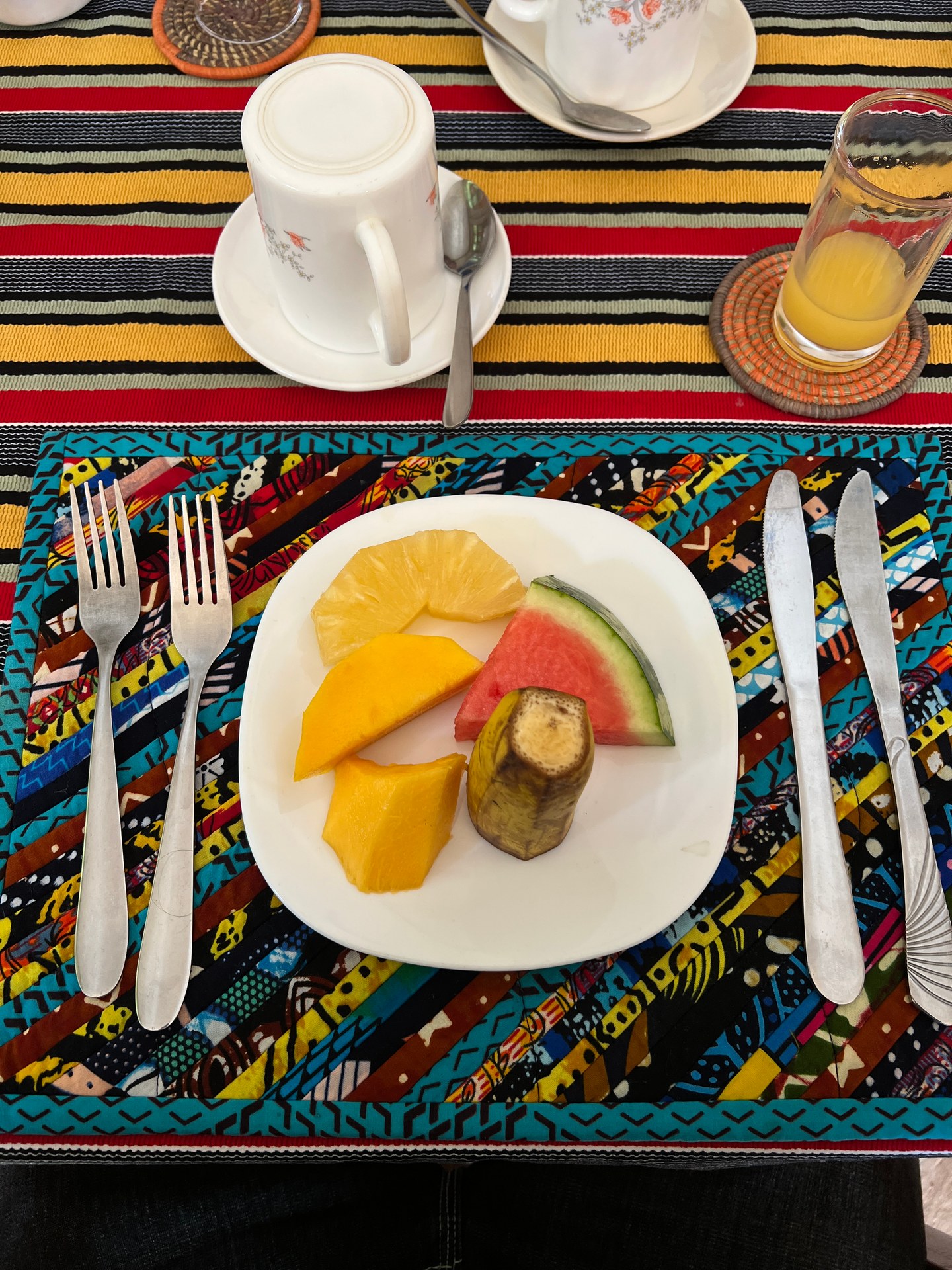
Avocados in Uganda are large, buttery, and extraordinarily cheap — often sold for 200–500 UGX each at the market. Passion fruit, pawpaw, and mango appear depending on the season. Avocado is commonly served at lodge breakfasts alongside eggs and toast, but it is also available from market vendors for a fraction of the lodge price.
Why It Matters Where You Eat
Gorilla trekking permits ($800 USD, 2026) channel significant revenue into the Uganda Wildlife Authority and, through revenue sharing, into local community projects. But that money does not automatically reach the individual vendor selling rolex at the roadside or the woman running a 20-square-metre shop on the main street. Those livelihoods depend on direct spending.
Buhoma's economy is highly exposed to tourist flows: when visitors come, money circulates; when they don't — because of disease alerts, border closures, or simply the low season — the circulation stops almost immediately. Spreading your spending across multiple local vendors rather than concentrating it at your lodge is a small but meaningful way to support a broader range of households.
A practical approach: buy water and snacks from local shops, eat at least one rolex from a street vendor, and browse the local market even if you don't intend to buy. The presence of tourists at the market is itself a signal that the season is active — that alone has value for the vendors.
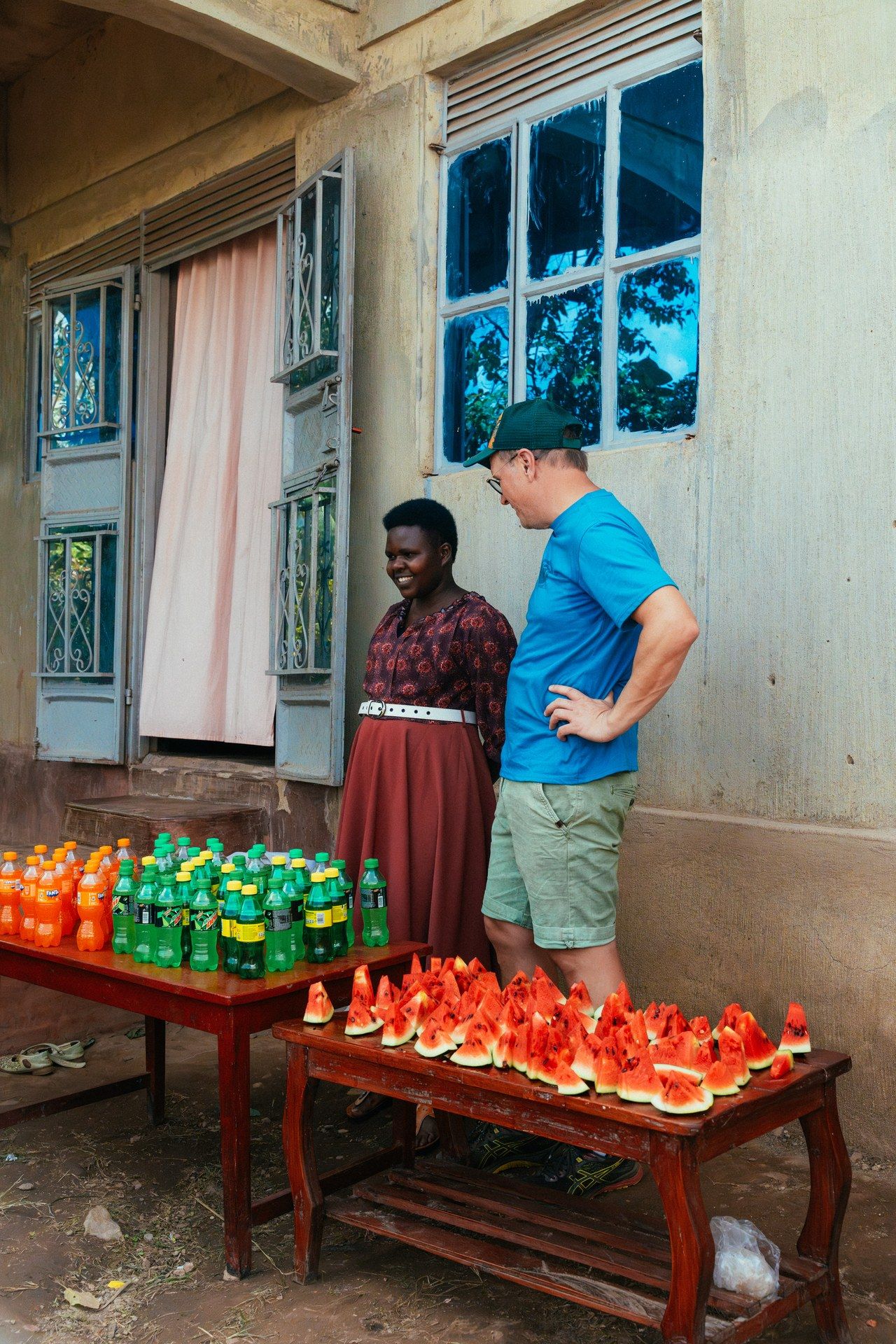
Buhoma's market is where the village economy meets visitors — direct spending here reaches individual households
Lodge Restaurants — When They Make Sense
Lodge restaurants in Buhoma serve a predictable and reliable menu: eggs, toast, porridge, avocado, and fruit at breakfast; grilled protein, matooke, salads, and juice at dinner. The Gorilla Bluff Lodge and other mid-range lodges typically include breakfast in the room rate.
On the morning of a gorilla trek, a lodge breakfast makes logistical sense: it is early (often 06:30–07:00), you need energy for a potentially long hike, and the lodge staff will have prepared something appropriate. The avocado, rolex and French toast we ate at Gorilla Bluff Lodge before our October 2024 trek was exactly the right preparation — filling without being heavy.
Lodge kitchens also source locally, so some of your lodge spending does reach village producers and market vendors indirectly. But the economic link is shorter and more direct when you buy from the vendor themselves.
Plan Your Trip
Uganda Food Guide
The 10 essential Ugandan dishes explained — matooke, rolex, katogo, and more.
Getting Around Buhoma
BodaBoda taxis, walking routes, and how to move between the village and the park gate.
How Tourism Helps Buhoma
The economic chain that runs from a gorilla permit to a dozen local livelihoods.