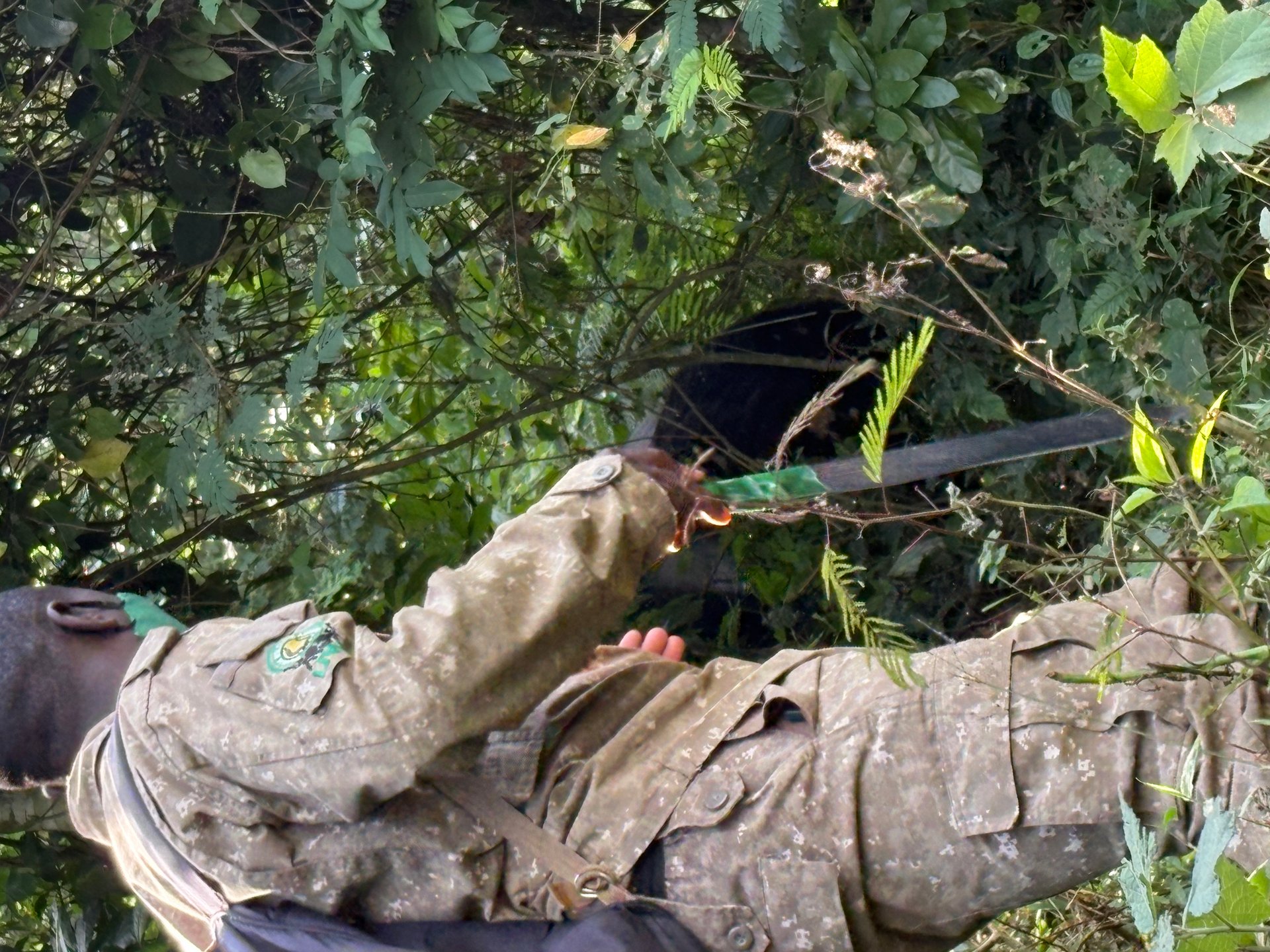
Bwindi Impenetrable National Park is a UNESCO World Heritage Site recognised as the most important forest in Africa for the conservation of montane forest biodiversity. Covering just 331 km², it packs an extraordinary density of life: 160+ tree species, 100+ fern species, 220+ butterfly species, 350+ bird species, 120+ mammal species, and a small population of rare forest elephants. The forest has survived continuously for at least 25,000 years, serving as a Pleistocene glacial refugium.
Quick Facts
- UNESCO Inscription:
- 1994 (Natural Criteria vii, x)
- Park Area:
- 331 km² (128 sq mi)
- Forest Age:
- 25,000+ years (glacial refugium)
- Tree Species:
- 160+
- Fern Species:
- 100+
- Bird Species:
- 350+
- Butterfly Species:
- 220+
- Mammal Species:
- 120+
- Elevation Range:
- 1,160–2,607 m
- Vegetation Zones:
- 5 distinct types
Why Bwindi Matters
Bwindi Impenetrable National Park is not merely a refuge for mountain gorillas — it is one of the most biologically significant forest ecosystems on the African continent. Inscribed as a UNESCO World Heritage Site in 1994, the park was recognised for its “outstanding universal value” based on its exceptional natural beauty, its extraordinary concentration of species, and its irreplaceable role in conserving montane forest biodiversity.
What makes Bwindi exceptional is not just its species richness but its species density. Per unit area, Bwindi contains more tree species, more fern species, more bird species, and more butterfly species than any other forest in East Africa. This density is a consequence of the forest's extraordinary age, its altitudinal range, and its position at the convergence of several phytogeographic regions.
The park is an ecological island — surrounded on all sides by one of the most densely populated agricultural landscapes in Africa, with over 300 people per square kilometre in some adjacent parishes. This isolation makes its biodiversity both precious and precarious. Every species within the park boundaries depends on the forest's continued integrity.
A 25,000-Year-Old Forest
Bwindi's extraordinary biodiversity has deep roots — literally. During the Pleistocene epoch, a series of glacial cycles dried much of tropical Africa, converting vast swathes of forest to savanna. Most East African montane forests disappeared. But a handful of forests survived in sheltered, moist locations. Bwindi was one of these glacial refugia.
Pollen core analysis from the park's swamps indicates continuous forest cover for at least 25,000 years — through the Last Glacial Maximum when much of Africa was far drier than today. This unbroken forest continuity allowed species to persist that were eliminated from other East African forests. When the climate warmed and forests re-expanded, Bwindi served as a source population for recolonisation — but the original forest retained species diversity that secondary forests could never replicate.
This refugium hypothesis explains why Bwindi hosts species assemblages that are unique in East Africa. The co-occurrence of gorillas and chimpanzees, the concentration of Albertine Rift endemic birds and butterflies, and the diversity of tree species all point to a forest that has accumulated species over millennia without the catastrophic reset that other forests experienced.
Flora and Vegetation Zones
Bwindi's 1,447-metre altitudinal range creates five distinct vegetation zones, each with characteristic plant communities and associated fauna.
Lowland Forest (1,160–1,500 m)
Found primarily in the Ishasha Gorge, this zone supports the highest tree diversity and the tallest canopy, reaching 40-50 metres. Dominant species include Cynometra alexandri, Newtonia buchananii, and Parinari excelsa. The understory is rich in ferns, gingers, and orchids. This zone is home to the park's small population of forest elephants.
Mid-Altitude Moist Forest (1,500–2,000 m)
The dominant vegetation type, covering the largest area of the park and including the forests around Buhoma. Canopy trees include Chrysophyllum gorungosanum, Strombosia scheffleri, and Tabernaemontana holstii. The understory is characterised by dense growth of Mimulopsis, wild bananas (Ensete ventricosum), and tree ferns. Most primate diversity is concentrated in this zone.
Upper Montane Forest (2,000–2,400 m)
Trees become shorter and more gnarled, with heavy moss and lichen cover on trunks and branches. Podocarpus and Rapanea species become important canopy components. Epiphytic orchids, mosses, and ferns are abundant. This zone supports several bird species not found at lower elevations, including the handsome francolin and various Albertine Rift endemics.
Bamboo Zone (2,200–2,500 m)
Pure stands of mountain bamboo (Arundinaria alpina) form a distinctive belt at higher elevations. Bamboo zones are critical habitat for mountain gorillas (who feed on bamboo shoots in season) and the African green broadbill. The bamboo undergoes periodic die-offs followed by mass regrowth, creating dramatic cycles of habitat change.
Afro-Alpine Heath (above 2,500 m)
Found only on the highest ridges, particularly around Rwamunyonyi Peak (2,607 m). Vegetation is stunted, with heather (Erica), tree lobelias, and giant groundsels. This zone occupies a tiny area but supports specialised plant and insect communities not found elsewhere in the park.
Faunal Diversity
Mammals (120+ species)
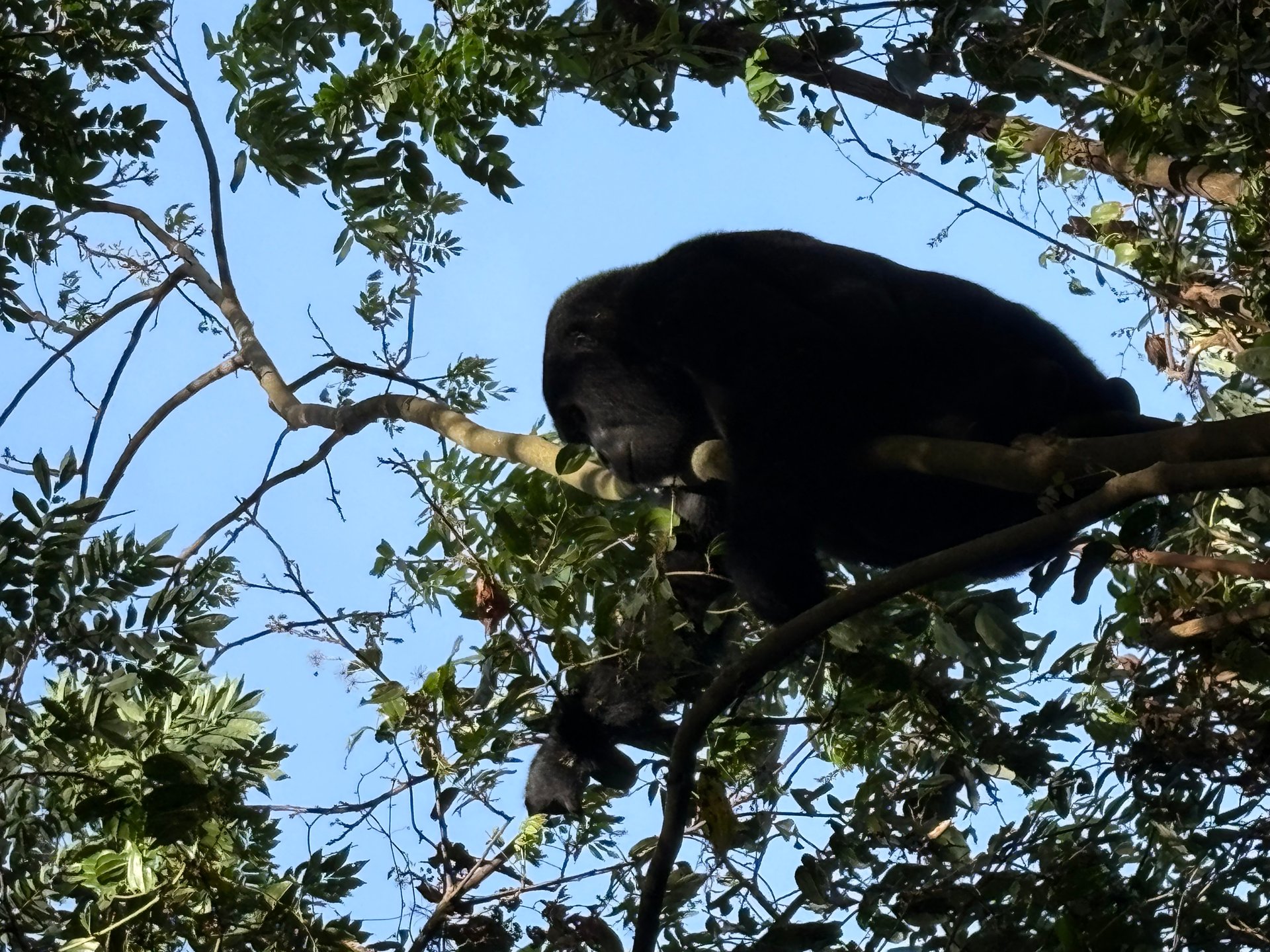
Bwindi supports at least 120 mammal species, including 13 primates (with both mountain gorillas and chimpanzees), forest elephants, giant forest hogs, bushpigs, several duiker species, bushbuck, African golden cats, side-striped jackals, African civets, spotted hyenas (at the forest edge), tree hyraxes, and an extraordinary diversity of bats (over 30 species). The yellow-backed duiker, one of the largest forest duikers, is an occasional but prized sighting.
Forest Elephants
Bwindi's forest elephants (Loxodonta cyclotis) are a small, isolated population estimated at 20-30 individuals. Recently recognised as a distinct species from savanna elephants, forest elephants are smaller (shoulder height of about 2.5 metres versus 3.5 metres for savanna elephants), with rounder ears and straighter tusks. They are important seed dispersers and create forest clearings that increase habitat diversity. Though rarely seen, their tracks and dung are commonly encountered on trails.
Butterflies (220+ species)
Bwindi's butterfly fauna is among the richest in East Africa, with over 220 documented species including several Albertine Rift endemics. The diverse butterfly community reflects the forest's structural complexity and plant diversity. Peak butterfly activity occurs during and after the wet seasons. Sunny clearings, stream crossings, and fruiting trees are the best spots for observation. Several Charaxes species are attracted to fermenting fruit and can be observed at close range.
Reptiles and Amphibians
At least 27 amphibian species inhabit Bwindi, including several Albertine Rift endemics and species with extremely restricted ranges. The three-horned chameleon is the most spectacular reptile regularly seen by visitors. Various skinks, geckos, and forest snakes (including the Gaboon viper, one of Africa's largest venomous snakes) are present but rarely encountered. The cool, moist forest climate supports an unusually high diversity of frogs and toads.
The Mimulopsis Phenomenon
One of Bwindi's most remarkable ecological phenomena involves Mimulopsis, a genus of forest understorey shrub that dominates the forest floor across large areas of the park. Mimulopsis undergoes a synchronised life cycle of approximately 5-7 years: the plants grow, flower en masse, set seed, and die simultaneously across entire forest sections.
When the die-off occurs, the effect is dramatic. The forest floor, previously cloaked in dense shrubby growth, opens up completely. Light floods in, temperatures shift, and the undergrowth composition changes. This has cascading effects on the entire ecosystem: gorillas may shift their ranging patterns to avoid areas where favoured food plants have disappeared; ground-nesting birds lose cover; and new plant species colonise the temporarily open forest floor.
The regrowth phase then creates dense, impenetrable thickets — the very vegetation that gives the forest its name. This cyclical disturbance regime is thought to be an important driver of Bwindi's plant diversity, creating a mosaic of different successional stages across the forest floor.
Conservation Challenges
Bwindi's biodiversity faces a paradox: the very richness that makes it globally important also makes it vulnerable. As a small, isolated forest in one of Africa's most densely populated regions, the park is essentially an ecological island with no corridors connecting it to other forests.
Climate change poses a particularly insidious threat. As temperatures rise, vegetation zones may shift upslope, compressing high-altitude habitats and potentially eliminating the Afro-alpine zone entirely. Species adapted to specific elevation bands may find themselves squeezed into ever-smaller areas or pushed above the mountaintops.
Human-wildlife conflict is a daily reality. Crop-raiding by baboons, gorillas, and elephants creates tension with farming communities around the park. Uganda Wildlife Authority and community-based organisations work continuously to mitigate these conflicts through buffer zone management, compensation schemes, and community revenue-sharing.
Disease transmission between humans and wildlife is a growing concern. Mountain gorillas, sharing 98.3% of human DNA, are susceptible to many human diseases including respiratory infections. Strict rules requiring visitors to maintain a 7-metre distance and prohibiting visits when sick are critical protective measures for the gorillas and other primates.
Tourism and Conservation
Tourism is the economic engine that drives Bwindi's conservation. Gorilla trekking permits alone generate millions of dollars annually, funding park management, ranger patrols, veterinary care, research, and community development. A portion of permit revenue is shared directly with communities bordering the park, giving local people a tangible financial stake in the forest's survival.
The lodges, guides, porters, craft sellers, and other tourism-related businesses in Buhoma and surrounding villages create employment and economic activity that would not exist without the park. This economic argument for conservation has proven to be one of the most effective tools for protecting Bwindi's biodiversity.
Every visitor to Buhoma — whether they come for gorillas, birds, butterflies, or simply the experience of walking through one of Africa's last great forests — contributes to the ongoing protection of this irreplaceable ecosystem.
Explore Bwindi's Wildlife
Mountain Gorillas
The flagship species of Bwindi — biology, behaviour, and conservation history.
Primates of Bwindi
All 13 primate species, from great apes to nocturnal bushbabies.
Birds of Bwindi
350+ species including 23 Albertine Rift endemics.
Community Conservation
How tourism protects Bwindi and supports local communities.