The First Hour in the Canopy
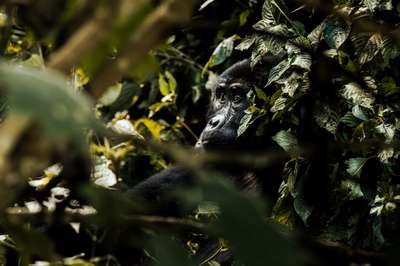
During our gorilla trek from Buhoma in January 2026, we were walking for just under an hour when the guide stopped and pointed upward. A large male gorilla was sitting in the branches of a tree about eight metres above the path, pulling leaves from a cluster of growth and eating them methodically, without any apparent awareness of — or concern about — the eight people standing below him. The GPS coordinates of the photo taken at that moment read -0.9735°N, 29.6281°E: a point deep in the eastern slope of the Bwindi forest, still technically within reach of the Buhoma sector trail network.
That encounter happened because we were based at a buhoma gorilla camp close enough to reach the briefing point on foot and enter the forest by 08:00. The location of your accommodation is not a minor logistical detail — it shapes the entire morning experience.
Quick Facts
- Permit cost:
- USD 800 per person
- GHE permit:
- USD 1,500 (4 hours with family)
- Briefing time:
- 07:30 at park headquarters
- Group size:
- Maximum 8 visitors per family
- Time with gorillas:
- 1 hour (standard permit)
- Minimum age:
- 15 years
- Location:
- GPS: -0.9725°N, 29.6213°E (Buhoma)
- Ranger accompaniment:
- Always — guide + 2 rangers minimum
The Morning Routine at a Buhoma Gorilla Camp
Gorilla trekking days follow a consistent rhythm. The briefing at Bwindi Impenetrable National Park headquarters in Buhoma starts at 07:30. Visitors are divided into groups of eight, each assigned to a specific gorilla family. A ranger team has typically set out before dawn to locate the family and radio their position back to the guides. By the time you arrive at the trailhead, there is already information about roughly how far the family has moved overnight.
At Gorilla Bluff Lodge, the morning before a trek begins with coffee and tea on the terrace, breakfast served at around 06:30, and a walk down the hill to the headquarters. The lodge is built into the hillside above the village, which means stairs and a short descent — but also a quiet perch above the valley where the forest mist is visible most mornings.
The morning we trekked in January 2026, breakfast began with fresh mango, banana, and melon on a white plate — local fruit, straightforward and good. Then eggs. Then the short walk to the briefing. By 08:15 we were at the forest edge.
Rangers: Armed, Experienced, and Helpful
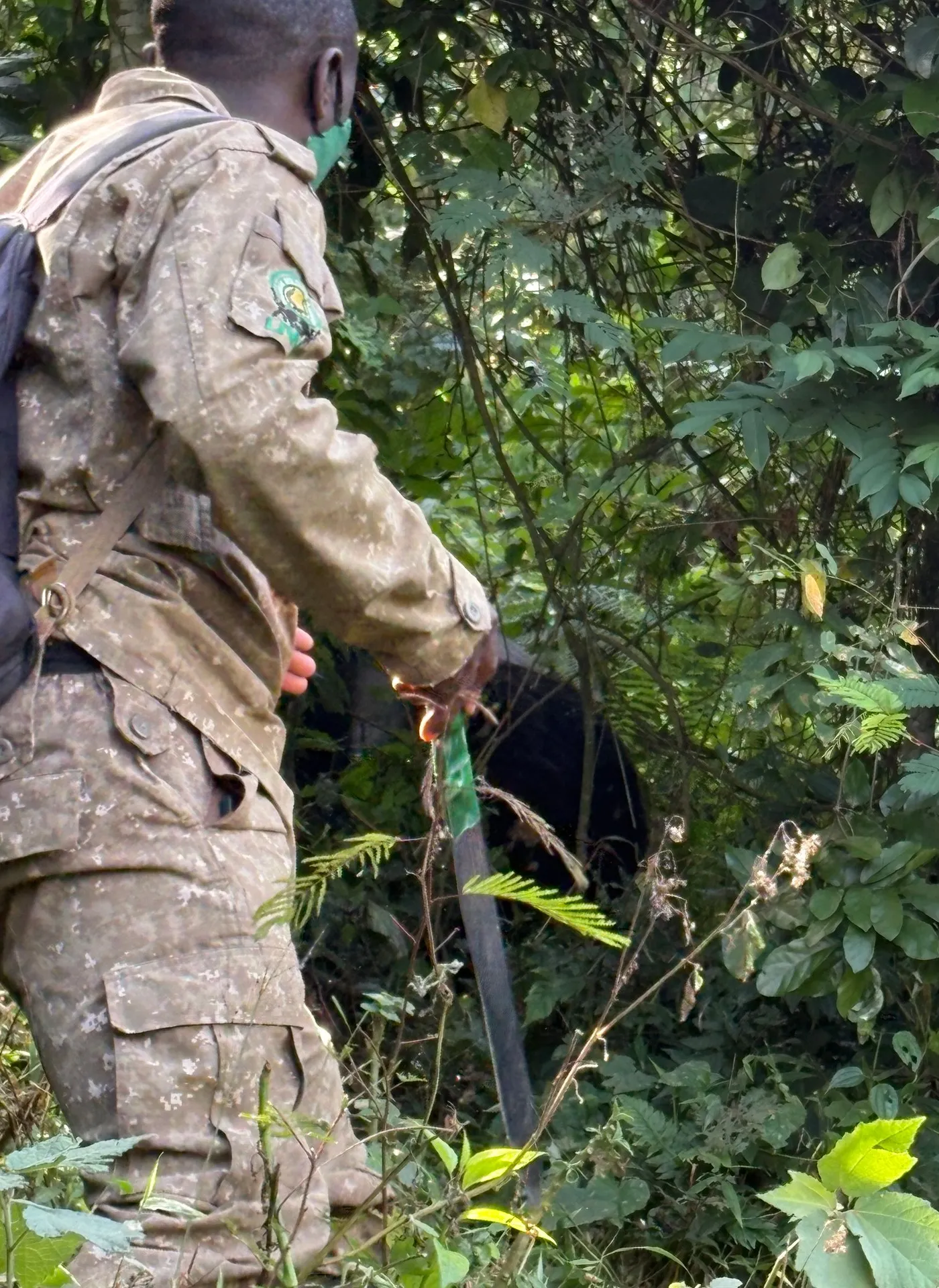
Every gorilla trekking group in Bwindi is accompanied by at least one trained guide and two armed rangers. The firearms are standard procedure in a remote forest that borders the DRC — not a response to any specific threat, and not something that affects the tone of the experience. In practice, the rangers are the most practically useful people on the trail.
On our trek in January 2026, one ranger led the group while another brought up the rear. When the slope became steep and the vegetation closed in, the leading ranger used a machete to open a path wide enough for the group to pass. When a visitor slipped on a root, a ranger was immediately alongside with a steadying hand. They moved through the forest with a fluency that takes years to develop — reading the terrain, adjusting pace, keeping the group together without making anyone feel managed.
The armed accompaniment felt entirely natural within the context of the forest. The weapons were a practical reality of working in a landscape shared with wildlife and bordering a region with historical instability — not a sign of danger, and not something that diminished the experience.
Gorilla Families in the Buhoma Sector
The Buhoma sector of Bwindi Impenetrable National Park has multiple habituated gorilla families available for trekking. Each family has a name, a known size, a dominant silverback, and a territory within the forest. Uganda's mountain gorilla population reached 459 individuals in the 2018–2020 census — a figure that represents decades of conservation work, anti-poaching efforts, and the revenue-sharing model that channels permit income back into surrounding communities.
The family you are assigned to at the morning briefing depends on permit availability and ranger intelligence about each family's location and behaviour. Families with young infants are sometimes particularly sought-after, and the morning briefing can include information about recent births or significant group events.
The one-hour limit with the gorilla family applies regardless of how long the trek took to reach them. Rangers monitor the time and begin the walk back after sixty minutes. The limit exists to protect the gorillas from prolonged human contact — an important conservation constraint that also shapes the experience into something deliberately precious rather than prolonged.
Village Life Around the Camp
Buhoma is a small village at the edge of the forest, not a tourist town built around the park. The businesses along the main road — small general stores, a fuel station, a handful of lodges — serve both visitors and the community of several thousand people who live here year-round. Small shops roughly 20 square metres in size, typically run by women, sell bottled water, snacks, and everyday supplies. We stopped at one during our January 2026 visit and bought water and sweets for children we had met outside.
This proximity of ordinary life to one of the world's great wildlife experiences is one of the things that makes Buhoma feel different from destinations built primarily for tourism. The gorillas bring visitors, but the village has its own economy, its own rhythms, and its own concerns. Staying at a buhoma gorilla camp means spending at least a couple of days within that context — and that, for most visitors, turns out to be as memorable as the trek itself.
Plan Your Stay
Gorilla Lodges in Bwindi
Full list of accommodation options near the Buhoma briefing point.
What to Pack for the Trek
Boots, layers, camera gear — what actually matters on the trail.
Gorilla Permit Costs
USD 800 standard, USD 1,500 GHE — how to book and what is included.
Birdwatching in Bwindi
350+ species recorded in the forest. What to look for on the trail.