
Before the safari vehicles start their engines
By the time the first lodge guests are sitting down to breakfast, most of Buhoma has already been awake for two hours. Farming villages at this altitude — approximately 1,500 metres, on the edge of a rainforest — operate by a schedule set by the land, not by tourism. Banana plantations need tending, water needs collecting, fires need lighting. The lodge economy runs on a 7:30 AM briefing time. The village economy runs earlier than that.
During eleven visits to Buhoma between 2023 and 2026 — totalling 43 days on the ground — the clearest impression is how completely the village operates on its own terms. Gorilla trekking is the reason most visitors come. It is not the reason Buhoma exists.
The market — where everything happens twice a week
The market in Buhoma is the social and economic heart of the village. On market days — which happen twice weekly — the central area transforms. During our January 2026 visit, the market was impressively busy: stalls selling clothing, household goods, fresh produce, dried beans, cooking oil, and everyday necessities were set up along the main road and spilling into the side paths.
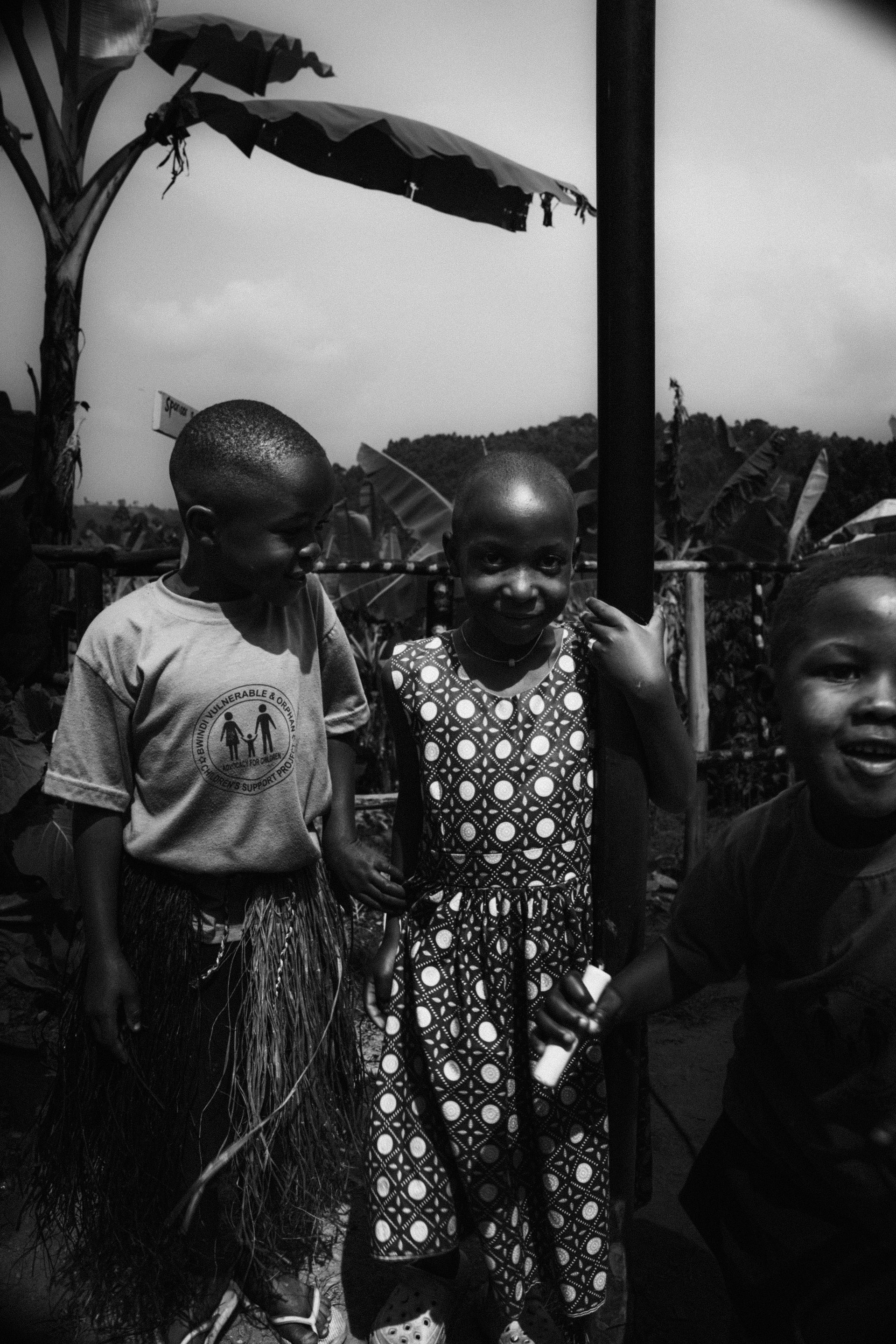
Nothing about it was a tourist experience. Nobody was performing or demonstrating for visitors. People were buying what they needed, arguing the price of tomatoes, catching up with neighbours they had not seen since the last market day. Emily knows every vendor and every customer. The market is where she sources stock for her shop, catches up on village news, and reads the economic mood of the week.
On a good tourism week, the market is busier. More cash is moving. Lodge staff have been paid. BodaBoda drivers have had customers. On a quiet week, the stalls are the same but the transactions are fewer. Emily's shelves tell the same story.
Emily's shop — reading the village by its shelves
Emily Assimwe runs a small shop in Buhoma's trading centre. She stocks the things that people buy when they have money to spend and the things they fall back on when they do not: soap, sugar, matches, phone airtime, biscuits, kerosene. Like every small-scale retailer in a tourism-adjacent village, her stock and her sales reflect the ebb and flow of visitor numbers — not because tourists shop there, but because their presence puts cash in local pockets that eventually finds its way to her counter.
Emily's own words about her daily life in Buhoma are drawn from a conversation recorded in June 2026 — to be added here in her voice.
What is striking about Emily's position — and that of most Buhoma traders — is the precision of her awareness. She can tell you which weeks the visitors come by the behaviour of her customers. She knows when the lodges are full not from any official source but from the number of BodaBoda trips up and down the road, the movement at the craft cooperative, the tempo of the village.
Children, school, and the weight of responsibility
School attendance in Buhoma has improved significantly over the past decade, partly supported by community development funds tied to park revenue. Most children attend primary school. But they also carry responsibilities that children in wealthier settings do not. Fetching water, tending animals, minding younger siblings, helping with agricultural work — these are not exceptional circumstances. They are daily life.
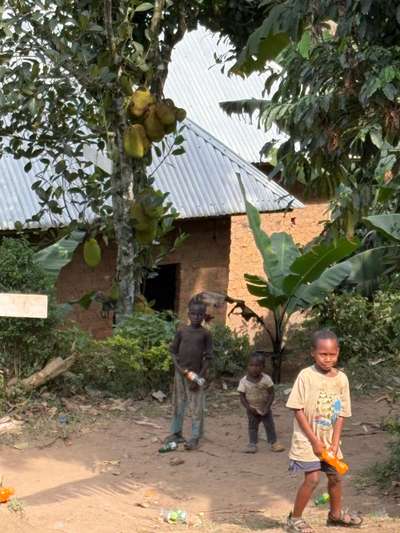
On the edge of the main road through Buhoma, on a January morning in 2026, we watched a boy of about ten years old breaking small stones with a hammer — the kind of pebble aggregate used to make building foundations. It is a job adults do too. He was not playing at it. He was working, steadily and methodically, in the early heat of a highland morning. For a visitor who has come only for gorilla trekking, this is an invisible scene. From the window of a safari vehicle it passes in a second. The story of that particular child is told in full on this site: Roger the Stone Breaker.
Community as the real infrastructure
In a village without a functioning hospital, a reliable ATM, or consistent electricity, the community network is the actual infrastructure. Neighbours share food during difficult weeks. Savings groups pool money for school fees. People walk to each other's homes in the evening not because there is anywhere else to go but because that is how a community maintains itself.
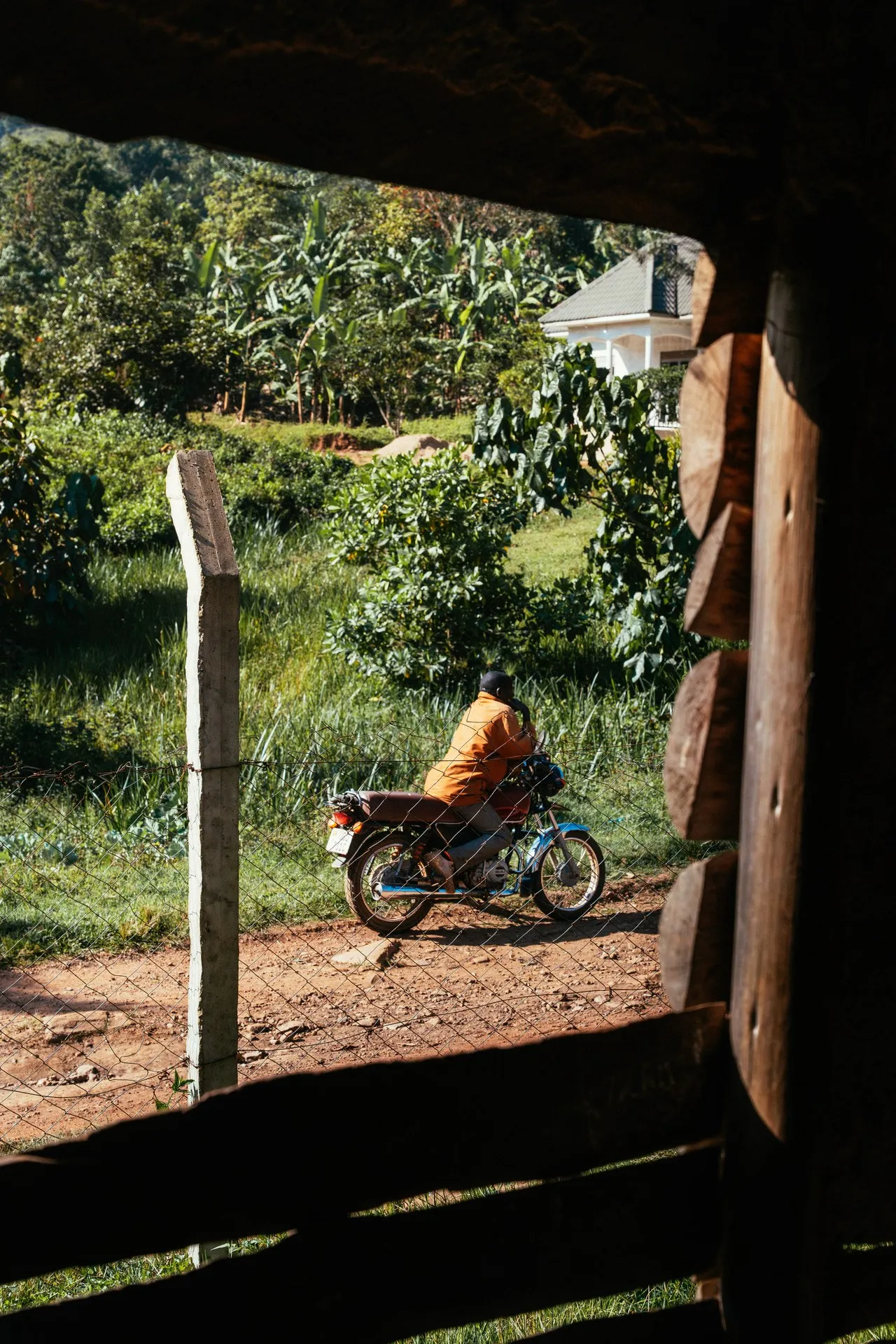
The BodaBoda is the connective tissue of this network — not just a vehicle for hire, but the quickest way to send a message, move produce from a farm, get a sick child to the health centre, or reach a friend in the next trading centre. Drivers like Norman Noel are not just transport operators. They are nodes in a social web that keeps Buhoma functioning.
What visitors usually miss
Most visitors see Buhoma from the window of a vehicle, or for a few hours during a community walk. What they rarely witness is the before and after: the early morning when the village wakes before the lodges do, the afternoon when children return from school and the market begins to wind down, the evening when generators cut out one by one and Buhoma settles back into itself.
The gorillas are extraordinary. They are the reason this site exists and the reason you are reading this. But the village and its people — Emily's world, Norman's road, the market on a busy morning — are why Buhoma is more than a trekking waypoint. Spending an extra day, slowing down, walking through the village without an agenda: that is when the real picture comes into focus.
How to see the real Buhoma
- —Book a community walk — they pass through residential areas, farms, and the market
- —Visit on a market day and buy from the stalls, not only from your lodge
- —Hire a local BodaBoda driver for short trips rather than using a lodge vehicle
- —Ask your guide what time the market starts — arrive before the tourist buses do
- —Stay for at least two nights — one day of trekking and one day of village time
Community Walks in Buhoma
Guided walks through the village, farms, and craft workshops — the best way to see Buhoma beyond the park gate
Emily — People of Buhoma
Emily's full profile: shopkeeper, community member, and one of the familiar faces of Buhoma village
Roger the Stone Breaker
A 10-year-old boy, a hammer, and the quiet reality of childhood in Buhoma
How Tourism Feeds Buhoma
Norman explains how a single gorilla permit ripples through the entire village economy
Frequently Asked Questions
Last updated: September 2026