In brief: Uganda's borders with the Democratic Republic of Congo and South Sudan carry documented security concerns, and there have been periodic restrictions at the Rwanda border. For gorilla trekking visitors arriving at Buhoma in the southwest, these issues are real but largely affect local livelihoods rather than day-to-day tourist safety. Gorilla trekking continues under normal conditions, though border-related disruptions have repeatedly cut visitor numbers and the income local guides depend on.
Quick Facts
- Region:
- Southwest Uganda / Bwindi borderlands
- Gorilla Permit:
- USD 800 per person (standard)
- GHE Permit:
- USD 1,500 per person
- Last visited:
- June 2026 (Mark Suer, GPS-verified)
- Nearest border:
- DRC (Ishasha / Bunagana crossings)
- Risk level (tourism):
- Low to moderate — sector ongoing
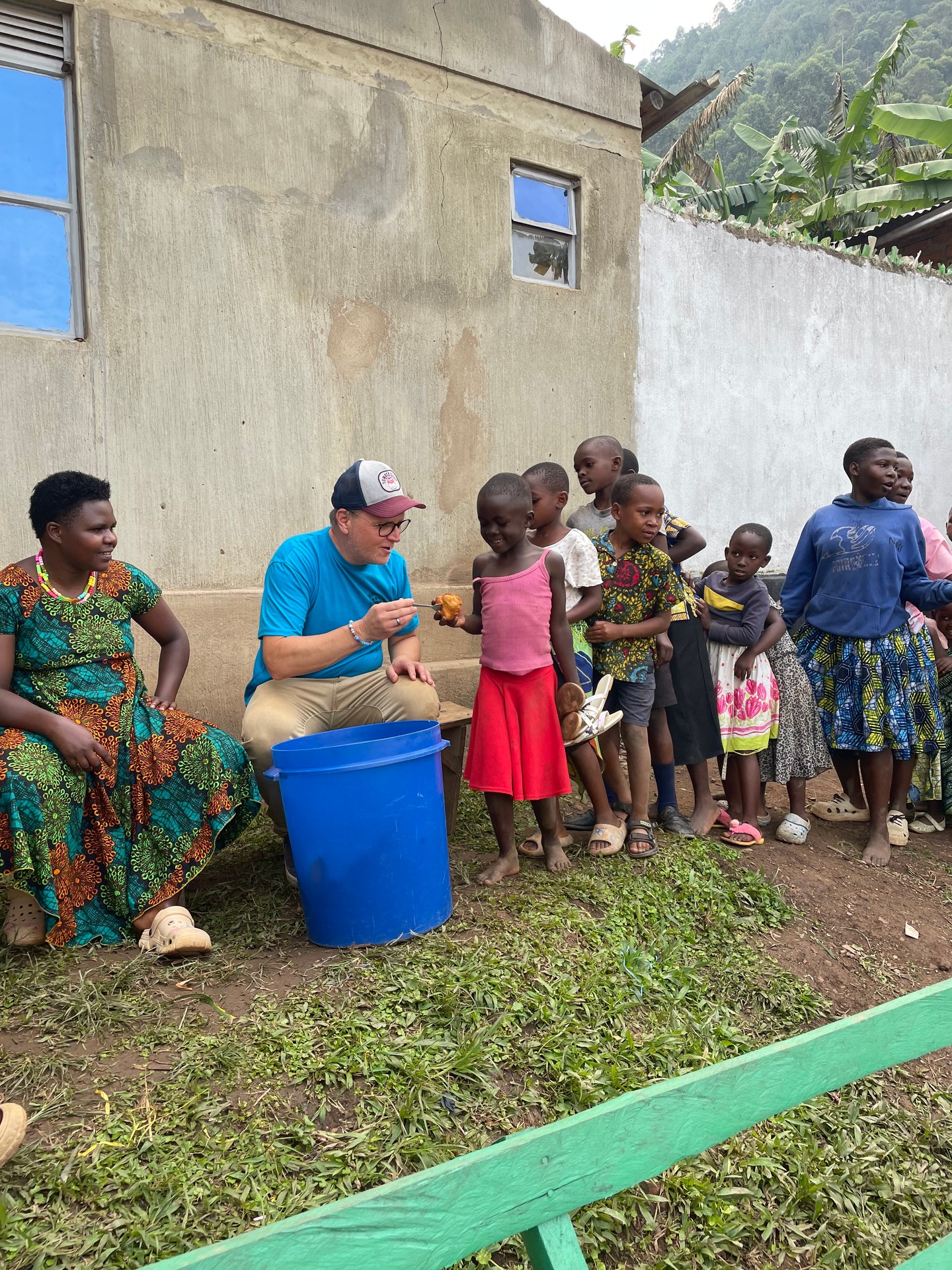
On the morning of 21 June 2026, three children from the neighborhood of the Buhoma orphanage appeared at the edge of our compound. They were visibly shy — their clothes worn, their posture a little uncertain, the kind of guardedness you see in children who have learned not to assume that adults mean them well. We invited them immediately to share breakfast with us. They sat down without a word and ate quietly. It was one of those moments that resets your perspective entirely: whatever abstract concern you had been carrying about security briefings or border alerts dissolves when a child accepts bread from your hand and gives you a careful, tentative smile.
That morning — photographed at GPS coordinates -0.9617, 29.6109 — sits about twelve kilometres inside Uganda from the Congolese border. The area is one of the most beautiful on earth. It is also one where the words "border instability" carry genuine weight for the people who live there. During my visits in October 2024, January 2026, and again in June 2026, I spoke at length with Norman, a local motorcycle guide who has operated tours out of Buhoma for years. What he described was not panic but a carefully recalibrated life: an economy built on tourism, periodically knocked flat by events entirely outside local control.
How Regional Border Instability Affects Uganda Tourism
Uganda shares long borders with six countries. Three of those borders — with the Democratic Republic of Congo, South Sudan, and, during a painful three-year period, Rwanda — have generated security incidents or diplomatic disruptions that reverberate all the way into the tourism sector. For visitors focused on gorilla trekking in Bwindi Impenetrable National Park, the DRC border is the most geographically relevant. The park's Buhoma sector sits in the southwestern corner of Uganda, separated from eastern Congo by the high forested ridgeline of the Albertine Rift.
The DRC has seen sustained conflict in its eastern provinces for decades. Armed groups operating across the border have at various times triggered travel advisories from multiple governments covering the Uganda-DRC frontier. The most serious incident directly touching Uganda's gorilla tourism was a kidnapping near Ishasha in 2018, in which tourists were temporarily seized before being released. That event shook the entire regional tourism sector and led Uganda Wildlife Authority to significantly revise its security protocols for all Bwindi trekking operations.
What is important to understand — and what you will only hear clearly from people like Norman who live inside the situation — is that this incident was geographically distant from Buhoma, and that the security improvements put in place afterward were substantial. Armed ranger escorts now accompany trekking groups as standard practice. Radio communication has been upgraded. Emergency protocols are drilled regularly. The experience at Buhoma itself has remained safe across the hundreds of trekking groups that have passed through since.
What has not recovered so cleanly is traveller confidence. Every fresh outbreak of fighting in eastern Congo, every travel advisory update from a European or North American foreign ministry, produces a new wave of cancellations. The instability does not have to reach Buhoma to damage it. It merely has to appear in a headline.
The Rwanda Border Closure and Its Lesson for Regional Travel
Between 2019 and 2022, Uganda and Rwanda engaged in a diplomatic standoff that resulted in the closure of their shared border. For gorilla trekking logistics, this was significant. Rwanda's Volcanoes National Park and Uganda's Bwindi Impenetrable National Park offer different — and to many travellers complementary — gorilla trekking experiences. Overland circuits that combined both parks in a single itinerary became impossible. Visitors who had planned to cross between the two countries were forced to choose one or the other.
The closure had a paradoxical effect on some operators. Uganda-only itineraries became necessary for many tour groups, and Bwindi — with its four different sectors and larger overall gorilla population — could absorb that demand. But the loss of combined-country circuits removed a powerful selling point for the region as a whole, and the uncertainty itself was damaging. Travellers dislike uncertainty. A border that might open or might not open is worse for planning purposes than a border that is simply closed.
The border reopened in 2022 and cross-border circuits have resumed. But the episode illustrated a structural fragility in Uganda's tourism industry: its revenues depend heavily on external political conditions that Uganda Wildlife Authority, individual lodges, and local guides have zero ability to influence.
What Local Guides Like Norman Actually Experience
Norman has been guiding motorcycle tours around the Buhoma area for years. In conversations across multiple visits — October 2024, January 2026, and June 2026 — he described what border disruptions mean in practical terms for a person whose livelihood depends on tourist arrivals. When visitors stop coming, the effect is immediate and total. There are no fallback employment sectors in a village like Buhoma. Agriculture provides subsistence, not income. Tourism is the cash economy.
Norman described the Ebola crisis of 2018-2019 in similar terms to border security disruptions: both produce the same outcome for someone in his position. A warning issued in a distant capital city translates, within days, into empty lodges, cancelled bookings, and guides with no work. The cause — whether disease or armed conflict or diplomatic breakdown — matters less than the result.
This is worth sitting with for any visitor planning a trip to Bwindi. The person driving your safari vehicle, preparing your meals, or leading your community walk is operating in a system with no buffers. There is no unemployment insurance, no furlough scheme, no government support package for a motorcycle guide in Buhoma when bookings collapse. When you choose to travel to Uganda rather than redirect your trip elsewhere because of a border alert, you are making a decision that has real consequences for real people in a specific village.
Norman also spoke about the children in the area — including those from the orphanage neighborhood whom we fed that June morning. Many come from families directly affected by the economic contractions that follow security scares. The connection between border headlines and child welfare in a village like Buhoma is not metaphorical. It is direct and measurable.
Security Realities in the Bwindi Borderlands Today
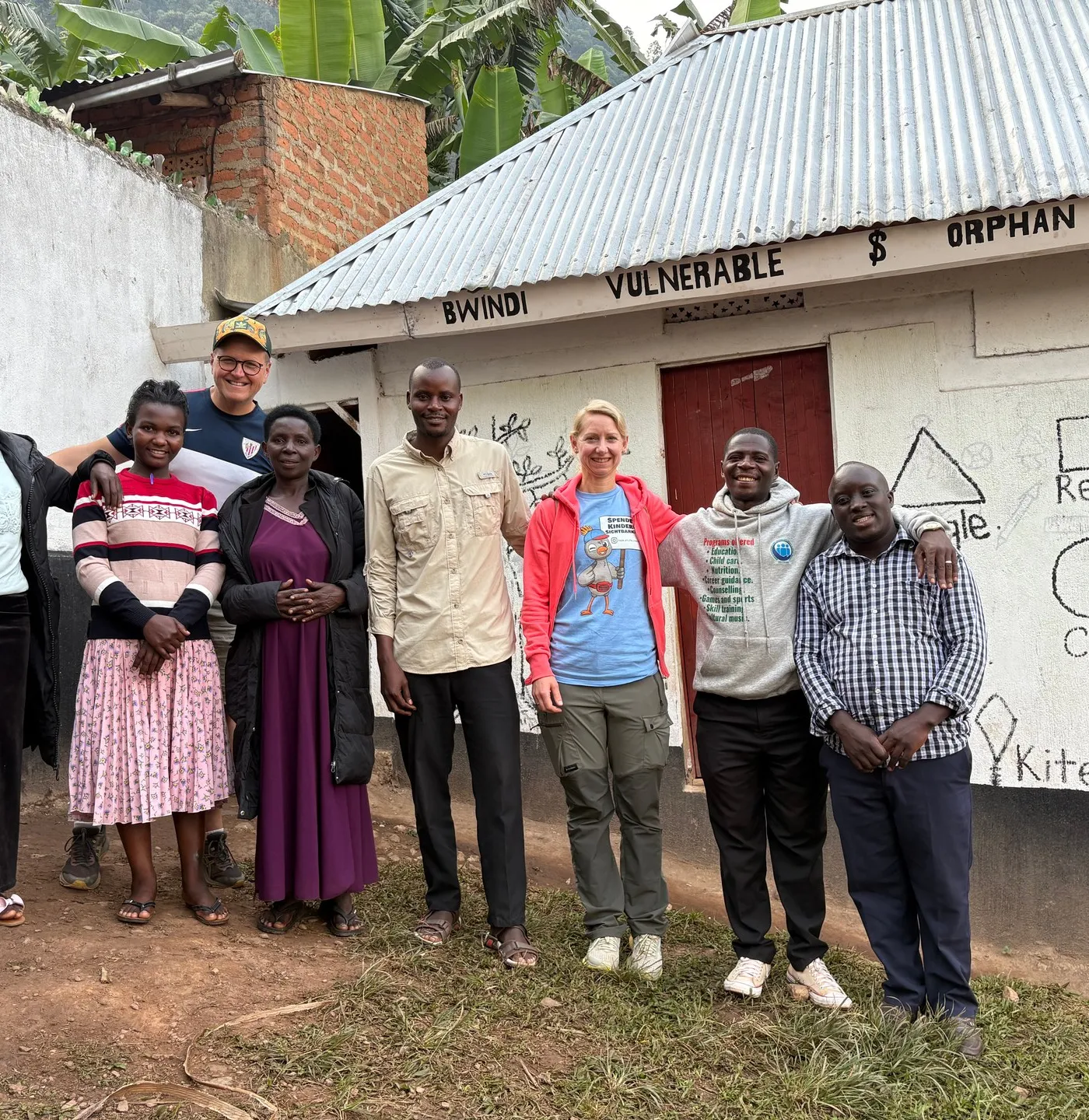
Buhoma village sits at approximately -0.9676, 29.6195 — GPS coordinates I have personally verified across multiple visits. At that location, on a calm morning, you hear birds and children and the sounds of a village waking up. You do not hear fighting. You do not feel the sense of threat that security alerts sometimes imply. This does not mean threats are invented; it means they require calibration.
Uganda Wildlife Authority has, since 2018, operated gorilla trekking with armed ranger escorts as a standard component of every outing. The escorts are experienced, radio communication is functional, and emergency protocols have been rehearsed. Uganda as a whole maintains a different security profile from eastern Congo: the Ugandan state controls its territory, the army is professional by regional standards, and the park itself is monitored by rangers with years of specific experience in the terrain.
The practical guidance — verified against conditions on the ground across visits in October 2024, January 2026, and June 2026 — is this: check your government's travel advisory, but read it with an understanding of how advisories are written. They are cautious by design and often cover broad geographic zones rather than the specific terrain of a gorilla trek. An advisory covering "southwestern Uganda border areas" is not the same as an advisory specifically covering Bwindi National Park. Distinguish between the two before making a booking decision.
The lodges in Buhoma — including well-established operations that have run for more than two decades — maintain direct lines with Uganda Wildlife Authority and will communicate clearly if conditions change. No responsible operator will run gorilla treks when the security situation genuinely warrants suspension. In all the visits I have made, trekking has continued as normal and the ranger escort system has functioned as designed.
What Border Problems Mean for Tourism Policy and Local Development
The vulnerability of Uganda's tourism sector to external border shocks points to a structural challenge that goes well beyond Buhoma. Uganda is one of the world's rarest gorilla trekking destinations, a fact that should make its gorilla tourism segment highly resilient. And yet the sector experiences boom-and-bust cycles driven almost entirely by perception: a security incident in eastern Congo, a diplomatic rupture with Rwanda, an Ebola outbreak in a district hundreds of kilometres away.
The economic consequences fall hardest on the people with the least cushion. A large lodge can absorb a slow month; Norman and the other independent guides cannot. The children from the orphanage neighborhood cannot. Community-based tourism initiatives — craft sellers, village walk guides, women's groups supplying produce to lodge kitchens — have no reserves.
Various development programmes operating in Uganda have attempted to address this fragility. Graduation programmes focused on economic resilience, microfinance initiatives serving communities near the park, and skills development projects for young people in border areas all represent efforts to build livelihood diversity. But tourism remains the dominant cash economy in Buhoma and that is unlikely to change quickly. The gorillas are here, the forest is extraordinary, and visitors will keep coming — the question is how much of that economic activity reaches the most vulnerable people, and how the community withstands the gaps when visitors stop coming.
For a traveller, the honest answer to whether you should visit Buhoma despite border problems is: yes, with appropriate preparation. Monitor your government's advice. Book with a reputable operator who maintains direct contact with Uganda Wildlife Authority. Understand that the gorilla permit — USD 800 per person for a standard trek — funds the ranger service that keeps trekking safe. And know that the people in Buhoma who depend on your visit are not abstractions. They are Norman, planning motorcycle tours that may or may not have passengers this season. They are the children who sat down to eat with us that June morning, tentative and careful and entirely real.