Western Uganda’s tourism offer is built on one centrepiece — gorilla trekking in Bwindi Impenetrable National Park — and extends across chimpanzee tracking in Kibale, game drives in Queen Elizabeth National Park, hiking on the Rwenzori, and a layer of community experiences that only becomes visible when you stay longer than one day. What makes this corner of East Africa different from other wildlife destinations is the proximity of extraordinary nature to lived village life. In Buhoma, the park gate and the orphanage are minutes apart. Understanding western Uganda’s attractions means understanding how that system works — on multiple visits since October 2024, including five trips across more than 50 days on site, I have tried to document it as accurately as possible.
Quick Facts
- Gorilla permit (2026):
- USD 800 per person
- Mountain gorillas (global):
- Over 1,000 individuals
- Bwindi area:
- 321 km² montane rainforest
- Mubare family habituated:
- 1993 — Buhoma sector
- UWA revenue sharing:
- 20% of park fees to communities
- Queen Elizabeth birds:
- 600+ species recorded
- Rwenzori highest peak:
- Margherita Peak, 5,109 m
- Author visits to Buhoma:
- 5 trips · 50+ days on site (2024–2026)
The Children at the Gate: Why Buhoma Is More Than a Trekking Waypoint
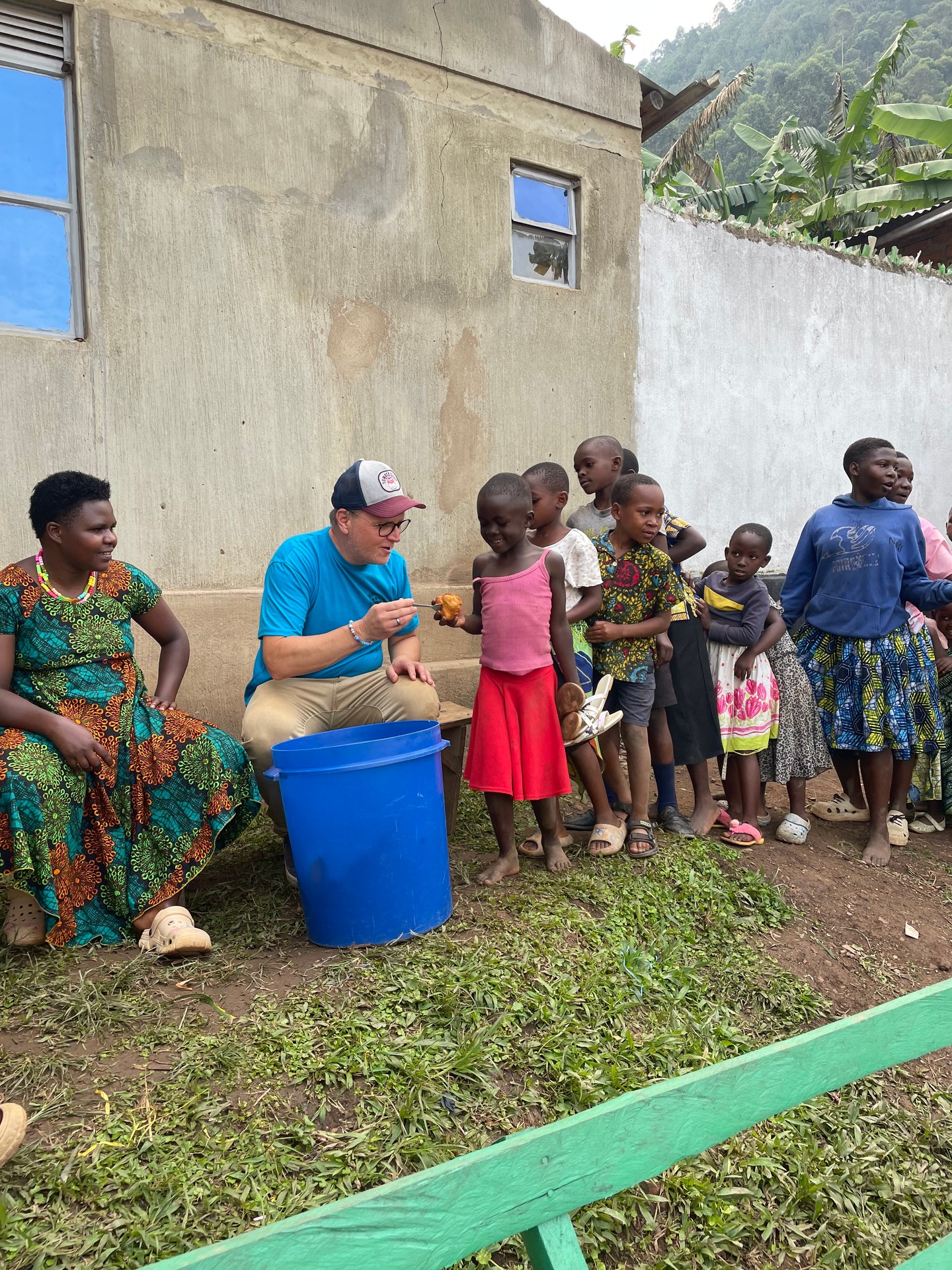
On the morning of 21 June 2026, I photographed three children standing outside the compound gate of the orphanage in Buhoma at GPS coordinates -0.9617°S, 29.6109°E. They had arrived the way neighbourhood children often do — drawn by the sound of a meal being prepared, cautious at the gate, not sure whether they were welcome. Their clothes were worn. Their posture had the particular wariness that comes from being accustomed to not being included. We invited them in immediately. There was enough food.
I am beginning with this moment because it is the most honest entry point into what western Uganda actually is as a tourism destination. The gorillas are the headline attraction — and they deserve to be. But if you arrive in Buhoma, trek through Bwindi Impenetrable National Park for four hours, and leave the same afternoon, you have seen the most spectacular thing the region offers while missing almost everything that makes it worth understanding. The children at the gate, the orphanage run by Nicholus and Media, the chicken farmer a short drive away who supplies the orphanage with chicks — these are not sideshows to the gorilla trek. They are the context within which the trek makes sense.
Western Uganda’s tourism infrastructure exists because of wildlife. But the communities that have grown up around that infrastructure — and that make the wildlife conservation possible in the first place — are the thing that distinguishes a meaningful visit from a transaction. This guide is an attempt to describe both layers.
Gorilla Trekking in Bwindi Impenetrable National Park
Bwindi Impenetrable National Park is the centrepiece of tourism in western Uganda and one of the most significant wildlife destinations on the continent. The park covers approximately 321 square kilometres of montane rainforest in the Kigezi Highlands, straddling the border between the districts of Kanungu, Kabale, and Kisoro. It holds more than half of the world’s remaining mountain gorillas — a population that has recovered from fewer than 300 individuals in the 1980s to over 1,000 today, a conservation success story driven by a combination of anti-poaching enforcement, veterinary intervention, and the revenue generated by tourism.
A gorilla trekking permit costs USD 800 per person (Uganda Wildlife Authority rate, 2026). That price is not incidental — it is the mechanism through which international visitors directly fund the park’s management, ranger salaries, and community benefit programmes. Uganda Wildlife Authority returns 20 percent of gate fees to surrounding communities, funding schools, health infrastructure, and local services in villages like Buhoma. Every permit sold is a direct investment in keeping the forest intact and the gorilla families habituated and protected.
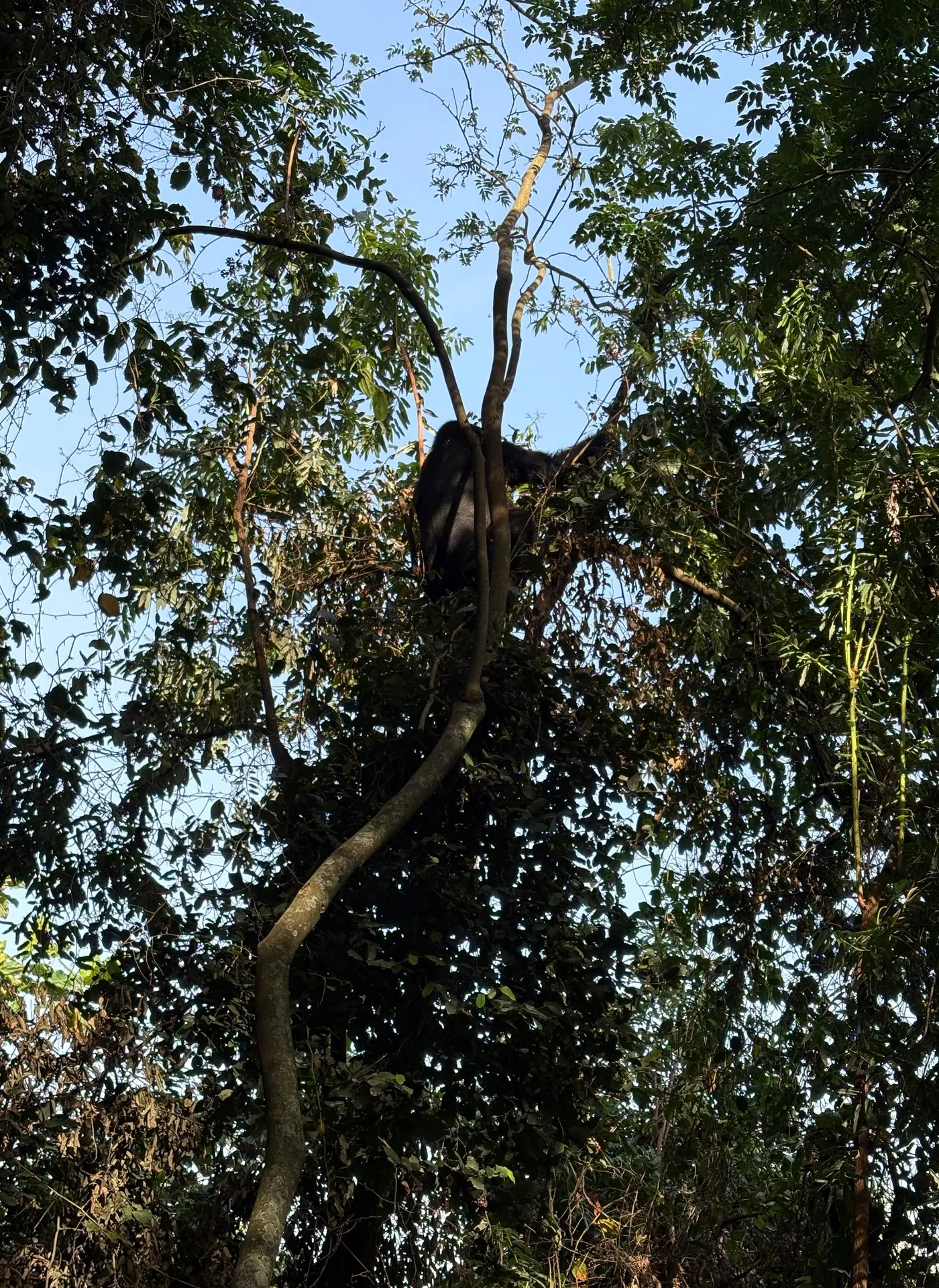
The trek itself varies considerably by day. The gorillas move freely through the forest, and rangers radio their location each morning after a dawn tracking session. On my first visit in January 2026 — an eleven-day stay during which I completed multiple treks — we walked for just over an hour before our guide signalled us to stop. The first gorilla we encountered that day was sitting in the branches of a large tree at canopy height, pulling leaves toward him with an efficiency that suggested he had been doing this for decades. He paid us no particular attention. This, more than anything else, is what makes the Bwindi experience different from a zoo encounter: the indifference is genuine. You are in his forest, on his schedule, and he has simply accepted that a small group of bipeds will occasionally stand below his tree and look up at him.
On a subsequent visit in June 2026, I photographed a silverback at GPS -0.9735°S, 29.6281°E feeding in the canopy — a position that illustrates how adaptable the Bwindi gorillas are. Mountain gorillas spend more time in trees than their lowland counterparts, particularly during periods of food abundance. The Buhoma sector of the park offers access to several habituated families, including the Mubare family — the first to be habituated for tourism purposes in Uganda, beginning in 1993. The Mubare treks represent some of the most established gorilla encounters available anywhere.
Trekking difficulty ranges from moderate to strenuous depending on the gorillas’ position on a given day. The forest is genuinely impenetrable in places — dense secondary growth, steep hillsides, root systems that require careful footing. A reasonable level of fitness is advisable and proper footwear essential. Uganda Wildlife Authority provides walking sticks and, in some cases, porter assistance for visitors who need support on difficult terrain. The porters are invariably local community members, and the fee goes directly to them — one more point at which a gorilla trek feeds into the village economy.
Buhoma Village: Community Tourism in Practice
Buhoma sits at the main entrance to Bwindi Impenetrable National Park in Kanungu District. For most visitors, it is the place you sleep before the trek and leave after breakfast. That is a reasonable itinerary if your sole purpose is the gorilla encounter. But Buhoma itself — the village, its markets, its community-run enterprises, its history as one of the first communities to benefit formally from wildlife tourism revenue — is worth more than a transit stop.
Community walks, offered through local guides who have grown up in the village and know its people directly, provide a structured entry point for visitors who want to see more than the park. A typical walk of two to three hours covers the market, the boda-boda station, the fuel point, the coffee-growing plots on the hillsides, and the network of small enterprises — food stalls, craft workshops, welding yards — that constitute the formal and informal economy of a village whose population has grown significantly since gorilla tourism took root. The guides on these walks are not interpreters of a curated experience. They are people who have lived in Buhoma their whole lives, and the walks are conversations rather than presentations.
The Batwa people — the forest-dwelling community displaced when Bwindi was gazetted as a national park in 1991 — are also present in the Buhoma area, and several community-run initiatives work to document their traditional forest knowledge and cultural practices. The relationship between the Batwa and the park is complicated and painful, and it is important to approach Batwa cultural experiences as a genuine attempt to understand an ongoing displacement rather than as an anthropological curiosity.
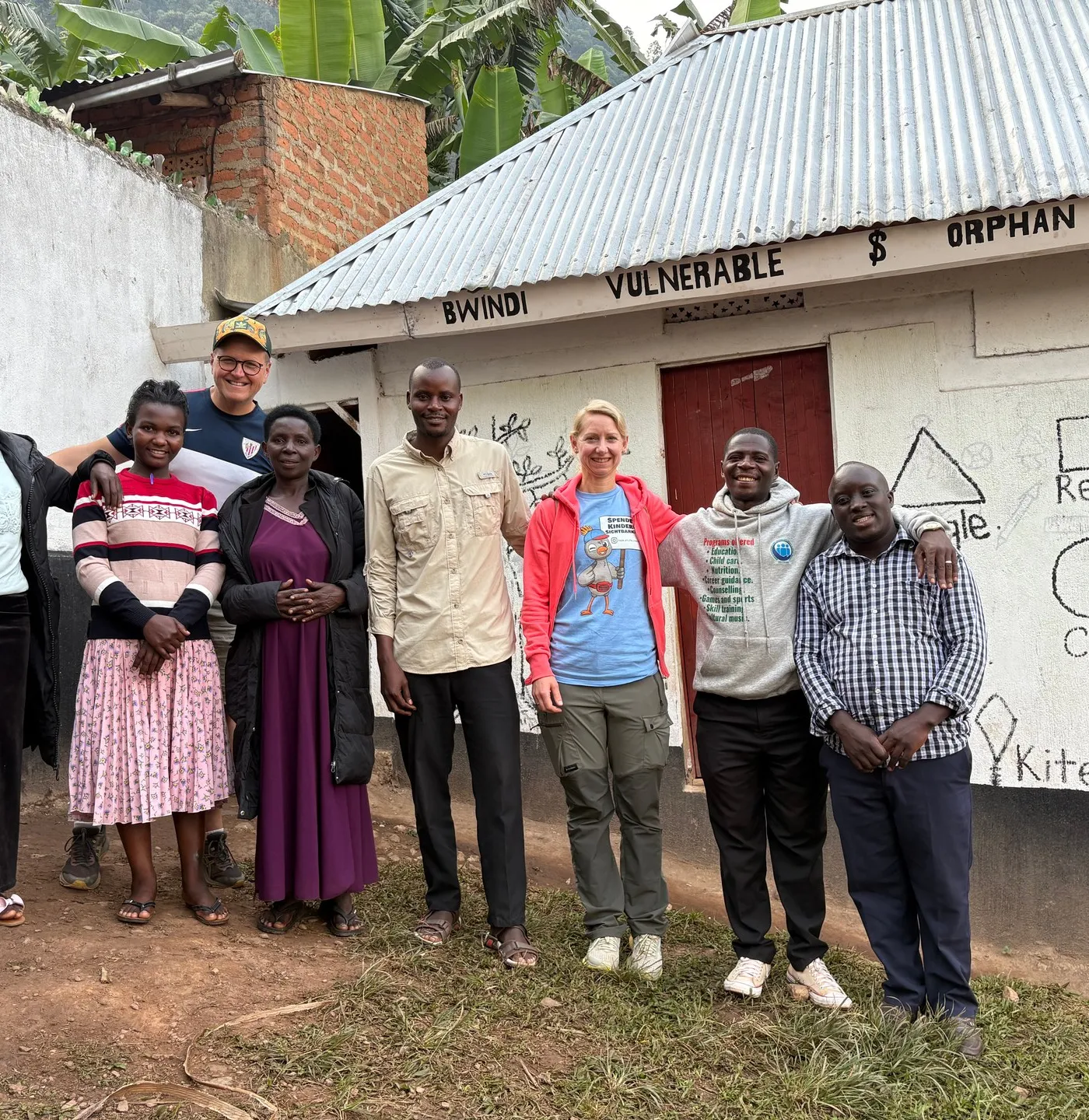
Social projects connected to the village — the orphanage run by Nicholus and Media, the food programmes supported by organisations including Hope on the Road — are not tourism products. But visitors who are aware of them, and who choose to buy locally in ways that support these operations, are participating in the same economic logic that makes gorilla conservation viable. The ecology is circular and fragile, and it becomes legible only if you spend enough time to see it operating.
Beyond Bwindi: The Wider Tourism Landscape of Western Uganda
Western Uganda’s tourism offer does not begin and end with gorilla trekking, though the gorillas tend to dominate how the region is marketed. Several other national parks and landscapes within driving distance of Buhoma represent genuinely significant attractions in their own right, and combining them into a western Uganda circuit is increasingly the approach taken by visitors who want to maximise the ecological and cultural range of a trip to Uganda.
Kibale National Park, roughly four to five hours north of Buhoma by road, holds the highest density of primates of any national park in Africa. The park is best known for chimpanzee tracking — a guided experience that follows habituated chimpanzee communities through the forest and offers close observation of behaviour that, in its complexity and social richness, rivals the gorilla encounter for sheer impact. Kibale also shelters red-tailed monkeys, olive baboons, L’Hoest’s monkeys, and several other primate species. The Bigodi Wetland Sanctuary, adjacent to the park, adds birds and wetland mammals to what Kibale offers.
Queen Elizabeth National Park lies between Kibale and the border with the Democratic Republic of Congo, covering more than 1,900 square kilometres of savannah, forest, wetland, and crater lake landscape. It is the most ecologically diverse park in Uganda, with more than 600 bird species recorded. The Kazinga Channel, a natural waterway connecting Lakes George and Edward, supports one of the highest concentrations of hippos anywhere in Africa, and boat safaris along it offer close views of wildlife entirely different from the forest-based experiences of Bwindi and Kibale. The Ishasha sector of Queen Elizabeth, in the south near the Congolese border, is home to the phenomenon for which the park is internationally known: tree-climbing lions, which habitually rest in the branches of large fig trees during the heat of the day.
The Rwenzori Mountains, on Uganda’s border with the DRC, are a different category of experience altogether. Known historically as the Mountains of the Moon, the range holds the third-highest peak in Africa — Mount Stanley, whose Margherita Peak reaches 5,109 metres — and supports a succession of vegetation zones from lowland forest through montane bamboo and heath to equatorial glacier. Multi-day trekking routes through the Rwenzori are managed by the Rwenzori Mountaineering Services concession and range from moderate lower-slope walks to full glacier ascents over seven to ten days.
Lake Bunyonyi, near Kabale in the southwest, is a quieter attraction that is often underestimated. The lake — one of the deepest in Africa — sits in a crater landscape of steep terraced hillsides, with around 29 islands scattered across its surface. It is navigable by dugout canoe and offers a pace and visual quality entirely different from the adrenaline of a gorilla trek or the scale of a game drive. Staying an additional night to explore the lake by canoe and walk the hillside paths around Kabale is invariably worth the extra time.
Mgahinga Gorilla National Park, the smallest of Uganda’s national parks, shares the Virunga volcanic range with Rwanda’s Volcanoes National Park and the DRC’s Virunga National Park. Gorilla trekking here follows a different dynamic than Bwindi — a single habituated family whose range shifts between Uganda, Rwanda, and the DRC, meaning availability varies day to day. Mgahinga also offers golden monkey tracking and a community-run Batwa trail that documents the forest knowledge of the displaced Batwa population in the park boundary area.
Tourism as an Economic Force in Western Uganda
Uganda’s tourism sector has been systematically documented in the government’s annual Statistical Abstract series published by the Uganda Bureau of Statistics, which tracks tourism’s contribution to national employment, foreign exchange earnings, and investment. The data from the 2014 edition captures a period when western Uganda’s gorilla tourism was still maturing and community benefit mechanisms were being formalised. The picture it reveals is of a sector with significant growth potential constrained by infrastructure gaps, inconsistent service quality, and an overreliance on a single high-value product — the gorilla permit — without adequate development of complementary attractions.
Much of that context has shifted in the decade since. The gorilla permit price has risen steadily as Uganda repositioned its wildlife tourism offer around quality and conservation value rather than volume. Uganda Wildlife Authority sold approximately 42,960 gorilla permits in the 2025 fiscal year, representing steady growth. The community benefit mechanism has been refined through successive policy cycles, with a greater share of formal revenue flowing to local government and community structures around protected areas.
But the most economically significant effect of gorilla tourism in communities like Buhoma is not the formal revenue-sharing payment. It is the daily spending of visitors in the village — on guides, accommodation, food, boda-boda transfers, and a range of informal services — that creates the economic activity sustaining non-tourism livelihoods. When tourism stops, as happened during the COVID-19 closure and the 2022 Ebola scare, the damage cascades through every level of the village economy simultaneously.
Development programmes operating in parallel with tourism address the vulnerability that comes from this dependence. Organisations including Stichting SYPO, through its Uganda micro-enterprise arm, run credit programmes for small businesses in communities surrounding Bwindi, providing capital access to entrepreneurs whose operations are too small and too informally structured to reach through conventional banking. Graduation programmes — a four-component model combining social protection, livelihood support, financial inclusion, and social empowerment — have been tested in several districts of western Uganda as a mechanism for building household resilience below the tourism economy.
The implication for visitors is simple: how you spend in western Uganda shapes what the region can sustain. Choosing community-run accommodation over international-chain lodges, hiring local guides through village-based operators, eating at village restaurants, buying from local markets and craft sellers — each of these decisions keeps more spending in the immediate community and builds the economic base that makes long-term conservation viable. The gorilla in the canopy at GPS -0.9735°S, 29.6281°E exists in the form he does — habituated, protected, recovering — because the people of Buhoma and the communities around Bwindi have accepted the restrictions of living alongside a national park in exchange for benefits that have sometimes been slow to materialise. Understanding that exchange is not a prerequisite for enjoying the gorilla trek. But it changes what the experience means.