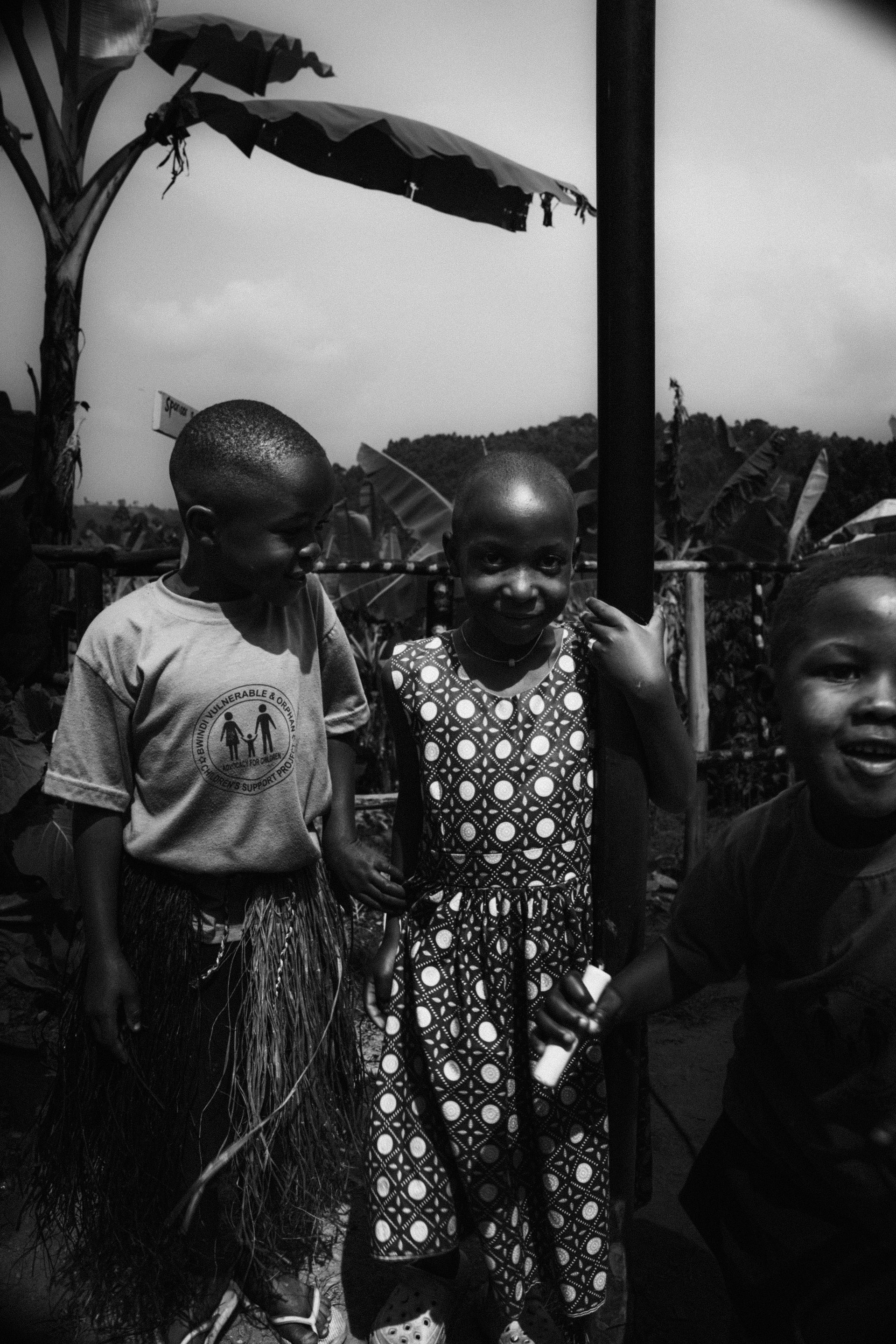
The 2022 Ebola outbreak in Uganda’s Mubende District triggered international travel advisories that caused a wave of gorilla trekking cancellations in Buhoma, emptying the village’s lodges within days and suspending income across the community. The outbreak was contained relatively quickly — but for the guides, drivers, lodge staff, and market traders whose livelihoods depend on a steady flow of visitors, even a brief interruption is economically severe. Recovery followed, but the episode made visible a structural vulnerability that persists today: Buhoma’s economy rests on a single tourism product, and any disruption to international confidence in Uganda’s safety reaches the village almost immediately.
Quick Facts
- Outbreak year:
- 2022 (Sudan strain)
- Affected district:
- Mubende, central Uganda
- Distance to Buhoma:
- ~350 km from outbreak zone
- Gorilla permit (2026):
- USD 800 per person
- Gorilla Habituation Experience:
- USD 1,500 per person
- UWA revenue sharing:
- 20% of gate fees to communities
- Mubare family habituated:
- 1993 — Buhoma sector
- Author visits documented:
- Oct 2024, Jan 2026
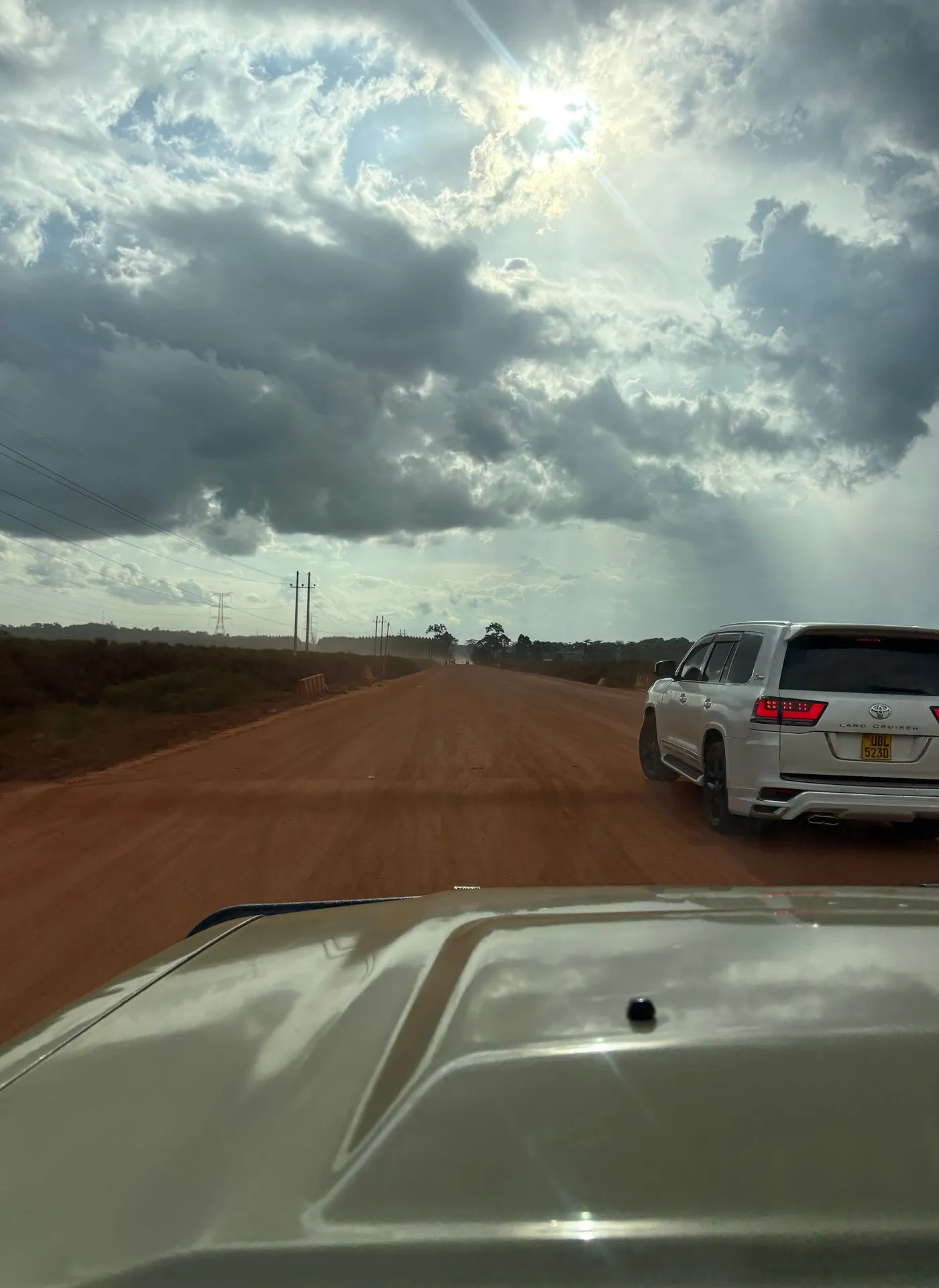
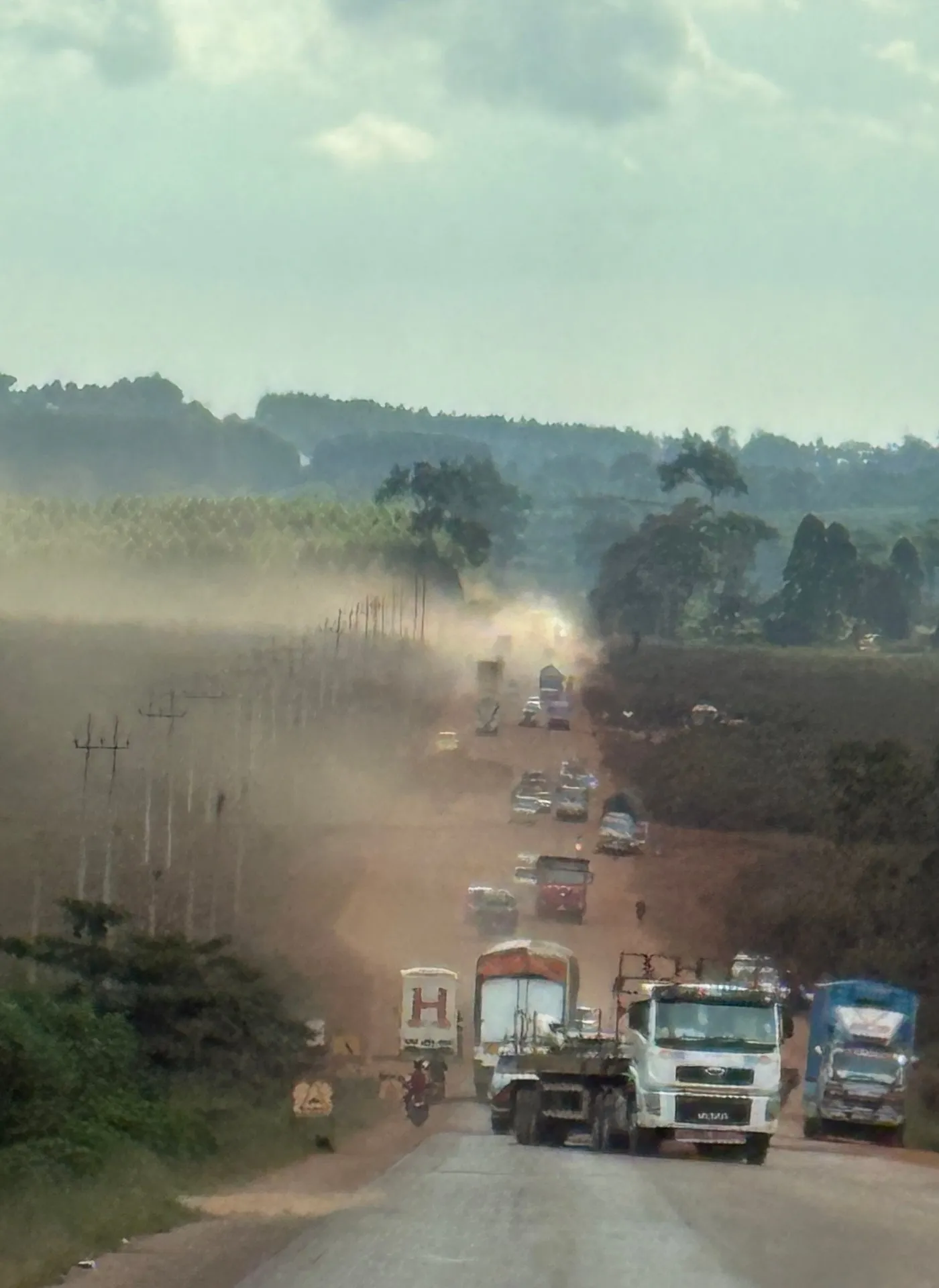
We were somewhere on the Masaka Highway when the dust became so thick it felt almost solid. In January 2026, during our visit to southwestern Uganda, our driver navigated the long red-dirt road through Butambala that connects Kampala to the west — a route that, for anyone travelling towards Bwindi, is a rite of passage. The highway is long, mostly unpaved in its central sections, and at that time was only beginning to undergo rehabilitation works planned for 2026. As we drove, the sun broke through the clouds in a wide, theatrical light that turned the dust gold. Boda-boda riders picked their way through the corrugations ahead of us. Lorry drivers leaned into the heat without the benefit of air conditioning. At GPS 0.1019°N, 32.1645°E — photographed and verified — this was what reaching Bwindi looked like: an honest road, unhurried, demanding.
During that January 2026 visit, and during an earlier visit in October 2024, I heard repeatedly from people in Buhoma about a period some two years prior when the village had gone very quiet. Not quiet in the pleasant sense of an off-season lull, but quiet in the way a market goes quiet when the suppliers do not arrive: a sudden, structural absence. The cause was Ebola — specifically the 2022 Sudan strain outbreak centred on Mubende District in central Uganda, roughly 350 kilometres from Buhoma. The outbreak had nothing geographically to do with Bwindi Impenetrable National Park. But the travel advisories it generated reached Buhoma’s lodges, guiding desks, and village economy within days.
The 2022 Ebola Outbreak and Its Immediate Impact on Uganda Tourism
In September 2022, Uganda’s Ministry of Health confirmed a case of Ebola Sudan — a strain of the virus caused by the Sudan ebolavirus, distinct from the Zaire strain responsible for the devastating West Africa outbreak of 2014–2016. The confirmed case was in Mubende District, a densely populated area in central Uganda about 150 kilometres west of Kampala. Additional cases followed in subsequent weeks, and the government imposed containment measures in the affected districts. By Ugandan and international standards, the response was comparatively swift: the outbreak was contained and Uganda declared Ebola-free by January 2023, after a period of fewer than four months.
From a public health standpoint, the 2022 outbreak was serious but geographically limited. Mubende District is in central Uganda; Buhoma and Bwindi Impenetrable National Park are in the far southwest of the country, separated from the outbreak zone by hundreds of kilometres of separate terrain. The habituated gorilla families trekked by visitors in Buhoma’s sector of the park had no exposure whatsoever to the outbreak region. Gorilla trekking operations themselves were not suspended by government order during the Ebola period.
International travel decision-making, however, does not always move in proportion to geographic specificity. When a country receives an Ebola alert — regardless of the distance between the outbreak zone and the destination a visitor has booked — travel advisories from major source markets tend to be issued for the country as a whole. Airlines reassess their risk communications. Tour operators contact booked clients. Travel insurance providers update their country-level assessments. The practical result for Buhoma in late 2022 was a wave of cancellations from travellers who had pre-booked gorilla trekking permits months in advance. These visitors did not decide not to come to Mubende — they decided not to come to Uganda.
The gorilla trekking permit, priced at USD 800 per person for non-residents (the current 2026 rate), is the most significant single transaction a visitor to Buhoma makes before arriving. When that booking is cancelled, the downstream economic consequences for the village are not limited to Uganda Wildlife Authority’s permit revenue. They extend to every guide, cook, driver, lodge employee, and market trader who would have benefited from that visitor’s presence. A cancelled week of fully booked permits is not an abstraction — it is the income that was supposed to pay for school fees, food, boda-boda fuel, and the small daily margins on which households in Buhoma operate.
How Buhoma’s Tourism Economy Works — and Why It Is Structurally Fragile
To understand what the 2022 Ebola disruption meant for Buhoma, it helps to understand how the village’s economy is actually structured. Buhoma sits at the northern entrance to Bwindi Impenetrable National Park — the main gateway for the park’s Buhoma sector trekking operations, which have been running since the Mubare gorilla family was habituated in 1993. It is not a large village, and the great majority of its monetised economic activity is connected, directly or indirectly, to the gorilla tourism that passes through the park gate at the top of the hill.
The formal part of this economy is visible and measured. Uganda Wildlife Authority sells gorilla trekking permits and returns 20 percent of park gate fees to the surrounding communities through its revenue-sharing mechanism — a system in place since the early 1990s that was designed to compensate communities who lost access to forest resources when Bwindi was gazetted as a national park. The disbursements fund schools, health facilities, and local infrastructure in Kanungu District. When visitor numbers fall, so do the disbursements.
The informal and semi-formal parts of the economy are larger and harder to quantify. Guides employed by Uganda Wildlife Authority and by private operators receive a daily wage on working days that depends entirely on there being a visitor to guide. Lodge staff at Buhoma’s accommodation properties work when the lodges are occupied. The restaurants and food stalls that serve visitors operate on margins that require reasonably consistent footfall. The boda-boda drivers who ferry visitors between the park gate, the accommodation, and the village road depend on there being movement to facilitate.
None of these livelihoods have significant buffers. A guide who works regularly during peak months may save something, but the expectation of continued income is built into household expenditure patterns. When a disruption arrives — whether from a pandemic, a regional health outbreak, or a political event that generates travel advisories — the income loss is not spread gradually. It arrives suddenly, often within the space of a few days as cancellations accumulate, and it falls most heavily on the people furthest from the permit counter and closest to subsistence.
What a Travel Advisory Does to a Village in Real Time
In the village, the experience of a travel advisory is lived before it is understood. A guide at the park briefing centre knows something is wrong when fewer vehicles arrive than expected on the morning of a high-season day. A lodge receptionist knows when calls begin arriving with cancellation requests, sometimes from operators who are themselves unsure what they are managing. A boda-boda driver knows when the road from the park gate is quieter than it should be. The information reaches people in this order — felt first, explained later.
During our January 2026 visit, talking with people in and around Buhoma, I found that the 2022 period was not described with bitterness but with a matter-of-fact resignation that spoke to a community that had already lived through the complete closure of borders in 2020 during the COVID-19 pandemic. That closure was total and lasted many months; the park was shut, the village was cut off from international visitors, and the revenue-sharing mechanism had nothing to disburse. By comparison, the 2022 Ebola disruption was shorter and geographically less relevant to Bwindi’s operations — but it arrived just as the recovery from COVID was beginning to gather pace, and the timing made it feel particularly draining to those who had already reorganised their expectations around the return of visitors.
The physical distance between Mubende and Buhoma — which is substantial by any practical measure — does not translate into reassurance for an international visitor who has seen a news headline using Uganda and Ebola in the same sentence. This is not a failure of intelligence on the visitor’s part. It is a consequence of the way health risk communication operates at a country level, and of the entirely rational behaviour of travel insurers, tour operators, and airlines who manage liability across entire markets rather than at the level of individual districts. The mechanism is impersonal, and Buhoma experiences its effects personally.
What makes this dynamic particularly pronounced in Buhoma — compared to a diversified urban economy — is the absence of alternative economic foundations that might cushion the impact. A hotel in Kampala can redirect its marketing to domestic business travellers during a period of international advisory. A Buhoma lodge has nowhere to redirect. The gorilla permit holder is, by definition, international; there is no domestic substitute for the specific product that Buhoma exists to offer. When international arrivals fall, the village has limited mechanisms to soften the impact, because the economy has no second product to fall back on.
Buhoma’s Gorilla Trekking in Context: Recovery, Resilience, and What Persists
The trajectory of tourism in Buhoma across the years immediately before and after the 2022 Ebola period tells a complicated story about resilience. The park’s COVID-19 closure in 2020 was the most severe disruption in Buhoma’s history as a trekking destination — a full halt with no visitors, no revenue-sharing disbursements, and a near-complete collapse of the informal economy that supports the village. Recovery from 2021 was slow at first, then accelerating as international travel returned and Uganda Wildlife Authority’s marketing efforts reconnected Bwindi with its traditional source markets in Europe, North America, and Australia.
The 2022 Ebola disruption arrived into this recovering context. It was shorter than COVID — Uganda was declared Ebola-free in early 2023 — and the operational disruption to trekking was never as absolute. But it was enough to pull cancellations out of the booking pipeline at a moment when the recovery had not yet rebuilt the financial reserves that lodges, guides, and community members had drawn down during the pandemic years. A second disruption on top of an incomplete recovery compounds the damage in ways that headline numbers do not fully capture: the person who had almost saved enough to repair a roof was not ruined a second time in the technical sense, but had the target moved further away again.
By the time of my January 2026 visit — GPS-verified at multiple locations in and around Buhoma — the village’s tourism economy appeared to be functioning and gradually strengthening. The briefing centre was operational; gorilla trekking permits were being issued at the Uganda Wildlife Authority-set price of USD 800 per person for non-residents. The Gorilla Habituation Experience, a longer and more immersive option that allows visitors to spend extended time with a gorilla family still in the process of habituation, was available at USD 1,500 per person — a premium product that attracts a different category of visitor and generates proportionally higher spending in the village around each booking.
During that January 2026 trek, we left the briefing centre and entered the forest. After approximately one hour of walking through the dense interior of Bwindi, the trackers signalled a stop. Above us, in the upper branches of a large tree, a gorilla from one of Buhoma’s habituated families was feeding calmly on leaves — pulling branches toward itself with the unhurried confidence of an animal entirely at ease in its own environment. I photographed the encounter (GPS -0.9735°, 29.6281°); the guides held position and kept the group at the required distance. The hour passed. That moment is the core product of everything that Buhoma exists to offer.
The gorillas are there. The forest is there. The trekking routes are there. What changes with Ebola outbreaks and travel advisories is whether the international booking pipeline that delivers visitors to the park gate is functioning or disrupted. Buhoma’s vulnerability is not in its product; the product is exceptional and irreplaceable. Its vulnerability is in the single-channel dependency on international visitor confidence, which can be interrupted by events entirely unrelated to what is actually happening in the forest above the village.
What Travelers Need to Know About Ebola, Safety, and Visiting Bwindi Today
For anyone planning a gorilla trek to Buhoma and wondering about the relevance of Uganda’s Ebola history to their trip, a few things are worth stating plainly. Uganda has managed multiple Ebola outbreaks over decades and has developed a public health response infrastructure that the international health community recognises as effective at containment. The 2022 outbreak was declared over in fewer than four months. At no point during that outbreak were Bwindi’s trekking operations formally suspended; the park gate remained open and gorilla permits continued to be issued throughout.
The practical implication for visitors is that Uganda Wildlife Authority, international health organisations, and most major travel insurers monitor the situation continuously. A visitor booking a gorilla trek twelve months in advance should purchase adequate travel insurance with cancellation coverage for health-related disruptions and check their government’s travel advisory for Uganda at the time of travel. Country-level advisories change; the advice in place at the time of booking may have been upgraded or downgraded by the time the trip departs.
What the 2022 period also demonstrated is that Uganda recovered its tourism narrative quickly once the health situation was resolved. Bwindi’s fundamental appeal — mountain gorillas, Afromontane forest, a community with decades of experience hosting international visitors — did not diminish during or after the Ebola period. The lodges that remained open maintained quality. The guides who continued to work maintained the skills and local knowledge that make Buhoma’s trekking operations distinctive. The gorilla families continued to range through the forest as they always have.
From Buhoma’s perspective, the most important thing a visitor can do is to come — and to spend locally while here. The USD 800 gorilla permit fee goes to Uganda Wildlife Authority and is distributed through national systems, with 20 percent returning to communities. The cost of the guesthouse, the lunch at the community restaurant, the hire of the boda-boda for an afternoon excursion — these are the transactions that reach the village economy directly and in the forms most useful to the people who live here. Choosing to visit Buhoma when conditions are safe and normal is, itself, a meaningful act of support for a community that endures precisely when that support is interrupted.
The Masaka Highway, when we drove it in January 2026, was already showing signs of the rehabilitation planned for later that year. Sections were dusty and uneven; others had been graded and were smoother. The whole length of it was being lived in by the people who use it every day — the boda-boda riders exposed to the dust, the truck drivers without air conditioning, the families walking the verge with loaded baskets. The road to Buhoma will be improved, section by section. The village at the end of it will remain what it has been for three decades: the gateway to one of the most extraordinary wildlife encounters on earth, and a place that needs visitors to keep arriving for the community around it to remain viable.