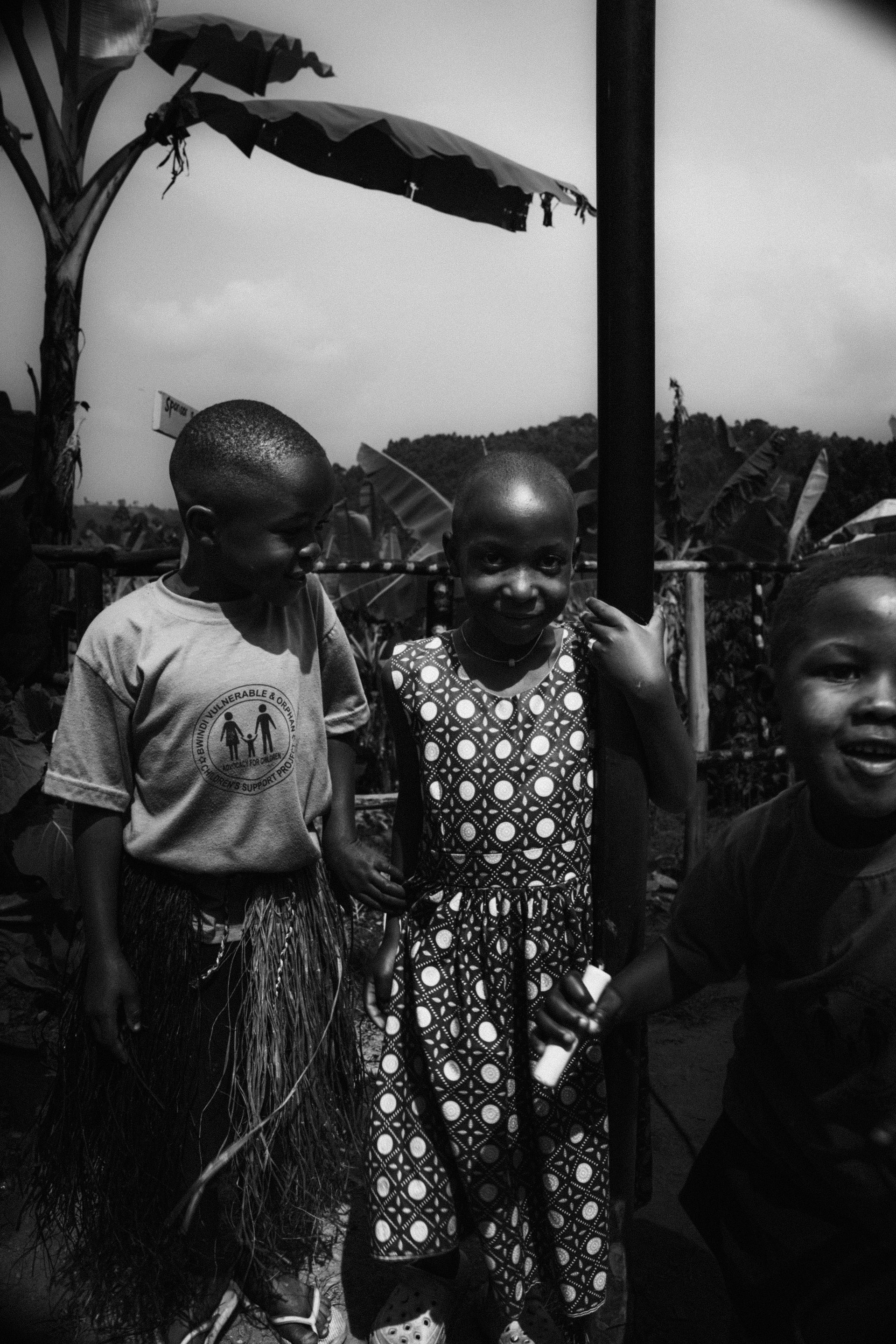
Community benefit sharing at Bwindi means that a portion of every gorilla permit and park gate fee is channelled back to the villages surrounding Bwindi Impenetrable National Park. The model — built on collaborative resource management agreements between Uganda Wildlife Authority and local communities — gives farming families, indigenous Batwa groups, and village institutions a direct financial stake in protecting the forest rather than encroaching on it.
Quick Facts
- Gorilla permit (2026):
- USD 800 per person
- Community revenue share:
- 20% of UWA gate fees
- Primary trust:
- Bwindi Mgahinga Conservation Trust (BMCT)
- Batwa status:
- Indigenous — displaced when park was gazetted 1991
- Key partners:
- IGCP, Gorilla Organisation, PROBICOU
- Active programs:
- Batwa Forest Trail, tree restoration, livelihood grants
- Location:
- Rubanda District, southwestern Uganda
- Author visit:
- January 2026 — GPS-verified on site
How the Revenue Sharing Model Works
Uganda Wildlife Authority collects fees at every national park gate. Since the early 2000s, a mandatory 20 percent of those revenues has been earmarked for communities in the surrounding districts. At Bwindi, this means Rubanda and Kisoro districts receive regular disbursements that are then channelled through local government structures and community institutions into projects chosen by the communities themselves — classroom blocks, water tanks, health posts, and bridge repairs have all been funded this way.
The mechanism has a practical logic behind it. When a family living beside the park can send a child to school partly because gorillas attract international tourists, that family has a reason to report poachers rather than join them. Conservation economists call this "economic complementarity" — the livelihoods of local people and the survival of the gorillas become intertwined rather than opposed.
Beyond the gate-fee formula, a second layer of benefit flows through Collaborative Resource Management Agreements. These formal contracts between Uganda Wildlife Authority and elected community leaders define specific rights: which community members may collect deadwood at the park boundary, which groups may conduct cultural programs inside the buffer zone, and how income from those activities is distributed. The agreements are renegotiated periodically and require community approval, giving local institutions a genuine voice in how park resources are used.
The Batwa: Bwindi's Original Forest Inhabitants
The Batwa lived inside what is now Bwindi Impenetrable National Park for generations before it was gazetted in 1991. When the park was formally established, the Batwa were relocated outside the boundary without compensation or alternative land. It remains one of the most contested displacements in Ugandan conservation history.
Decades later, the Batwa are among the most marginalized communities in the Bwindi landscape. Many households lack legal land tenure, formal employment, and access to secondary education. The community benefit sharing framework is therefore especially important for Batwa families, who were not compensated for the land they lost and receive fewer benefits from the general agricultural economy that other communities depend on.
Several programs now target Batwa communities specifically. The Batwa Forest Trail, developed in collaboration with Uganda Wildlife Authority, allows Batwa guides to lead visitors into the park's buffer zone, sharing knowledge of medicinal plants, forest navigation, and traditional practices. The trail generates direct income for Batwa participants and has become one of the more visible ways the park economy touches indigenous families. Organizations working in the area have also invested in indigenous-language literacy programs, school fee support, and Batwa-led advocacy for land rights.
Organizations Working on the Ground
The community benefit ecosystem around Bwindi involves a network of organizations, each with a distinct focus. Understanding who does what helps visitors and donors direct support where it is most needed.
The Bwindi Mgahinga Conservation Trust (BMCT) is the principal grant-making institution for the Bwindi and Mgahinga landscapes. It administers funding from tourism revenues, international donors, and conservation foundations, then distributes grants to community groups for education, health infrastructure, water access, and livelihood projects. The trust operates independently of Uganda Wildlife Authority and uses a competitive application process to allocate funds.
The International Gorilla Conservation Program (IGCP) focuses on transboundary cooperation — coordinating conservation efforts across Uganda, Rwanda, and the Democratic Republic of Congo, where mountain gorillas live. Around Bwindi, IGCP supports community enterprise development, problem animal control, and field equipment for rangers. Its cross-border approach matters because gorillas do not respect national boundaries.
The Gorilla Organisation (GO) funds local projects directly, often in partnership with IGCP. In the Bwindi area it has supported Batwa livelihood programs, health outreach, and the strengthening of the Batwa Forest Trail. The Batwa Development Program, Nkuringo Cultural Center, and Batwa Indigenous Development Organization work specifically within Batwa communities on education, cultural preservation, and legal advocacy.
PROBICOU (Pro-biodiversity Conservationists in Uganda) operates at the interface of agriculture and conservation — helping communities around the park boundary adopt practices that reduce pressure on the forest while improving farm productivity. This includes agroforestry training, improved seed varieties, and the planting of indigenous trees in "pocket forests" on community land, which provide resources that farmers previously sought inside the park.
What Your Gorilla Permit Actually Funds
A gorilla tracking permit costs USD 800 per person in 2026. That figure is intentionally high. Uganda made a deliberate policy choice to position its permits at a premium price point — attracting visitors who spend more per day and are more likely to stay multiple nights in lodges that employ local staff. The higher fee also generates more revenue per visitor, which means the community revenue share produces larger disbursements without requiring mass tourism.
Of the USD 800, the 20 percent community share amounts to USD 160 per permit. Over a year, with thousands of permits issued across Bwindi's multiple trekking sectors — Buhoma, Nkuringo, Rushaga, and Ruhija — the cumulative community fund is substantial. It is not a gift or aid; it is a share of the commercial value that wild gorillas generate, flowing back to the people whose land and labor make the conservation possible.
The money reaches communities in several forms. Some goes directly to local government for infrastructure. Some flows through the BMCT grant process to specific projects. Some stays closer to the park gate — through wages paid to lodge employees, earnings of licensed local guides, and sales from the craft cooperative at the Buhoma Community Rest Camp. Every night a visitor spends in Buhoma adds to this local economic layer.
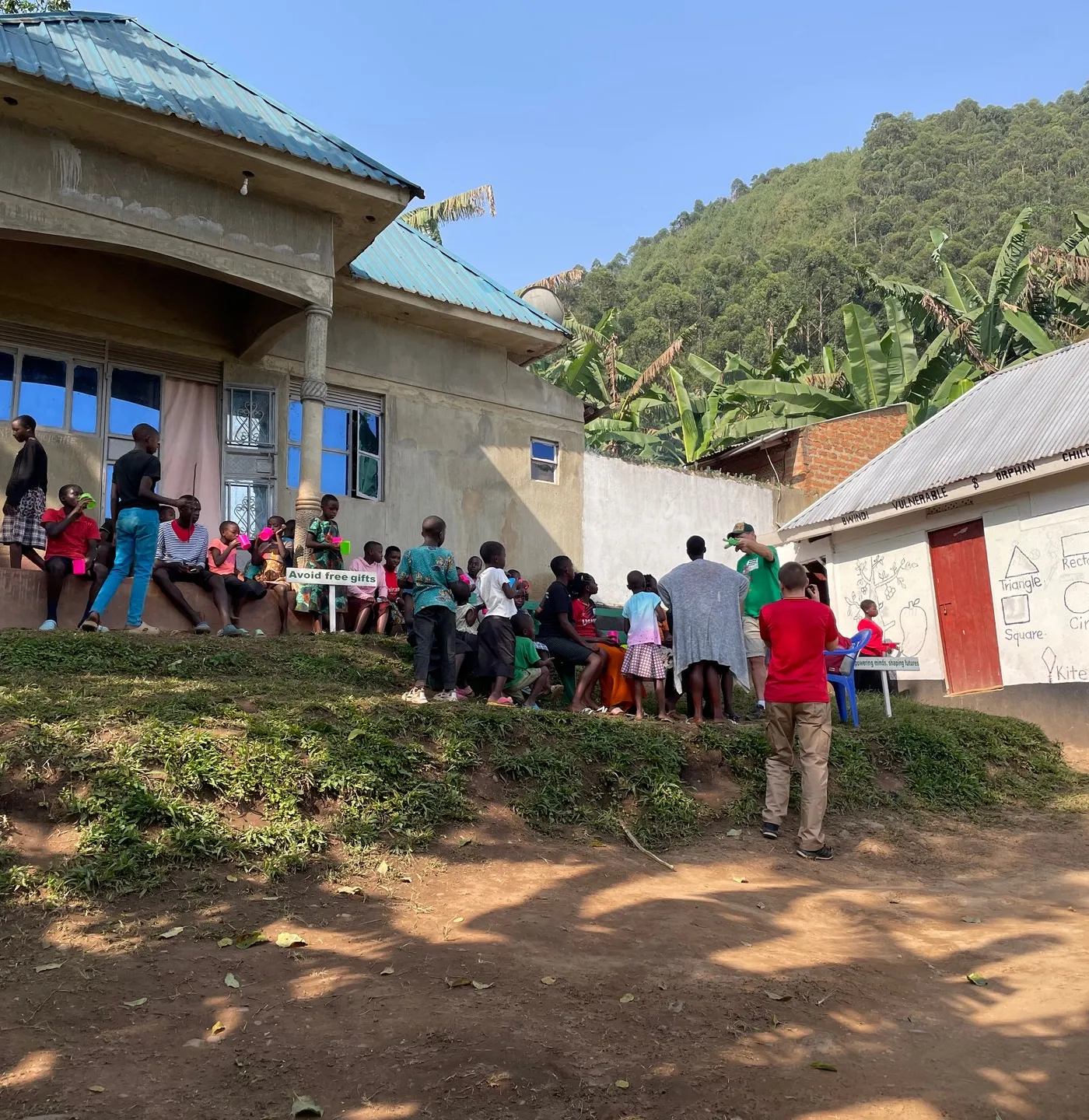
During my visit in January 2026 I spent time at the orphanage in Buhoma — a small compound with three rooms, electricity, and no running water. The main building can barely contain the children it shelters, so the courtyard becomes the school, the dining room, and the playground all at once. Institutions like this one exist in a space where tourism revenue, NGO support, and community self-organization all intersect. Whether the benefit sharing model reaches places like this depends partly on how the funds are structured and partly on local leadership.
Challenges and Gaps in the System
No benefit sharing model is without friction. The 20 percent revenue share is a real mechanism, but the path from UWA headquarters to a household in a remote village involves multiple institutional steps — local government committees, application processes, audit requirements — that can slow or distort the flow of funds. Communities far from district centers, including many Batwa settlements, have historically received a smaller share than those with better organized representation.
The Batwa situation illustrates a deeper tension. Revenue sharing was designed for communities that have land, farms, and other economic activities alongside tourism. For Batwa families who lost their forest home and now live as tenants on other people's land, the baseline is lower and the path to economic participation is steeper. Targeted programs — school fee waivers, Batwa-specific enterprise grants, and the Batwa Forest Trail — partially address this gap, but advocates argue the underlying land tenure issue has not been resolved.
Tourism downturns expose another vulnerability. When visitor numbers drop — as they did during the Ebola alerts of 2018 and the global halt of 2020 — the revenue share shrinks immediately. Communities that have come to depend on regular disbursements have no buffer. This is one reason conservation organizations push for a diversified income base: community-owned enterprises, agroforestry products, and artisan craft markets that generate revenue independent of permit sales.
What is clear from time spent in Buhoma is that the model does produce visible results. School classrooms funded by tourism revenue exist. Water points installed with BMCT grants are in use. Local guides who might otherwise have had no formal employment earn a consistent income. The Batwa Trail gives indigenous families a way to earn from the forest that was taken from them, on terms they partially control. The system is imperfect — but the alternative, a park that generates no income for local people, would produce worse conservation outcomes and worse lives.